Student Allergen Protection
Food Safety in Schools: Cafeteria Compliance and Allergen Safety in the Education Industry
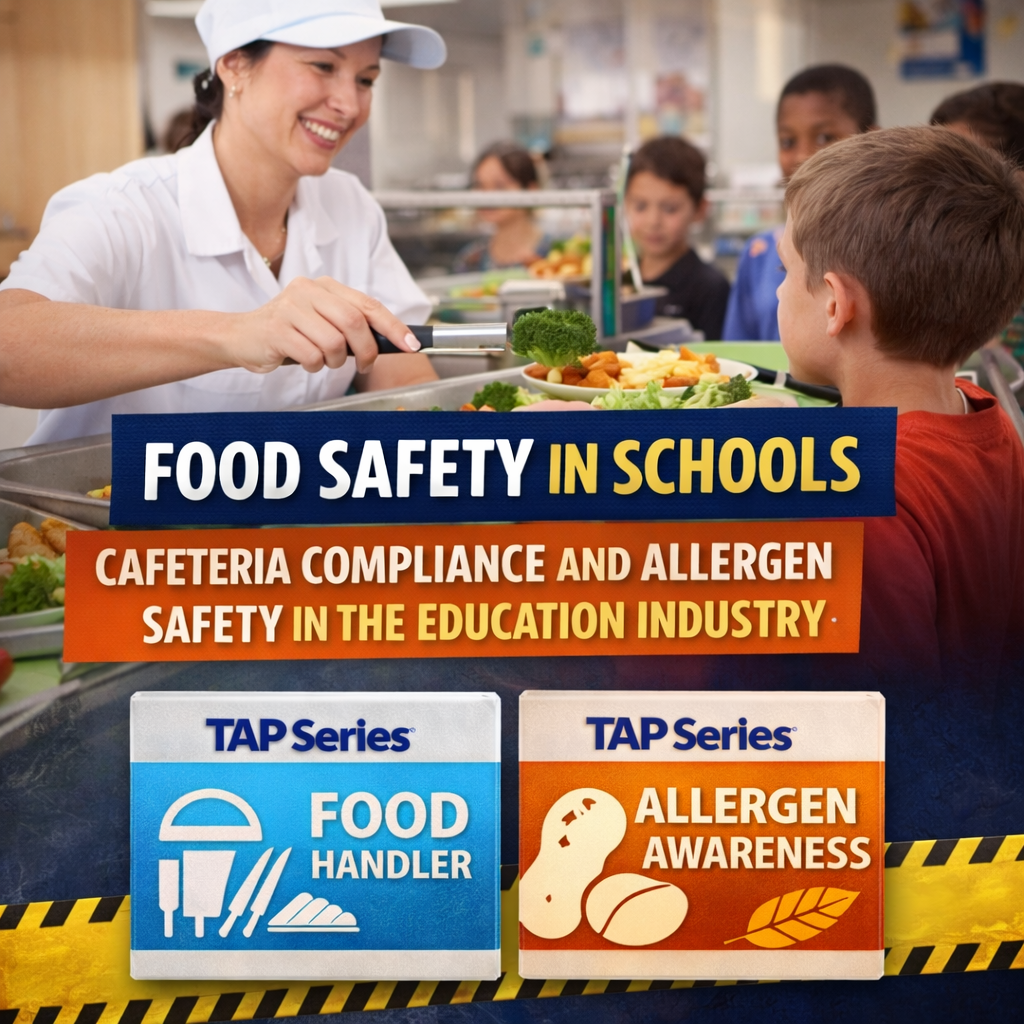
Food safety in schools is not just a regulatory requirement. It is a responsibility that directly affects student health, parent confidence, and institutional credibility across the United States. School cafeterias serve children daily, including students with food allergies and other health sensitivities, making compliance and allergen safety critical.
Cafeteria compliance and allergen safety must be treated as essential parts of school operations.
Why Food Safety Matters in School Cafeterias
School food service environments face unique challenges compared to commercial restaurants. High meal volumes, time constraints, rotating staff, and limited resources all increase food safety risks.
Common challenges include:
- Inconsistent food handling practices among cafeteria staff
- Improper temperature control during food preparation and service
- Limited allergen awareness
- Cross contact from shared equipment and prep areas
- Incomplete cleaning and sanitation routines
Without proper controls, these challenges can lead to foodborne illness or allergen exposure.
Cafeteria Compliance in the Education Environment
School cafeterias must comply with local and state health department regulations, as well as federal guidelines tied to child nutrition programs.
Inspectors typically focus on:
- Proper handwashing and personal hygiene
- Safe food storage, labeling, and rotation
- Hot and cold holding temperature control
- Cleaning and sanitizing food contact surfaces
- Clear allergen management procedures
Failure to meet these standards can result in violations, corrective actions, or loss of program eligibility.
The Importance of Allergen Safety in Schools
Food allergies affect millions of children in the US, and schools are responsible for minimizing exposure risks during meals.
Allergen incidents in cafeterias often result from:
- Staff not understanding major food allergens
- Inadequate cleaning between food preparation tasks
- Shared utensils or equipment
- Incorrect ingredient or menu information
- Poor communication between food service staff and school administrators
Proactive allergen safety practices are essential to prevent serious health emergencies.
Training as the Foundation of Safe School Food Service
Training is the most effective way to ensure consistent food safety and allergen practices across cafeteria teams. Well-trained staff are more confident, compliant, and prepared to respond to risks.
Effective training helps staff:
- Handle food safely from delivery to service
- Prevent cross contamination and cross contact
- Follow proper cleaning and sanitation procedures
- Communicate clearly about allergen concerns
- Maintain compliance during health inspections
TAP Series Training Solutions for Schools
TAP Series provides accessible training designed to support food safety and allergen compliance in education settings.
Food Handler Training
The Food Handler course delivers essential food safety knowledge for cafeteria staff and school food service workers.
This training covers:
- Safe food handling practices
- Personal hygiene and sanitation
- Temperature control fundamentals
- Reducing foodborne illness risks
👉 Learn more here:
Food Handler Training | TAP Series®
Allergen Awareness Training
The Allergen Awareness course helps school food service teams understand and manage allergen risks in daily operations.
This course focuses on:
- Major food allergens recognized in the US
- Preventing cross contact in cafeteria environments
- Proper cleaning and storage procedures
- Clear communication regarding allergen concerns
👉 Learn more here:
Allergen Awareness | Tap Series®
Building Safer School Cafeterias Through Education
Food safety in schools starts with trained and informed cafeteria teams. When staff understand compliance requirements and allergen risks, schools create safer dining environments for every student.
For US education organizations, investing in Food Handler and Allergen Awareness training through TAP Series supports compliance, protects student health, and reinforces a culture of safety across school campuses.