Student Food Allergy Protection
Food Safety in Schools: Why Cafeteria Compliance and Allergen Awareness Matter
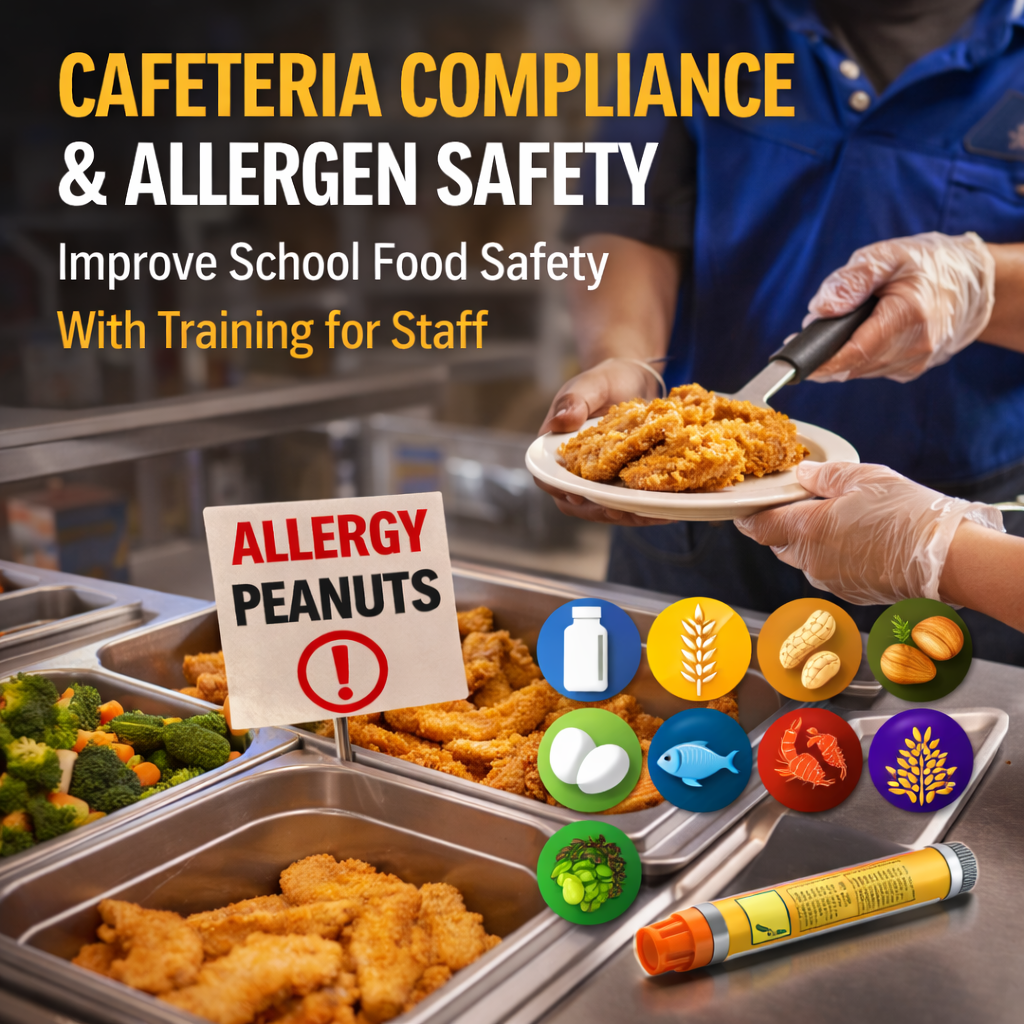
School cafeterias serve millions of meals to students every day across the United States. For many children, these meals are a critical part of their daily nutrition. Because students rely on schools to provide safe food, cafeteria operations must follow strict food safety practices and allergen awareness procedures.
Unlike traditional restaurants, school foodservice programs serve a vulnerable population that includes young children and students with medical conditions such as severe food allergies. Even small mistakes in food preparation, storage, or communication can lead to serious health risks.
Strong cafeteria compliance programs help schools protect student health while maintaining regulatory food safety standards.
Why Food Safety Is Critical in School Cafeterias
School foodservice environments face unique challenges. Large meal volumes, tight serving schedules, and varied staff experience levels can create conditions where food safety mistakes may occur if procedures are not clearly followed.
Common food safety risks in school cafeterias include:
- Improper food temperature control
- Cross contamination during preparation
- Inadequate cleaning and sanitizing of equipment
- Poor personal hygiene practices
- Miscommunication about food allergens
When these risks are not managed properly, they can lead to foodborne illness outbreaks or allergic reactions among students.
Understanding Allergen Risks in School Meals
Food allergies are a major safety concern in educational environments. Millions of children in the United States live with food allergies, and exposure to even small amounts of an allergen can trigger serious reactions.
The nine major allergens responsible for most allergic reactions include:
- Milk
- Eggs
- Fish
- Shellfish
- Tree nuts
- Peanuts
- Wheat
- Soy
- Sesame
School cafeteria teams must be able to recognize these allergens and understand how cross contact can occur during food preparation, storage, and service.
Cross contact may happen when allergens transfer from one food to another through shared utensils, equipment, surfaces, or improper cleaning practices.
Common Compliance Challenges in School Foodservice
Maintaining compliance with food safety standards requires consistent procedures and well trained staff. However, schools often encounter operational challenges.
Common issues include:
1. High volume meal preparation
Cafeterias may prepare hundreds or thousands of meals in a short period of time, increasing the risk of temperature control errors or cross contamination.
2. Staff turnover
School foodservice teams often experience staffing changes, which can make it difficult to maintain consistent food safety knowledge.
3. Limited allergen communication
Without clear systems in place, staff may not always receive accurate information about student allergies or ingredient details.
4. Time pressure during service
Busy lunch periods may lead employees to skip important steps such as verifying food temperatures or following strict sanitation procedures.
Building Strong Food Safety Practices in Schools
Schools can strengthen cafeteria compliance by focusing on core food safety principles that apply to every stage of food preparation.
Important practices include:
1. Maintaining proper time and temperature control
- Monitor hot and cold holding temperatures
- Use calibrated thermometers to verify food safety
- Prevent bacteria growth by controlling temperature ranges
2. Reinforcing personal hygiene
- Require proper handwashing procedures
- Ensure staff understand the connection between hygiene and foodborne illness prevention
3. Preventing contamination
- Separate raw and ready to eat foods
- Use clean and sanitized equipment
- Maintain safe food storage practices
4. Following effective cleaning and sanitizing procedures
- Clean food contact surfaces regularly
- Properly sanitize utensils and equipment
- Maintain organized and hygienic kitchen environments
Training School Staff for Food Safety and Allergen Awareness
Education and training play a critical role in helping school foodservice teams maintain safe cafeteria operations.
The TAP Series Food Handler training course provides foundational food safety know ledge for employees working in food preparation environments.
This training covers essential topics including:
- Time and temperature control and its role in preventing foodborne illness
- Personal hygiene practices that reduce contamination risks
- Methods for preventing contamination during food handling
- Cleaning and sanitizing procedures for equipment and utensils
- Safe food storage, preparation, and service practices
To support allergen safety in school environments, the TAP Series Allergen Awareness course helps foodservice staff understand how to manage food allergies responsibly.
The course teaches employees how to:
- Identify the nine major food allergens commonly responsible for allergic reactions
- Understand how allergen cross contact occurs during food preparation and service
- Apply practical methods to prevent allergen exposure in foodservice operations
- Communicate allergen information clearly with coworkers and supervisors
- Recognize symptoms of allergic reactions and follow emergency response procedures
Together, these training programs help school cafeterias strengthen both food safety compliance and allergen protection.
Protecting Student Health Through Training and Compliance
Food safety in schools goes beyond regulatory compliance. It directly impacts the health and well being of students who depend on school meal programs every day.
By implementing strong food safety procedures, improving allergen awareness, and providing staff with proper training, schools can create safer cafeteria environments that reduce risk for both foodborne illness and allergic reactions.
Programs such as the Food Handler training and Allergen Awareness training from TAP Series help educational institutions build knowledgeable foodservice teams that are prepared to protect students and maintain safe dining environments.