Food Safety Training For Restaurant Employees
Health Department Enforcement in Restaurants: The Violations That Get You Cited
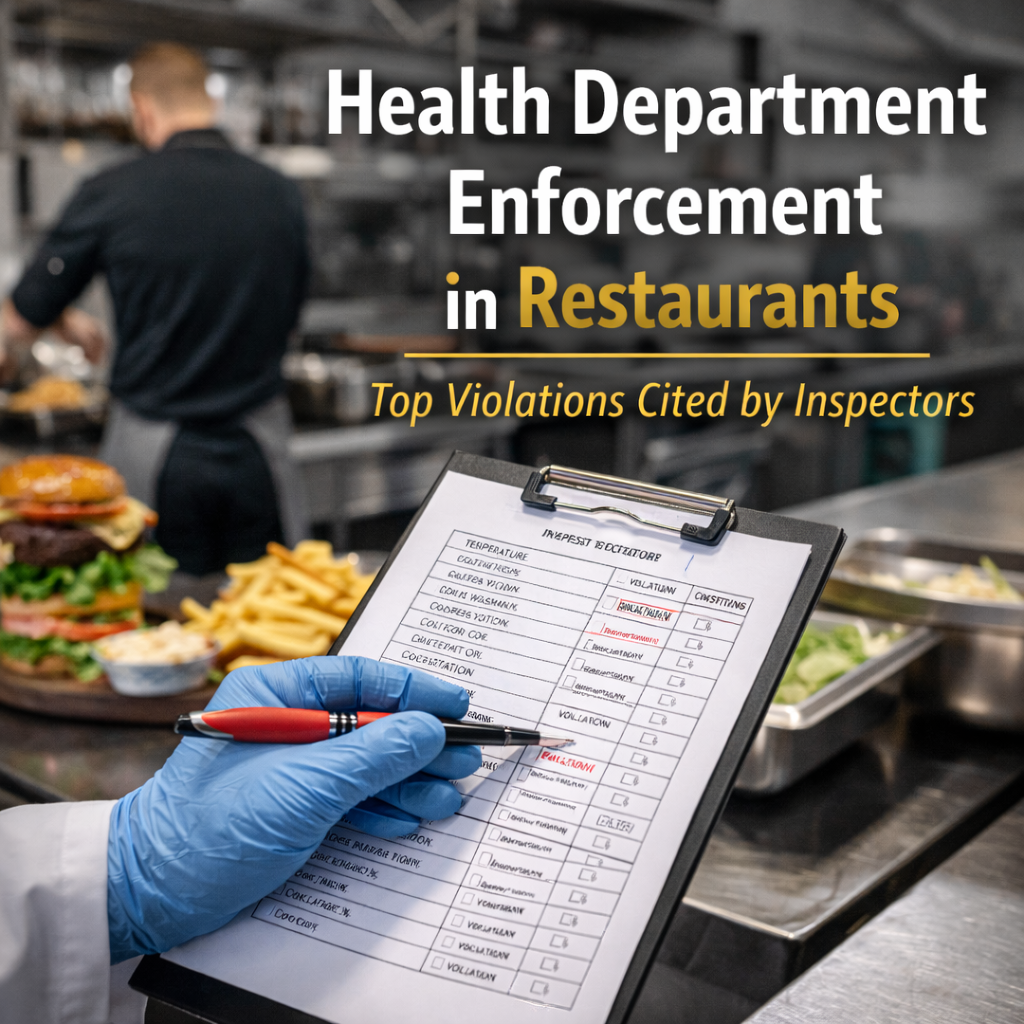
Health inspections are not just routine checks. They are enforcement actions that determine whether a restaurant is operating safely and within regulatory standards. Across the United States, inspectors follow strict guidelines to identify violations that can directly lead to foodborne illness, unsafe conditions, and compliance failures.
For restaurant operators, understanding the most common violations is essential. These are not rare mistakes. They are recurring issues that inspectors consistently find across the industry.
Why Violations Happen in Restaurants
Even experienced teams can fall short when systems are inconsistent or training is outdated.
Common reasons violations occur:
- Lack of ongoing training for food handlers and managers
- Inconsistent procedures during busy service hours
- Poor supervision or lack of accountability
- Improper documentation and monitoring
- Complacency over time with food safety practices
Violations often reflect gaps in daily habits rather than one-time errors.
Top Restaurant Violations Cited by Inspectors
Inspectors focus on high-risk factors that contribute directly to foodborne illness.
Most frequently cited violations include:
- Improper time and temperature control
- Food held in the danger zone too long
- Inadequate cooking or reheating temperatures
- Lack of temperature monitoring logs
- Poor personal hygiene practices
- Improper or infrequent handwashing
- Employees working while ill
- Proper glove use when handling ready-to-eat food
- Cross-contamination risks
- Raw food stored above ready-to-eat items
- Shared equipment without proper cleaning
- Unsafe food handling during prep
- Inadequate cleaning and sanitizing
- Food contact surfaces not properly sanitized
- Dirty utensils and equipment
- Build-up of grease and debris in prep areas
- Improper food storage and labeling
- Missing or incorrect date marking
- Food stored on the floor or uncovered
- Use of unapproved or unsafe food sources
- Lack of active managerial control
- No clear food safety systems in place
- Failure to correct issues during operations
- Limited oversight of staff practices
These violations are not only common. They are preventable with the right training and oversight.
The Role of Management in Preventing Violations
Managers are the first line of defense during inspections and daily operations.
Key responsibilities include:
- Establishing clear food safety procedures aligned with regulations
- Training staff consistently on proper handling and hygiene
- Monitoring critical control points like temperature and sanitation
- Correcting issues immediately before they escalate
- Maintaining accurate records for compliance verification
Strong leadership creates a culture where violations are less likely to occur.
How TAP Series Training Helps Reduce Violations
Training is one of the most effective tools for preventing common inspection failures.
Food Handler Training
Food Handler Training | TAP Series®
What your team will learn:
- Time and temperature control to prevent foodborne illness
- Proper hygiene practices and their role in food safety
- Contamination prevention across all food handling stages
- Cleaning and sanitizing procedures for safe operations
- Identifying risks and applying corrective actions
Food Safety Manager Training
Foodservice Food Safety Manager Certification Training | Tap Series®
What managers will learn:
- Preventing foodborne illness through structured processes
- Understanding the most common risk factors cited by inspectors
- Managing employee health and illness reporting
- Monitoring the flow of food from receiving to service
- Implementing HACCP-based food safety systems
- Strengthening managerial control and accountability
These programs provide practical knowledge that directly addresses the violations inspectors look for.
Turning Violations Into Preventable Outcomes
Restaurants that consistently pass inspections do not rely on luck. They build systems that support safe practices every day.
Best practices to avoid violations:
- Conduct daily self-inspections using checklists
- Reinforce training regularly for all staff levels
- Standardize food safety procedures across shifts
- Empower employees to report issues without hesitation
- Review inspection reports to improve future performance
Consistency is what separates compliant operations from those at risk.
Conclusion: Compliance Starts Before the Inspector Arrives
Health department enforcement highlights the real conditions inside your restaurant. By understanding the most common violations and investing in proper training, businesses can reduce risk, protect customers, and maintain compliance. Restaurant food safety training is a proactive step that ensures your team is always prepared, not just during inspections but every day of operation.