US Restaurant Compliance Regulations
Health Department Enforcement in Restaurants: Top Violations Inspectors Cite and How to Prevent Them
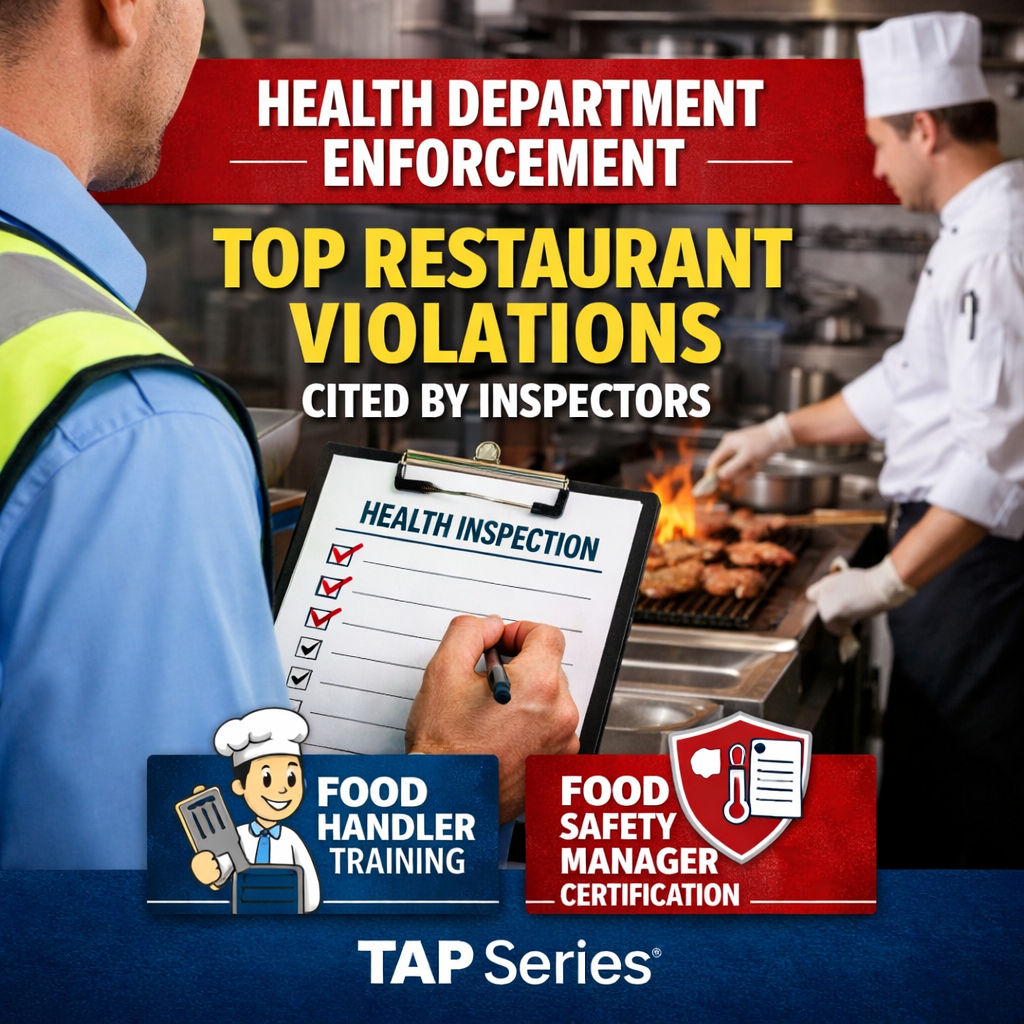
Health Department Enforcement in the Restaurant Industry continues to intensify across the United States as local and state agencies increase inspections, enforce food codes, and respond to public health concerns. For restaurant operators, citations are not just paperwork. They impact reputation, operational continuity, and revenue.
Health inspectors are not looking for perfection. They are looking for consistent compliance with food safety standards that protect guests from foodborne illness. The most frequently cited violations are preventable with proper training, oversight, and active managerial control.
Below are the top restaurant violations inspectors cite and what they mean for your business.
1. Improper Time and Temperature Control
Failure to control time and temperature is one of the most common and most serious violations.
Inspectors frequently cite:
- Cold food held above 41°F
- Hot food held below 135°F
- Improper cooling or reheating procedures
- Lack of thermometer calibration
Temperature abuse creates ideal conditions for bacteria growth. This is directly linked to foodborne illness outbreaks and is considered a critical violation in most jurisdictions.
Prevention Focus
- Calibrate thermometers regularly
- Log temperatures consistently
- Train staff on proper cooling and reheating standards
- Implement monitoring procedures at every stage of food flow
The TAP Series Food Handler Training equips frontline employees with practical knowledge on temperature monitoring, cross contamination prevention, and safe food handling practices.
2. Poor Personal Hygiene Practices
Inspectors commonly observe:
- Employees not washing hands properly
- Bare hand contact with ready to eat foods
- Employees working while ill
- Lack of glove use or improper glove changing
Personal hygiene violations directly increase the risk of contamination. Norovirus outbreaks, for example, are often linked to improper handwashing.
Prevention Focus
- Establish strict handwashing policies
- Enforce illness reporting procedures
- Provide continuous staff training
- Conduct routine hygiene audits
Food safety culture begins with management. When leaders reinforce hygiene expectations daily, violations decrease significantly.
3. Cross Contamination Risks
Cross contamination continues to be a major citation category.
Common findings include:
- Raw meat stored above ready to eat foods
- Shared cutting boards without proper sanitizing
- Improper storage practices
- Lack of labeling and date marking
These practices create pathways for pathogens to spread.
Prevention Focus
- Separate raw and ready to eat foods
- Implement color coded equipment systems
- Reinforce cleaning and sanitizing procedures
- Monitor storage organization daily
The TAP Series Food Safety Manager Certification prepares managers to implement active managerial control systems, understand FDA risk factors, and establish preventive protocols such as HACCP plans.
4. Inadequate Cleaning and Sanitizing
Sanitation violations are highly visible to inspectors and guests alike.
Typical citations include:
- Improper sanitizer concentration
- Dirty food contact surfaces
- Grease buildup
- Unsanitary equipment
Cleaning without proper sanitizing does not eliminate pathogens. Many operations fail to test sanitizer strength or maintain proper documentation.
Prevention Focus
- Test sanitizer solutions daily
- Follow manufacturer dilution instructions
- Schedule deep cleaning routines
- Train staff on the difference between cleaning and sanitizing
Consistent cleaning logs and supervisory checks can significantly reduce repeat violations.
5. Pest Control and Facility Maintenance Issues
Structural and facility violations often signal deeper sanitation problems.
Inspectors commonly cite:
- Evidence of rodents or insects
- Gaps in doors or walls
- Improper waste management
- Standing water issues
These violations can escalate quickly if not addressed proactively.
Prevention Focus
- Maintain routine pest control contracts
- Conduct facility inspections weekly
- Repair structural damage immediately
- Monitor garbage storage areas closely
Active managerial control plays a critical role in preventing recurring facility violations.
The Managerial Role in Preventing Citations
Health department enforcement is not random. It focuses on risk factors that contribute to foodborne illness. The FDA identifies five major risk factors that frequently lead to outbreaks. Managers must understand these and implement systems to control them.
A certified manager trained in:
- Identifying causes of foodborne illness
- Monitoring the flow of food
- Handling employee illness reports
- Setting up HACCP plans
- Maintaining documentation
can dramatically reduce the likelihood of violations.
The TAP Series Food Safety Manager Certification program is designed specifically for leaders responsible for compliance. It provides practical guidance on building food safety systems, not just passing an exam.
Why Training Is the Strongest Defense Against Violations
Health department enforcement is increasing across states. Online reporting systems make inspection results publicly accessible, increasing reputational risk for restaurants cited repeatedly.
Restaurants that invest in structured training see measurable improvements:
- Fewer critical violations
- Improved inspection scores
- Stronger food safety culture
- Reduced liability exposure
The Food Handler Training course strengthens frontline employee knowledge on:
- Time and temperature control
- Preventing contamination
- Personal hygiene standards
- Cleaning and sanitizing protocols
The Food Safety Manager Certification builds leadership accountability and equips managers to implement active control systems that inspectors look for during evaluations.
Building a Culture That Prevents Citations
Avoiding violations is not about reacting to inspections. It is about building a culture where safe food handling is standard practice every day.
Successful U.S. restaurant operators:
- Train every employee consistently
- Reinforce policies daily
- Monitor temperature logs actively
- Conduct internal audits
- Empower managers to enforce compliance
Health inspections should confirm what your team already practices, not expose gaps.
By prioritizing food safety training and certification, restaurant operators can reduce enforcement risk, protect guests, and maintain operational excellence in an increasingly regulated environment.
Investing in structured compliance programs like TAP Series strengthens operational control, safeguards public health, and supports long term success in the restaurant industry.