Food Safety Training For Restaurants
Health Department Enforcement in Restaurants: Top Restaurant Violations Cited by Inspectors
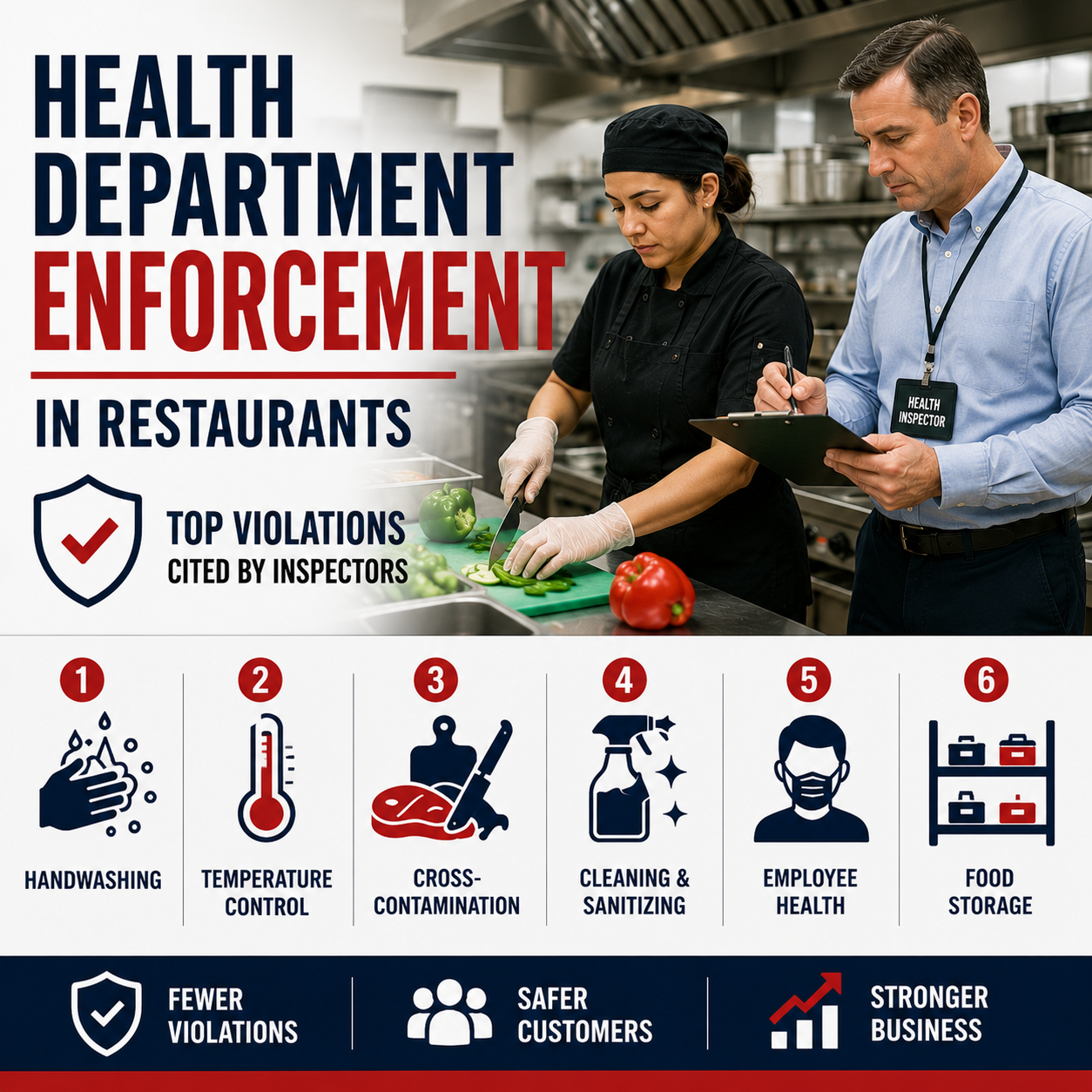
Health department inspections are a routine part of operating a restaurant in the United States. While inspections can sometimes create anxiety among restaurant owners and managers, their purpose is straightforward: ensuring that food is prepared, stored, and served in a manner that protects public health.
Many restaurant violations cited by inspectors are not the result of major negligence. Instead, they often stem from everyday operational mistakes, inconsistent procedures, or gaps in employee training. Understanding the most common violations can help restaurants strengthen compliance efforts and reduce the risk of enforcement actions.
Why Health Department Inspections Matter
Restaurants serve food directly to the public, making food safety a critical responsibility.
Health inspections help:
- Protect customers from foodborne illness
- Verify compliance with food safety regulations
- Identify operational risks
- Promote corrective action when needed
- Maintain public confidence in food establishments
A successful inspection reflects consistent food safety practices that occur every day, not just when inspectors visit.
The Most Common Restaurant Violations
While specific requirements vary by jurisdiction, inspectors frequently identify similar issues across foodservice operations.
1. Improper Handwashing
Handwashing remains one of the most commonly cited violations.
Inspectors often observe:
- Employees failing to wash hands when required
- Inadequate handwashing procedures
- Missing handwashing supplies
- Improper glove use
Poor hand hygiene can contribute to food contamination and increase the risk of foodborne illness.
2. Improper Food Temperatures
Temperature control is one of the most important aspects of food safety.
Common violations include:
- Cold foods stored above safe temperatures
- Hot foods held below required temperatures
- Inadequate temperature monitoring
- Missing temperature records
- Improper cooling procedures
Temperature violations create conditions where harmful bacteria can grow rapidly.
3. Cross-Contamination Risks
Cross-contamination occurs when harmful bacteria or contaminants are transferred from one food or surface to another.
Inspectors commonly identify:
- Improper separation of raw and ready-to-eat foods
- Shared utensils without cleaning
- Unsafe food preparation practices
- Contaminated work surfaces
Preventing cross-contamination is essential for protecting customer health.
4. Cleaning and Sanitizing Deficiencies
Restaurants are expected to maintain clean and sanitary food preparation environments.
Violations often involve:
- Dirty food-contact surfaces
- Improper sanitizer concentrations
- Unclean equipment
- Inadequate cleaning schedules
- Food residue buildup
Consistent sanitation procedures help reduce contamination risks.
5. Employee Health and Hygiene Concerns
Employee health policies are designed to prevent illness transmission.
Inspectors may cite violations related to:
- Employees working while ill
- Poor personal hygiene
- Inadequate illness reporting procedures
- Improper protective practices
Strong employee health programs support safer food handling operations.
6. Improper Food Storage
Food storage violations can affect both food quality and safety.
Common issues include:
- Foods stored on the floor
- Improper labeling
- Missing date markings
- Unsafe storage arrangements
- Failure to protect food from contamination
Proper storage practices are fundamental to regulatory compliance.
Why Restaurants Continue to Receive the Same Violations
Many violations occur repeatedly because they are tied to routine employee behaviors and operational habits.
Common contributing factors include:
- Insufficient training
- High employee turnover
- Lack of supervision
- Inconsistent enforcement of procedures
- Poor documentation practices
- Failure to correct recurring issues
Addressing root causes is often more effective than focusing solely on inspection outcomes.
The Role of Management in Compliance
Managers play a critical role in maintaining food safety standards.
Responsibilities often include:
- Monitoring food safety practices
- Reviewing temperature logs
- Conducting internal inspections
- Training employees
- Correcting deficiencies promptly
- Reinforcing compliance expectations
Strong leadership helps create an environment where food safety becomes part of daily operations.
Preparing for Inspections Year-Round
The best way to pass inspections is to maintain compliance every day.
Restaurants can improve inspection readiness by:
- Conducting routine self-audits.
- Monitoring food temperatures consistently.
- Reinforcing proper handwashing practices.
- Maintaining sanitation schedules.
- Reviewing employee food safety knowledge.
- Correcting issues before they become violations.
Consistent preparation reduces stress and improves inspection outcomes.
The Importance of Food Safety Training
Many restaurant violations can be prevented when employees understand food safety requirements and apply them consistently.
Food Handler Training | TAP Series® provides employees with practical knowledge about food contamination prevention, personal hygiene, temperature control, and safe food handling practices.
Foodservice Food Safety Manager Certification Training | TAP Series® helps managers develop the expertise needed to oversee food safety programs, maintain compliance, identify operational risks, and prepare for health inspections.
Together, these programs support stronger food safety cultures and improved inspection performance.
Compliance Begins Before the Inspector Arrives
Health department enforcement is not about finding faults. It is about ensuring restaurants operate in a way that protects public health. The violations inspectors cite most often are frequently preventable through proper training, active management oversight, and consistent food safety practices.
By investing in employee education and food safety leadership, restaurants can reduce violations, improve operational performance, and create safer dining experiences for their customers.