TAP Series Allergen Awareness
How Allergen Mistakes Turn Into Lawsuits and Why Restaurant Training Matters More Than Ever
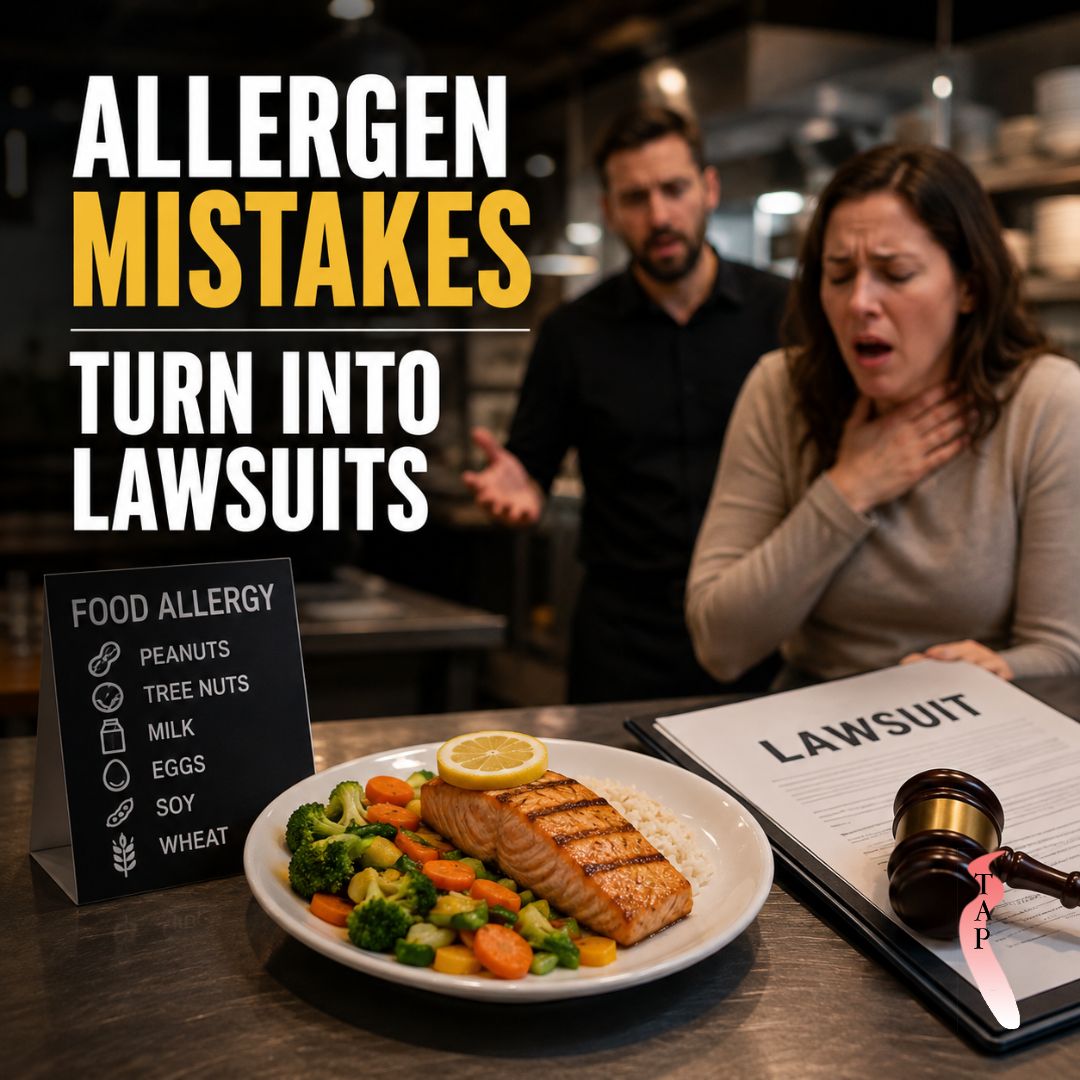
Food allergies affect millions of Americans, and for many customers, dining out comes with significant risk. A single mistake involving allergens can trigger a severe allergic reaction, leading to emergency medical treatment, lasting health consequences, or even death. For restaurants, these incidents often extend far beyond customer dissatisfaction. They can result in lawsuits, regulatory scrutiny, reputational damage, and substantial financial losses.
Many allergen-related lawsuits do not begin with intentional misconduct. Instead, they stem from communication failures, improper food handling, inaccurate menu information, or employees who simply were not trained to recognize the seriousness of food allergies.
Restaurant operators that invest in allergen education create safer dining experiences while reducing legal and operational risks.
Why Allergen Mistakes Frequently Lead to Legal Action
Customers trust restaurants to provide accurate information about the food they serve. When that trust is broken and someone suffers an allergic reaction, businesses may face claims involving negligence, failure to warn, or failure to follow reasonable food safety practices.
Common reasons restaurants become involved in allergen lawsuits include:
- Serving food that contains undeclared allergens
- Cross contact during food preparation
- Incorrect menu descriptions
- Employees providing inaccurate allergen information
- Kitchen staff ignoring allergy requests
- Poor communication between servers and cooks
- Inadequate food safety training
Many of these situations could have been prevented through consistent procedures and employee education.
Cross Contact Is One of the Most Common Causes
Even when a restaurant uses the correct ingredients, allergens can unintentionally transfer from one food to another.
Examples include:
- Using the same utensils for multiple dishes
- Preparing allergen-free meals on contaminated surfaces
- Shared fryers for different menu items
- Reusing gloves after handling allergen-containing foods
- Using the same cutting boards without proper cleaning
For customers with severe allergies, even trace amounts of an allergen can trigger a serious reaction.
Preventing cross contact requires clear procedures that every employee understands and follows consistently.
Communication Breakdowns Can Have Serious Consequences
Many allergen incidents begin long before food reaches the kitchen.
A customer may clearly explain their allergy, but if that information is not communicated accurately throughout the restaurant, mistakes become much more likely.
Communication failures may include:
- Servers forgetting to notify the kitchen
- Allergy requests not appearing on order tickets
- Staff making assumptions about ingredients
- Employees guessing instead of verifying information
- Managers not being involved when needed
Strong communication protocols help reduce these avoidable risks.
Menu Accuracy Matters
Customers often rely on menus when making decisions about what is safe to eat.
Problems arise when:
- Ingredients change without updating menus
- Specials contain allergens that are not disclosed
- Sauces or garnishes contain hidden allergens
- Menu descriptions are incomplete or misleading
Restaurants should regularly review menu information to ensure it accurately reflects current recipes and ingredients.
Every Employee Has a Role in Allergen Safety
Allergen protection is not solely the responsibility of the kitchen.
Everyone contributes to customer safety, including:
- Hosts who receive allergy notifications
- Servers who gather accurate information
- Kitchen staff who prepare meals safely
- Managers who oversee procedures
- Food runners who verify orders before delivery
A coordinated team approach helps reduce mistakes throughout the dining experience.
Training Helps Employees Make Better Decisions
Many allergen-related mistakes occur because employees simply do not understand the risks involved.
Comprehensive training helps staff:
- Recognize major food allergens
- Understand cross contact
- Communicate accurately with customers
- Follow proper food handling procedures
- Respond appropriately to allergy concerns
- Know when to involve management
Training also builds confidence, allowing employees to answer customer questions responsibly instead of making assumptions.
The Cost of a Single Mistake Can Be Significant
An allergen incident can have lasting consequences for both customers and businesses.
Potential impacts include:
- Medical expenses
- Legal claims
- Insurance costs
- Negative online reviews
- Loss of customer trust
- Regulatory investigations
- Reduced business reputation
The financial cost of one preventable mistake often exceeds the investment required for effective employee training.
Building a Strong Food Safety Culture
Restaurants with strong food safety cultures do not rely on individual memory or experience alone.
Instead, they establish consistent systems that include:
- Standard allergen handling procedures.
- Accurate ingredient verification.
- Clear communication between front and back of house.
- Routine employee training.
- Regular reviews of food preparation practices.
- Manager oversight and accountability.
When allergen safety becomes part of daily operations, employees are better prepared to protect both customers and the business.
How TAP Series Supports Restaurant Allergen Safety
Proper training is one of the most effective ways to reduce allergen-related risks before they become costly legal problems.
Allergen Awareness | TAP Series®
This online course helps restaurant employees understand the major food allergens, recognize situations that create cross contact, communicate effectively with customers, and follow safe food handling practices that support compliance and customer protection.
Protect Customers Before Mistakes Become Lawsuits
Every allergy request deserves careful attention. A single oversight can quickly become a medical emergency, damage a restaurant's reputation, and result in expensive legal action. Most allergen lawsuits begin with preventable mistakes that occur during communication, food preparation, or service.
Restaurants that prioritize ongoing education through Allergen Awareness | TAP Series® strengthen their food safety culture, improve employee confidence, reduce operational risk, and provide customers with greater peace of mind. Investing in allergen awareness training today is one of the most effective ways to prevent tomorrow's lawsuit.