Grocery Workplace Safety
How Everyday Deli Employee Errors Can Result in Grocery Inspection Failures
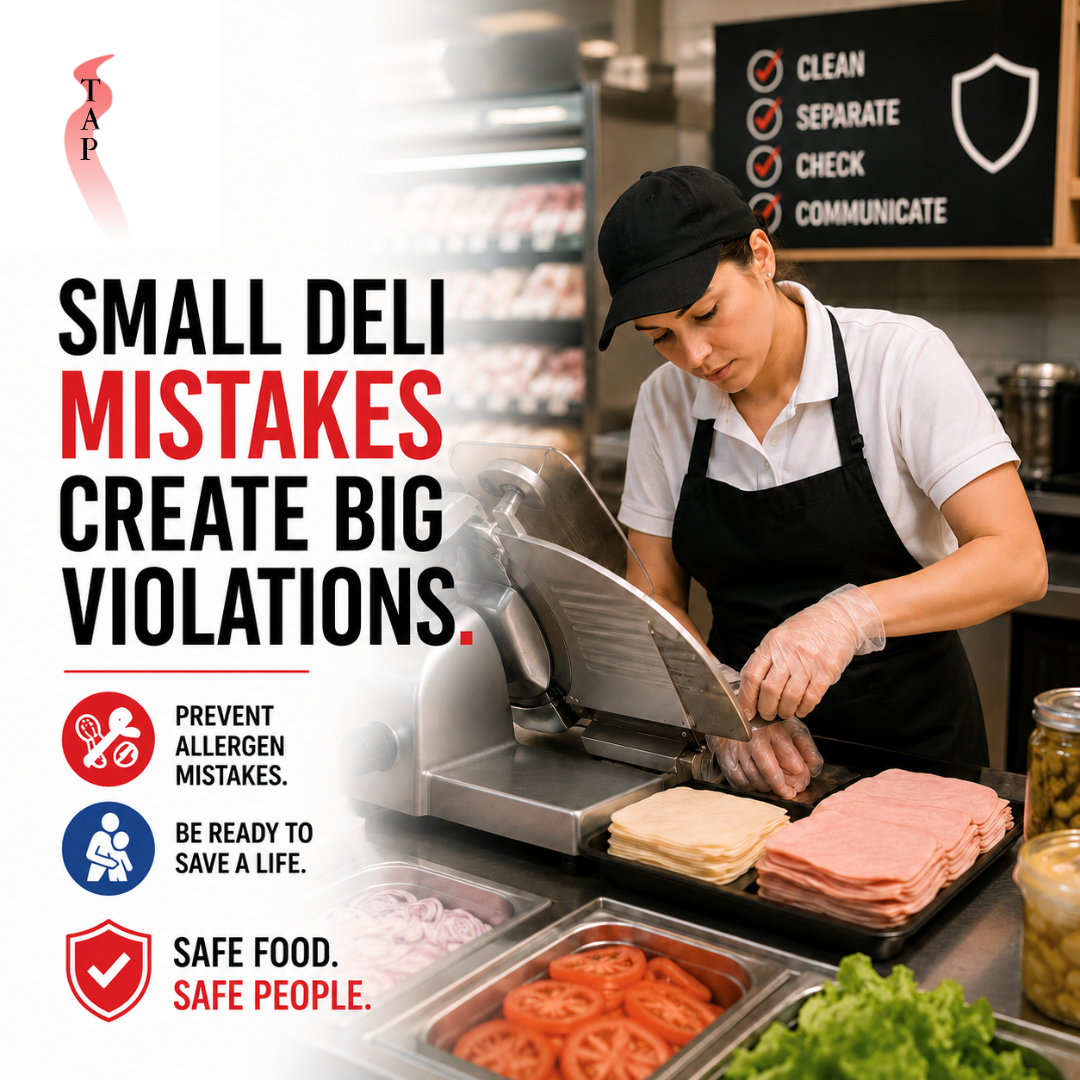
The deli department is one of the busiest areas in any grocery store. Employees prepare ready-to-eat foods, slice meats and cheeses, package products, and serve customers throughout the day. While these tasks may seem routine, even small mistakes can lead to food safety violations, customer illness, or serious emergencies.
Many grocery inspection findings are linked to everyday employee errors that are entirely preventable. By understanding the most common deli mistakes and providing the right training, grocery stores can improve compliance while creating a safer environment for both customers and employees.
Why Small Mistakes Matter
Food safety violations often begin with seemingly minor oversights.
Examples include:
- Using the wrong utensils
- Skipping handwashing
- Improper cleaning of slicers
- Cross-contact between foods
- Incorrect food storage
- Delayed response during choking emergencies
Small errors can quickly become larger safety concerns if they occur repeatedly.
Common Deli Mistakes That Lead to Violations
1. Cross-Contact With Food Allergens
Many deli products contain common allergens, making cross-contact a significant risk.
Common mistakes include:
- Using the same slicer without proper cleaning
- Sharing utensils between products
- Preparing allergen-free orders on contaminated surfaces
- Incorrect product labeling
Customers with food allergies depend on employees to handle food carefully and accurately.
2. Inadequate Cleaning and Sanitizing
Food-contact equipment must be cleaned regularly to prevent contamination.
Inspectors often identify:
- Food residue on slicers
- Dirty cutting boards
- Improper sanitizer use
- Incomplete cleaning schedules
Regular sanitation is essential for maintaining compliance.
3. Improper Temperature Control
Prepared foods must be kept within safe temperature ranges.
Common violations include:
- Refrigerated foods becoming too warm
- Hot foods cooling improperly
- Missing temperature records
- Failure to monitor display cases
Temperature control helps prevent harmful bacteria from growing.
4. Poor Employee Hygiene
Personal hygiene directly affects food safety.
Common concerns include:
- Improper handwashing
- Wearing gloves incorrectly
- Touching ready-to-eat foods with bare hands
- Working while ill
Good hygiene practices help reduce contamination risks.
5. Delayed Response During Choking Emergencies
Busy deli counters and prepared food areas increase the possibility of customers experiencing choking emergencies.
Employees who are unsure how to respond may lose valuable time while waiting for help.
Prepared employees can:
- Recognize choking quickly
- Respond appropriately
- Activate emergency procedures
- Assist until emergency responders arrive
Knowing what to do during a choking emergency can help protect customer safety.
Why Employee Training Prevents Violations
Most deli violations are not caused by intentional misconduct. They occur when employees lack the knowledge or confidence to follow proper procedures consistently.
Training helps employees:
- Handle food safely
- Prevent allergen cross-contact
- Maintain sanitation standards
- Follow temperature control procedures
- Respond appropriately during emergencies
- Support inspection readiness
Well-trained employees make fewer mistakes and contribute to stronger compliance.
Building a Safer Deli Operation
Managers can reduce violations by reinforcing safe work habits every day.
Best practices include:
- Review allergen procedures regularly.
- Clean and sanitize equipment on schedule.
- Monitor food temperatures consistently.
- Reinforce proper hand hygiene.
- Practice emergency response procedures.
- Encourage employees to report food safety concerns.
Daily attention to these practices helps prevent larger problems.
The Role of Management
Managers are responsible for creating an environment where food safety is part of everyday operations.
Leadership responsibilities include:
- Monitoring employee performance
- Providing ongoing training
- Reviewing sanitation procedures
- Verifying allergen controls
- Supporting emergency preparedness
- Correcting unsafe practices immediately
Strong supervision helps ensure food safety procedures are followed consistently.
Strengthening Food Safety Through Training
Allergen Awareness Training | TAP Series® helps grocery employees recognize major food allergens, prevent cross-contact, communicate accurate allergen information, and protect customers with food allergies.
Choke Saving Procedures Training | TAP Series® provides employees with practical guidance on recognizing choking emergencies, responding appropriately, and taking immediate action until emergency medical assistance arrives.
Together, these courses help deli teams improve food safety, strengthen emergency preparedness, and reduce preventable violations.
Small Actions Make a Big Difference
Many grocery inspection violations begin with small employee mistakes that seem harmless in the moment. A missed cleaning step, an improperly sanitized slicer, or an overlooked allergen request can have significant consequences for customers and the business.
By investing in employee education, reinforcing safe food handling practices, and preparing staff for emergencies, grocery stores can reduce violations, improve customer confidence, and create safer deli operations every day.