Neighborhood Comparison For Home Buyers
How to Compare the Cost of Living in Different Neighborhoods
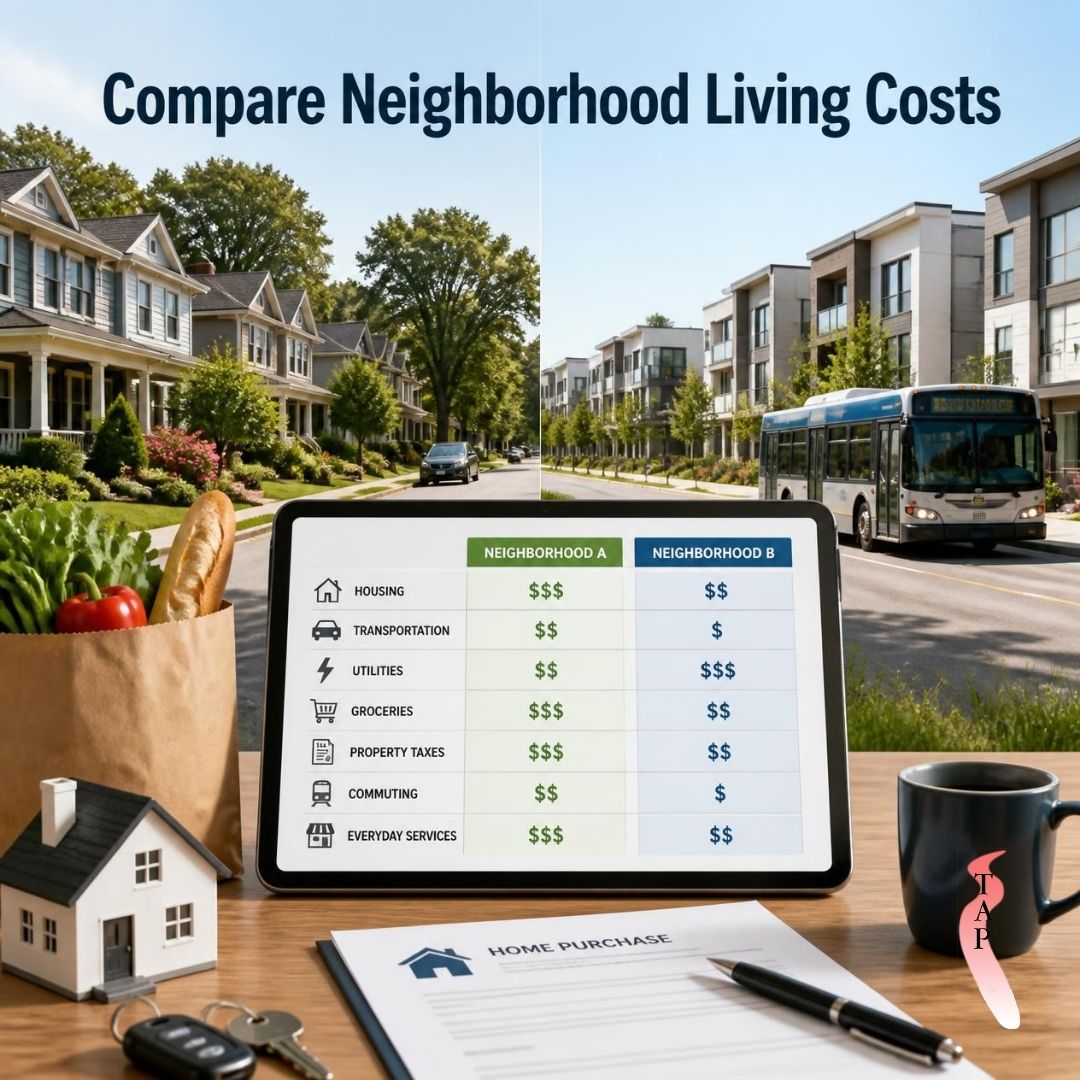
The price of a home is only one part of what it may cost to live in a particular neighborhood. Comparing the cost of living between neighborhoods can help buyers understand how housing, transportation, utilities, groceries, services, and other recurring expenses may affect their household budget.
Two homes with similar purchase prices can have very different ongoing costs because of their locations. A neighborhood farther from work may involve higher transportation expenses, while an area with higher property-related costs may offer easier access to shops and services. Looking at these expenses together provides a more complete picture of what living in each area could involve.
Start With Housing Costs
Begin by comparing the recurring housing expenses associated with each property. These may include mortgage payments, property taxes, homeowners insurance, association fees where applicable, and routine maintenance.
The purchase price alone does not capture all of the costs associated with homeownership. Two properties with similar prices may have different property taxes, insurance costs, association fees, or maintenance requirements.
When comparing neighborhoods, organize these expenses separately so you can see how much each location may contribute to your overall monthly housing costs.
Compare Transportation Expenses
Transportation can be one of the biggest differences between neighborhoods. Consider how far you would travel to work, school, shopping, healthcare, and other regular destinations.
For drivers, expenses may include fuel, parking, tolls, vehicle maintenance, and other transportation costs. Public transportation users should consider fares, transfers, and the availability of convenient routes.
A home with a lower housing cost may require more frequent or longer trips, potentially increasing transportation expenses.
Consider Commute Time
Transportation is not only about money. The amount of time spent traveling can also affect your daily routine.
Compare the typical commute from each neighborhood during the times you would normally travel. Consider traffic patterns, public transportation schedules, and the reliability of the routes you would use.
A longer commute may mean additional fuel or transit costs while also reducing the time available for family, recreation, or other activities.
Review Utility Costs
Utility expenses can vary depending on the home, local rates, climate, and how the property is designed.
When comparing homes, consider electricity, natural gas where applicable, water, sewer, waste services, internet, and other recurring utilities.
The home's size, insulation, age, appliances, heating and cooling systems, and energy efficiency can also influence usage.
If available, ask about historical utility bills or other information that can help you understand typical household expenses.
Compare Grocery and Everyday Shopping Costs
The cost of groceries and everyday necessities can differ between locations, although individual shopping habits also play a major role.
Consider the stores available near each neighborhood and how frequently you would need to travel to reach them. A neighborhood with convenient access to supermarkets and other essential retailers may reduce the time and transportation required for regular shopping.
Do not assume that a nearby store is automatically less expensive. Instead, compare the types of stores available and how their prices fit your typical shopping habits.
Look at Local Services
Everyday services can also contribute to the cost of living. Depending on your household, these may include childcare, healthcare, fitness facilities, personal services, pet care, restaurants, and home maintenance providers.
Think about which services you use regularly and whether they are conveniently available in each neighborhood.
Accessibility can affect transportation expenses as well. If common services are several miles away, you may spend more time and money reaching them.
Consider Property Taxes and Local Costs
Property-related taxes and other local expenses can differ between areas. These costs should be considered when comparing homes, particularly because they can contribute to ongoing ownership expenses.
Look at the applicable costs for each specific property rather than relying on general assumptions about an entire city or region.
A neighborhood with a different tax structure may have a different overall cost profile even when homes have similar purchase prices.
Account for Maintenance and Home Characteristics
The cost of maintaining a home can depend on its age, size, construction, systems, landscaping, and condition.
For example, a larger property may require more heating and cooling, while a home with extensive outdoor space may require additional landscaping maintenance.
When comparing neighborhoods, consider the properties themselves as well as the surrounding area. A lower-cost home may still have different maintenance requirements from another property with a similar purchase price.
Create a Neighborhood Cost Comparison
A simple comparison table can make the differences easier to understand. Consider listing estimated monthly or annual expenses such as:ExpenseNeighborhood ANeighborhood BHousing costs$$Transportation$$Utilities$$Groceries$$Property taxes$$Services$$Maintenance$$Other recurring costs$$
The figures do not need to be exact to be useful. The purpose is to identify major differences and areas that may require additional research.
Think About Your Lifestyle
Cost of living is highly dependent on how a household lives. Someone who works from home may spend less on commuting, while someone who travels to an office every day may place greater importance on transportation costs.
Similarly, a household that frequently uses restaurants, public transit, childcare, or recreational facilities may value neighborhood accessibility differently from someone who rarely uses those services.
Consider your actual routines rather than comparing neighborhoods based solely on general cost estimates.
Consider Future Changes
Your expenses may change after moving. A new job could alter your commute, household size could change, or transportation needs could increase.
When comparing neighborhoods, consider whether the area would remain practical if your circumstances changed. This can help you evaluate the location beyond your current monthly expenses.
Final Thoughts
Cost of living when choosing a neighborhood involves much more than the price of a home. Housing costs, transportation, utilities, taxes, groceries, services, maintenance, and commuting can all contribute to the total cost of living in an area.
Creating a side-by-side comparison can help you identify which expenses are likely to differ between neighborhoods. By considering both financial costs and everyday convenience, buyers can develop a clearer understanding of how each location may fit their household's budget and lifestyle.