Grocery Food Safety Certification Training
Inspection Failures in Grocery Stores: Why They Happen and How to Avoid Them
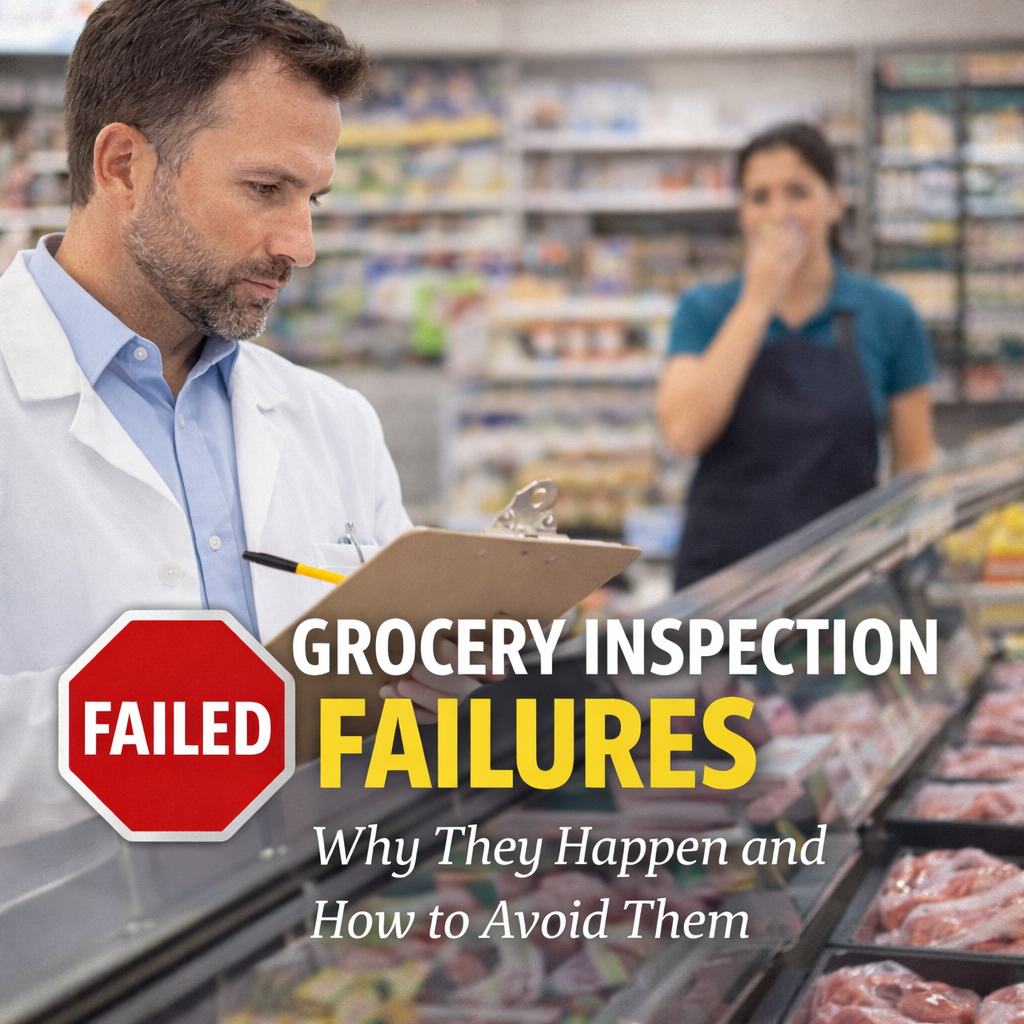
Health inspections play a critical role in protecting public health in the grocery industry. Grocery stores handle large volumes of fresh produce, packaged foods, deli items, and prepared meals every day. Because of this, food safety standards are strictly enforced across the United States.
When grocery stores fail inspections, the consequences can include fines, mandatory corrections, negative publicity, and loss of customer trust. Many inspection failures occur not because of intentional negligence, but because of gaps in training, inconsistent procedures, or lack of awareness about food safety risks.
Understanding the most common reasons grocery stores fail inspections can help managers and staff take proactive steps to maintain compliance and protect customers.
Common Reasons Grocery Stores Fail Health Inspections
Health inspectors typically focus on areas that present the greatest risk for foodborne illness or contamination. Grocery stores often fail inspections due to recurring operational issues.
Common violations include:
- Improper food storage temperatures
- Cross contamination between raw and ready to eat foods
- Poor employee hygiene practices
- Failure to monitor food handling procedures
- Improper cleaning and sanitation of equipment
- Lack of allergen awareness in prepared food areas
These violations can occur in deli counters, bakery sections, prepared food stations, and storage areas where staff handle food throughout the day.
Temperature Control Failures
Improper temperature control is one of the most frequently cited violations during grocery inspections. Many foodborne bacteria grow rapidly when food is held at unsafe temperatures.
Examples of temperature related violations include:
- Refrigerated foods stored above safe holding temperatures
- Hot foods held below required temperatures
- Inconsistent monitoring of cold storage units
- Failure to record temperature logs
Without consistent monitoring, employees may not notice equipment issues or temperature fluctuations that could compromise food safety.
Cross Contamination Risks
Cross contamination occurs when harmful bacteria spread from one food or surface to another. In grocery stores, this risk is especially high in deli departments, meat sections, and prepared food areas.
Cross contamination can happen through:
- Using the same cutting boards for raw and ready to eat foods
- Improper cleaning of knives, slicers, and preparation surfaces
- Poor glove changing practices between tasks
- Improper storage of raw meats near ready to eat items
Proper procedures and staff awareness are essential to preventing these risks.
Employee Hygiene and Illness Reporting
Employees working around food must follow strict hygiene practices. Health inspectors often observe employee behavior during inspections.
Violations may include:
- Improper handwashing practices
- Handling food while sick
- Not using gloves when required
- Poor hygiene or improper uniform standards
Employees who report symptoms of illness must be handled according to food safety guidelines to prevent contamination.
Allergen Awareness Gaps in Grocery Food Service Areas
Many grocery stores offer prepared foods, bakery items, deli sandwiches, and hot food stations. These areas introduce additional risks related to food allergens.
Inspection concerns may include:
- Failure to identify allergen ingredients in prepared foods
- Cross contact between allergen and non allergen foods
- Miscommunication between employees about allergen free orders
- Lack of procedures for handling allergy related requests
With food allergies affecting millions of Americans, proper allergen awareness is critical for grocery safety and customer protection.
The Role of Training in Preventing Inspection Failures
Consistent staff training is one of the most effective ways grocery stores can avoid inspection violations. When employees understand food safety risks and proper procedures, they are better prepared to follow safe practices during daily operations.
TAP Series offers training programs designed to help grocery teams strengthen food safety practices and meet compliance requirements.
Food Safety Manager Training for Grocery Operations
The Food Safety Manager Training course helps managers and supervisors understand how to build strong food safety systems and oversee safe operations.
Learn more about the course here:
Retail Food Safety Manager Training | Tap Series®
Key topics covered include:
- Preventing Foodborne Illness
- The Five Most Common Risk Factors Identified by Public Health Authorities
- Managerial Responsibilities in Food Safety
- Identifying Causes of Foodborne Illness
- Understanding the Big Six Foodborne Illnesses
- Handling Employee Illness Reports
- Preventing Cross Contamination
- Monitoring the Flow of Food
- Temperature Monitoring Practices
- Safe Food Handling Guidelines
- Developing HACCP Plans
This training helps grocery managers implement systems that reduce risk and support inspection readiness.
Allergen Awareness Training for Grocery Staff
Food allergens present a serious safety concern for grocery stores offering prepared foods or deli services. Employees must understand how to recognize allergen risks and prevent cross contact.
The Allergen Awareness Training course helps staff develop essential knowledge and practical safety practices.
Learn more about the course here:
Allergen Awareness | Tap Series®
Participants learn how to:
- Identify the most common food allergens
- Recognize cross contact risks involving allergens
- Implement strategies to prevent allergen exposure
- Communicate allergen information clearly to customers
- Recognize early signs of allergic reactions
This training supports safer food service operations and helps protect customers with food allergies.
Building a Culture of Food Safety in Grocery Stores
Avoiding inspection failures requires more than passing a single health inspection. It requires a consistent culture of food safety where employees understand the importance of safe food handling every day.
Grocery stores that prioritize training and accountability often see improvements in:
- Employee confidence in food safety procedures
- Consistency in food handling practices
- Reduced risk of contamination or foodborne illness
- Greater readiness during health inspections
When managers and staff work together to maintain safe practices, grocery stores can protect their customers, strengthen compliance, and maintain a positive reputation in their communities.
By investing in structured programs such as Food Safety Manager Training and Allergen Awareness Training, grocery organizations can reduce inspection risks and create safer environments for both employees and customers.