Grocery HACCP Training
Inspection Failures in Grocery Stores: Why They Happen and How to Avoid Them
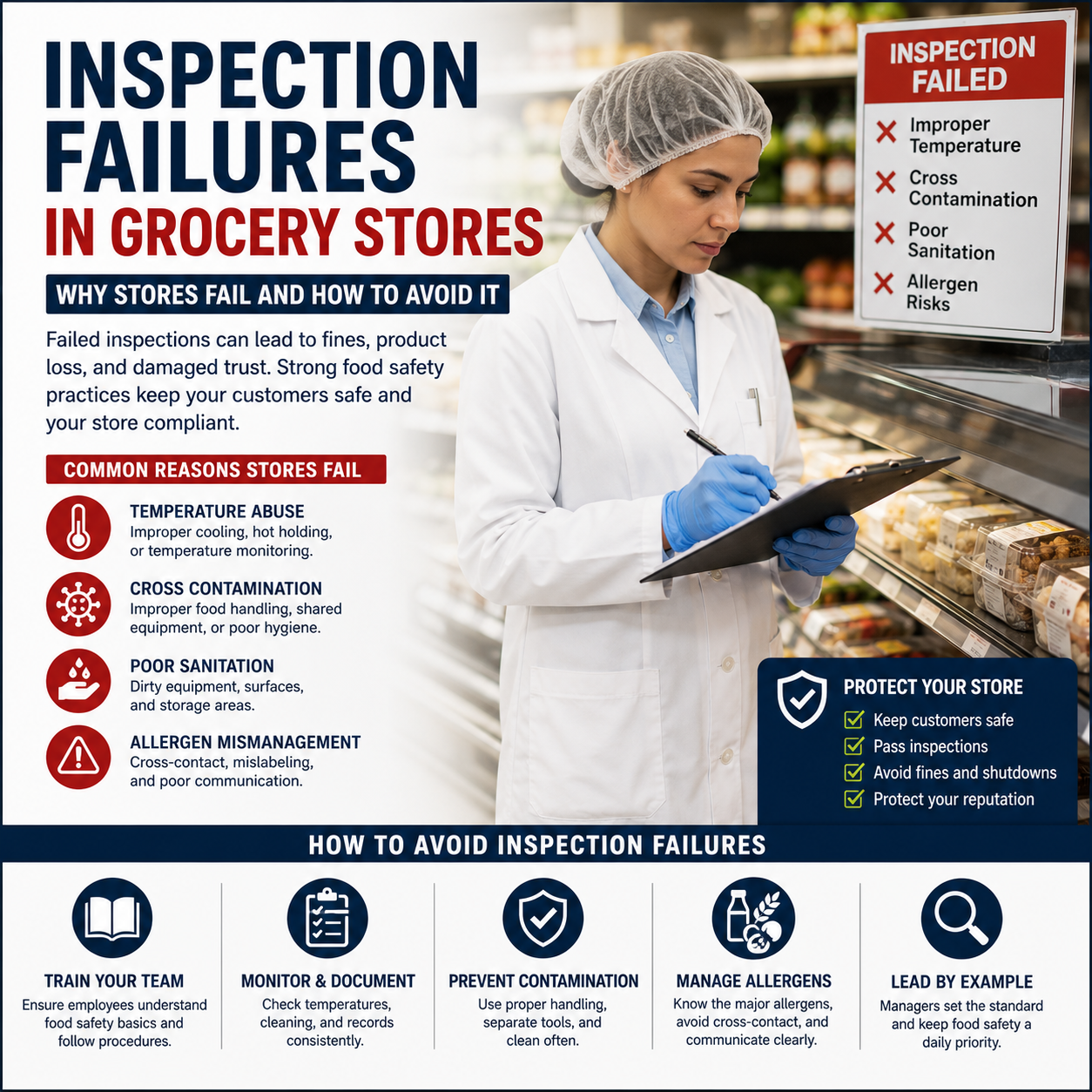
Food safety manager training is essential for grocery stores facing increasing pressure to maintain compliance, protect public health, and pass routine inspections. In the grocery industry, even small food safety mistakes can result in violations, customer complaints, financial losses, and reputational damage.
Health inspections are designed to identify risks that could lead to foodborne illness, allergen exposure, or unsafe food handling practices. Grocery stores that fail inspections often struggle with inconsistent procedures, inadequate employee training, or poor day-to-day oversight.
Understanding the most common causes of inspection failures can help grocery operators create safer environments and improve compliance across every department.
Why Grocery Stores Fail Food Safety Inspections
Many inspection failures are preventable. Most violations occur because critical food safety procedures are not consistently followed during busy operations.
Common grocery inspection issues include:
- Improper temperature control
- Cross contamination risks
- Poor employee hygiene practices
- Inadequate cleaning and sanitation
- Unsafe food storage
- Failure to monitor food handling procedures
- Lack of allergen awareness
- Incomplete documentation and records
Even a single violation involving food temperature abuse or allergen cross-contact can create serious health risks for customers.
Temperature Control Violations Remain a Major Problem
Temperature monitoring is one of the most common areas where grocery stores receive violations. Improper holding temperatures can allow harmful bacteria to grow rapidly in perishable foods.
High-risk foods commonly affected include:
- Deli meats
- Dairy products
- Prepared foods
- Seafood
- Poultry
- Salads and ready-to-eat items
Employees must understand safe temperature ranges and consistently monitor refrigeration, hot holding equipment, and food preparation areas.
Stores that fail to maintain proper temperature controls risk:
- Food spoilage
- Foodborne illness outbreaks
- Product waste
- Regulatory penalties
- Failed inspections
Cross Contamination Can Quickly Lead to Violations
Cross contamination remains a major concern during grocery inspections, especially in deli, bakery, meat, and prepared food departments.
Cross contamination may occur through:
- Shared utensils or cutting boards
- Improper glove use
- Unsafe storage practices
- Inadequate cleaning procedures
- Employee handling errors
Food safety training helps employees understand how contamination spreads and how to prevent it during food preparation, storage, and service.
Allergen Risks Are Increasingly Scrutinized
Food allergen management is becoming a growing focus during inspections and customer interactions. Customers rely on grocery staff to provide accurate allergen information and prevent accidental exposure.
The failure to manage allergens properly can result in severe medical emergencies and liability risks.
Common allergen mistakes include:
- Mislabeling products
- Cross-contact during preparation
- Improper cleaning of equipment
- Lack of ingredient awareness
- Poor communication between departments
Employees must understand how allergens transfer and how to safely handle products containing major allergens.
Employee Training Gaps Often Lead to Repeat Violations
Many grocery stores fail inspections because employees are not consistently trained on food safety procedures or updated compliance requirements.
Without regular training, staff may:
- Skip sanitation steps
- Handle food improperly
- Ignore temperature checks
- Fail to recognize contamination risks
- Mishandle allergen-related requests
Training programs help reinforce accountability while ensuring employees understand their role in maintaining food safety standards.
Managers Play a Critical Role in Inspection Readiness
Food safety compliance starts with leadership. Managers are responsible for maintaining operational consistency, monitoring procedures, and correcting issues before inspectors identify them.
Effective managers help create safer operations by:
- Conducting regular food safety checks
- Monitoring employee practices
- Reinforcing sanitation procedures
- Verifying temperature logs
- Addressing hazards immediately
- Supporting continuous employee training
Strong managerial oversight reduces violations and helps create a culture of food safety awareness throughout the store.
How TAP Series Helps Grocery Teams Improve Compliance
The TAP Series Food Safety Manager Training Course helps grocery managers and employees build the knowledge needed to support safer food handling and inspection readiness.
The course covers:
- Preventing foodborne illness
- Cross contamination awareness
- Temperature monitoring
- Safe food handling procedures
- Employee illness reporting
- HACCP planning
- FDA risk factors and compliance responsibilities
To strengthen allergen safety practices, the TAP Series Allergen Awareness Training Course helps employees understand how to recognize allergens, prevent cross-contact, and communicate allergen information effectively.
The allergen training includes:
- Identifying the nine major food allergens
- Preventing allergen cross-contact
- Safe food preparation practices
- Customer communication strategies
- Recognizing allergic reaction symptoms
Inspection Success Starts With Prevention
Grocery store inspection failures rarely happen because of one major issue alone. Most violations result from small mistakes that build over time due to inconsistent procedures, lack of oversight, or insufficient training.
By investing in food safety manager certification and allergen awareness education, grocery operators can strengthen compliance efforts, improve inspection outcomes, reduce operational risk, and create safer experiences for customers and employees alike.