Food Safety Compliance For Grocery Stores
Inspection Failures in Grocery Stores: Why Stores Fail Inspections and How to Avoid It
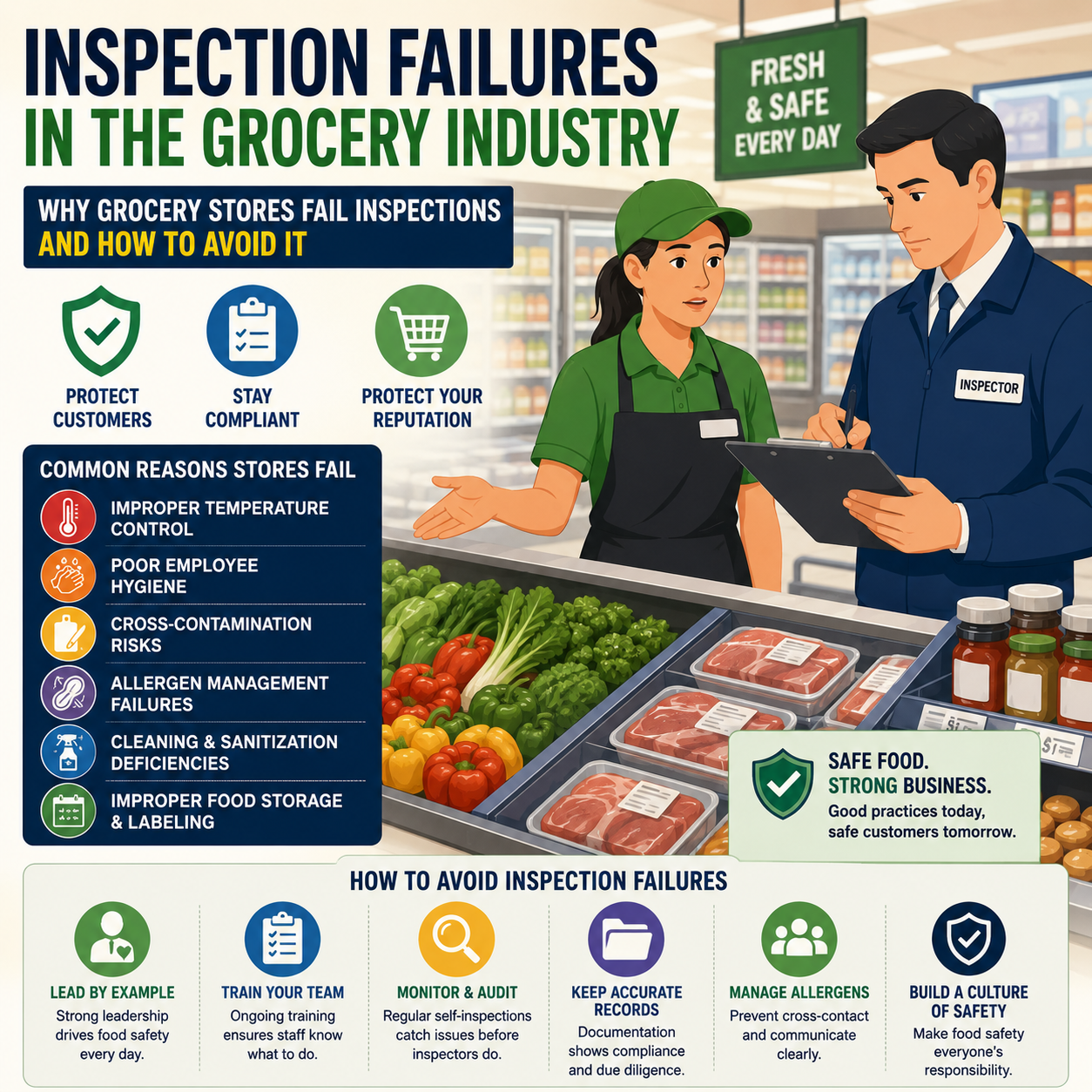
Few events create more concern for grocery store operators than a failed health or food safety inspection. Inspection failures can lead to corrective action requirements, fines, damaged reputations, lost customer confidence, and in severe cases, temporary closures. Yet many grocery stores continue to receive violations for issues that are both common and preventable.
The reality is that most inspection failures are not caused by a single major problem. Instead, they result from multiple breakdowns in food safety practices, employee training, supervision, and operational procedures. Understanding why grocery stores fail inspections is the first step toward building a stronger food safety culture and maintaining compliance.
Why Grocery Inspections Matter
Health inspectors evaluate whether grocery stores are operating in a way that protects public health. Their goal is to identify conditions that could contribute to foodborne illness, allergen exposure, contamination, or other food safety risks.
Inspections help ensure that grocery stores:
- Store food safely
- Prevent contamination
- Maintain sanitary conditions
- Follow food safety regulations
- Protect customers from foodborne illness
- Properly manage food allergens
Consistent compliance demonstrates that food safety practices are being followed every day, not just during inspections.
Common Reasons Grocery Stores Fail Inspections
While inspection requirements vary by jurisdiction, many violations appear repeatedly across grocery operations throughout the United States.
1. Improper Temperature Control
Temperature-related violations are among the most common findings during inspections.
Inspectors often discover:
- Refrigerated foods stored above safe temperatures
- Improper hot holding practices
- Inadequate cooling procedures
- Missing temperature logs
- Uncalibrated thermometers
When foods remain in unsafe temperature ranges, harmful bacteria can multiply rapidly and increase food safety risks.
2. Poor Employee Hygiene Practices
Employee hygiene remains a critical focus during inspections.
Common violations include:
- Failure to wash hands properly
- Inadequate glove use
- Employees handling food after touching contaminated surfaces
- Lack of handwashing supplies
- Poor personal hygiene practices
Even minor lapses in employee hygiene can contribute to significant contamination risks.
3. Cross-Contamination Issues
Cross-contamination is one of the leading causes of food safety violations.
Inspectors frequently identify:
- Raw foods stored near ready-to-eat products
- Shared utensils without proper cleaning
- Contaminated food-contact surfaces
- Improper storage practices
- Unsafe preparation procedures
Preventing cross-contamination requires continuous attention from both employees and managers.
4. Allergen Management Failures
Food allergens present serious risks for customers and are increasingly scrutinized during inspections.
Common allergen-related concerns include:
- Incorrect product labeling
- Inadequate allergen communication
- Cross-contact during food preparation
- Employee misunderstanding of allergen procedures
- Missing allergen controls
A single allergen-related mistake can have severe consequences for both customers and businesses.
5. Cleaning and Sanitization Deficiencies
Inspectors routinely evaluate whether cleaning procedures are being performed effectively.
Violations often include:
- Dirty food preparation equipment
- Unsanitary food-contact surfaces
- Improper sanitizer concentrations
- Incomplete cleaning schedules
- Food residue accumulation
Maintaining clean equipment and surfaces is essential for preventing contamination.
6. Improper Food Storage and Labeling
Food storage practices directly impact product safety and quality.
Inspectors may cite violations such as:
- Missing date labels
- Expired products
- Food stored on the floor
- Improper product rotation
- Uncovered food items
Proper storage procedures help reduce waste while supporting regulatory compliance.
The Hidden Cause Behind Many Inspection Failures
While individual violations may vary, many inspection failures can be traced back to a common issue: inadequate training.
Without proper education, employees may not fully understand:
- Food safety requirements
- Temperature monitoring procedures
- Contamination risks
- Allergen controls
- Documentation expectations
- Regulatory responsibilities
Even experienced employees can develop unsafe habits when training is inconsistent or outdated.
How Grocery Stores Can Avoid Inspection Failures
The most successful grocery operations take a proactive approach to food safety rather than reacting after violations occur.
Key strategies include:
1. Establish Strong Food Safety Leadership
Managers should actively monitor food safety practices and reinforce expectations throughout daily operations.
2. Conduct Internal Inspections
Routine self-audits can identify issues before inspectors do.
Regular reviews help verify:
- Temperature controls
- Cleaning practices
- Documentation accuracy
- Product storage conditions
3. Strengthen Employee Training
Employees should receive ongoing education that reflects current regulations and operational procedures.
Training should cover:
- Food handling practices
- Personal hygiene
- Cross-contamination prevention
- Allergen awareness
- Corrective action procedures
4. Improve Documentation Practices
Accurate records help demonstrate compliance and support operational consistency.
Examples include:
- Temperature logs
- Cleaning schedules
- Corrective action reports
- Training records
5. Build a Food Safety Culture
Food safety should be viewed as a daily responsibility shared by everyone in the organization.
When employees understand their role in protecting customers, compliance becomes part of routine operations rather than a response to inspections.
Training as a Critical Compliance Tool
Effective training can significantly reduce the likelihood of inspection failures by helping employees understand both food safety principles and regulatory expectations.
Retail Food Safety Manager Training | TAP Series® helps grocery managers develop the knowledge nee ded to oversee food safety programs, maintain compliance, monitor operational risks, and prepare for inspections.
Allergen Awareness Training | TAP Series® provides employees with practical guidan ce on allergen identification, prevention of cross-contact, customer communication, and allergen safety procedures that help protect customers and support compliance efforts.
Together, these training programs help grocery organizations strengthen food safety performance while reducing the risk of inspection violations.
Turning Inspection Readiness into Everyday Practice
Passing inspections is not about preparing for a single visit from a health department official. It is about creating systems, procedures, and behaviors that consistently support food safety every day.
Grocery stores that invest in employee education, manager accountability, allergen awareness, and proactive food safety management are far better positioned to avoid violations, protect customers, and maintain the trust that keeps shoppers returning.