Food Safety Training For Grocery Stores
Inspection Failures in Grocery Stores: Why Grocery Stores Fail Inspections and How to Avoid It
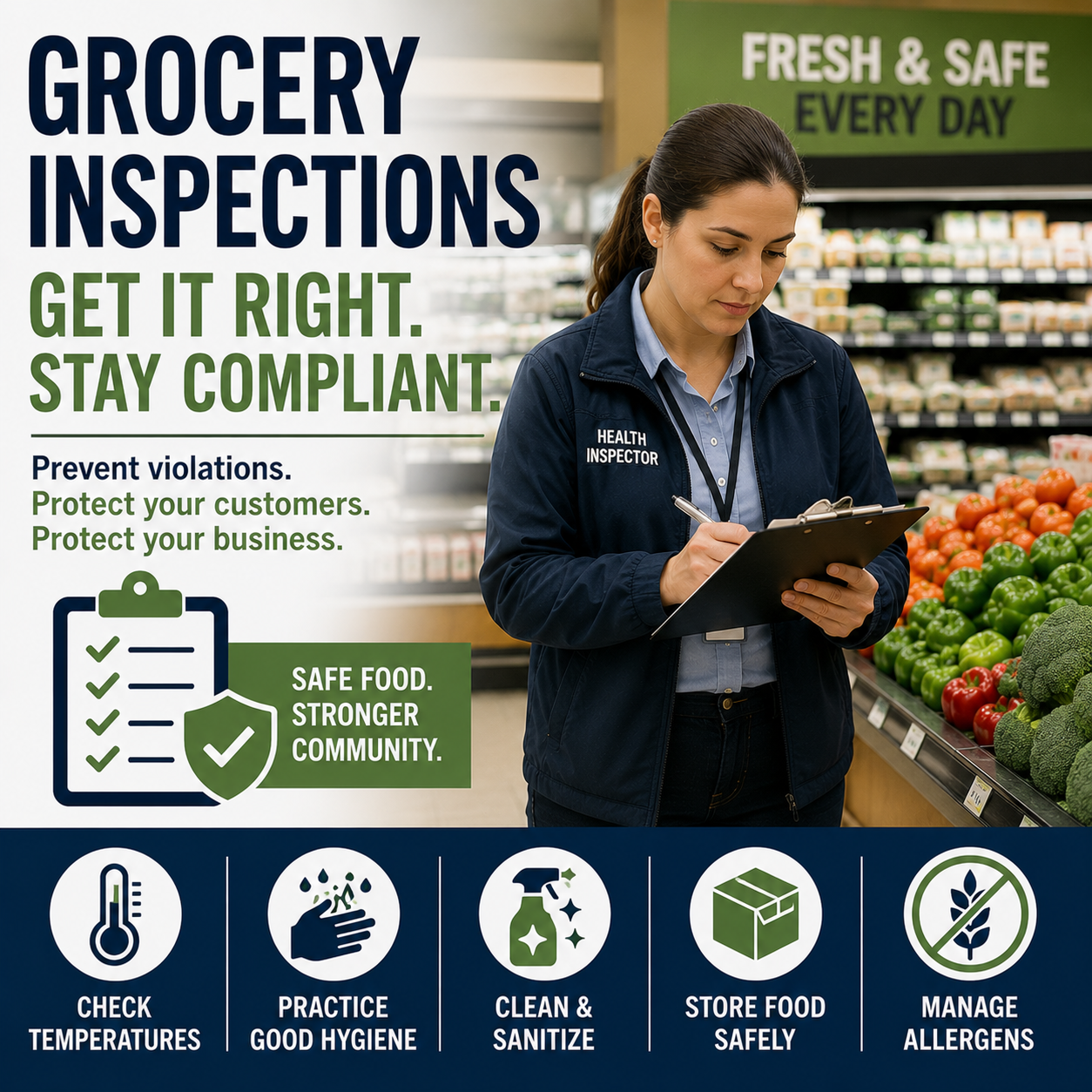
Health inspections are an important part of operating a grocery store. They help verify that food is stored, prepared, and sold in ways that protect customers from foodborne illness and other safety hazards. While many grocery stores successfully meet regulatory requirements, inspection failures still occur across the industry.
Most failed inspections are not caused by a single major mistake. Instead, they are often the result of small compliance issues that develop over time. By understanding why grocery stores receive violations and how those issues can be prevented, retailers can build stronger food safety programs and improve inspection outcomes.
Why Grocery Stores Fail Inspections
Grocery stores manage thousands of food products across multiple departments, including produce, deli, bakery, meat, seafood, and prepared foods. With so many daily responsibilities, small lapses in food safety can quickly become inspection findings.
Common causes of inspection failures include:
- Inconsistent food safety procedures
- Lack of employee training
- Poor management oversight
- Inadequate documentation
- Failure to correct recurring issues
- Weak allergen controls
Preventing these problems requires consistent attention throughout daily operations.
Common Violations Inspectors Identify
Inspectors typically focus on areas that directly affect food safety and public health.
1. Improper Temperature Control
Food must be stored and displayed within safe temperature ranges.
Common violations include:
- Refrigeration units operating above safe temperatures
- Improper hot holding practices
- Missing temperature logs
- Failure to monitor food temperatures consistently
Temperature control remains one of the leading causes of food safety violations.
2. Poor Employee Hygiene
Employees play a significant role in preventing contamination.
Inspectors often observe:
- Improper handwashing
- Incorrect glove use
- Poor personal hygiene
- Cross-contamination caused by employee practices
Strong hygiene procedures help reduce foodborne illness risks.
3. Cleaning and Sanitizing Deficiencies
Equipment and food-contact surfaces must be cleaned and sanitized regularly.
Violations may involve:
- Dirty preparation areas
- Food residue on equipment
- Improper sanitizer concentrations
- Inadequate cleaning schedules
Consistent sanitation supports both compliance and customer safety.
4. Improper Food Storage
Food storage practices are closely evaluated during inspections.
Inspectors may cite:
- Foods stored on the floor
- Improper product separation
- Missing date labels
- Unsafe storage arrangements
Proper storage helps preserve food quality and reduce contamination risks.
5. Allergen Management Issues
Food allergies continue to be a significant food safety concern.
Common allergen-related violations include:
- Missing allergen information
- Cross-contact during preparation
- Incorrect product labeling
- Inadequate employee knowledge
- Failure to follow allergen procedures
Even small allergen mistakes can have serious consequences for customers.
Why Small Problems Become Major Violations
Many inspection failures develop because minor issues are overlooked until they become recurring problems.
Examples include:
- Delayed equipment repairs
- Incomplete documentation
- Missed temperature checks
- Inconsistent employee practices
- Failure to correct previous inspection findings
Addressing concerns early helps prevent more significant compliance issues.
How Grocery Stores Can Improve Inspection Results
Successful inspections are usually the result of consistent daily practices rather than last-minute preparation.
Best practices include:
- Conduct regular internal food safety inspections.
- Monitor temperatures throughout the day.
- Maintain detailed food safety records.
- Reinforce employee hygiene expectations.
- Review allergen procedures regularly.
- Correct deficiencies immediately.
Building food safety into everyday operations reduces the likelihood of violations.
The Importance of Management Oversight
Managers play a vital role in maintaining compliance across every department.
Key responsibilities include:
- Supervising food safety procedures
- Reviewing inspection readiness
- Monitoring documentation
- Supporting employee training
- Addressing operational risks
- Promoting accountability
Strong leadership helps ensure food safety standards are applied consistently.
How Training Supports Inspection Success
Many grocery inspection failures can be prevented through education and ongoing employee development.
Retail Food Safety Manager Certification Training | TAP Series® prepares managers to oversee food safety programs, identify op erational risks, strengthen compliance efforts, and maintain effective food safety systems throughout retail operations.
Allergen Awareness Training | TAP Series® helps employees recognize food allergens , prevent cross-contact, communicate allergen information accurately, and support safer food handling practices for customers with food allergies.
Together, these training programs help grocery stores reduce inspection risks while strengthening customer protection and regulatory compliance.
Strong Food Safety Practices Lead to Better Inspection Outcomes
Inspection failures rarely occur because of one isolated mistake. They usually result from a series of small issues that go uncorrected over time. Grocery stores that prioritize employee training, active management, allergen awareness, and consistent food safety procedures are better prepared to meet inspection requirements and maintain customer confidence.
Investing in food safety education and continuous improvement helps create safer operations, stronger compliance, and more successful inspection results.