EEOC Enforcement
Jewel-Osco to Pay $1.95 Million in EEOC Settlement Over Disability Accommodation Failures
Background
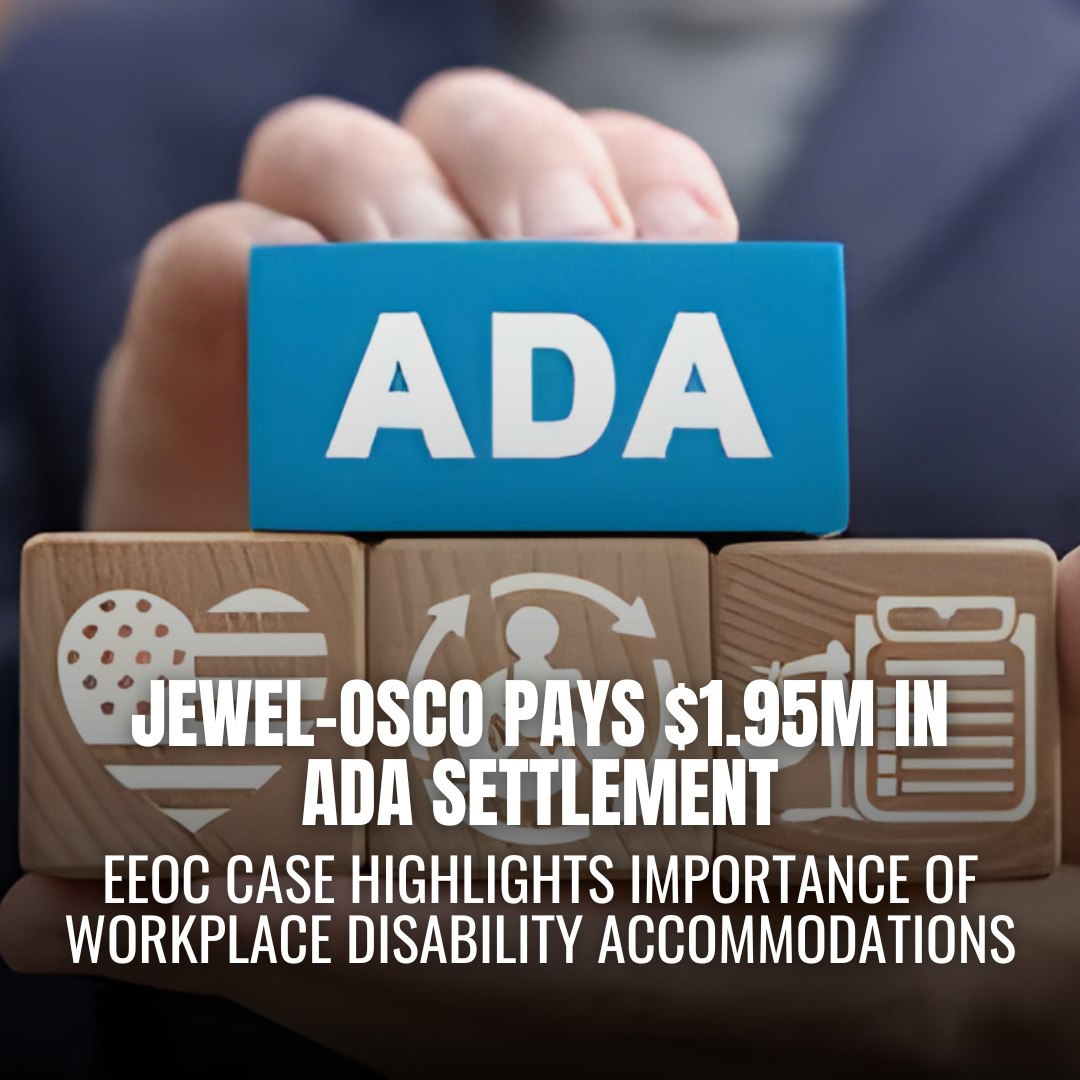
Jewel-Osco, a well-known grocery and drug store chain operating across Illinois, Iowa, and Indiana, reached a $1.95 million settlement following a U.S. Equal Employment Opportunity Commission (EEOC) investigation into allegations of disability discrimination. The case stemmed from claims that the company failed to provide reasonable accommodations to several employees with disabilities, in violation of federal law.
Incident Details
According to the EEOC’s findings, a group of Jewel-Osco employees alleged that they were denied workplace accommodations necessary to perform their essential duties. These employees, who had various disabilities, stated that the company either delayed or failed to engage in the interactive process required to determine appropriate adjustments under the Americans with Disabilities Act (ADA).
Instead of proceeding through litigation, Jewel-Osco entered into a voluntary agreement with the EEOC to resolve the allegations. The company agreed to provide financial compensation to the affected individuals and to take proactive steps to ensure compliance moving forward.
Legal Background
The Americans with Disabilities Act (ADA) prohibits employers from discriminating against qualified individuals with disabilities. It also requires employers to provide reasonable accommodations that enable employees to perform their jobs unless doing so would cause undue hardship.
The EEOC enforces the ADA and investigates claims where employees are denied accommodations or subjected to unequal treatment based on disability. Employers who fail to comply may face lawsuits, settlements, or mandatory policy reforms.
Settlement and Relief
Under the terms of the agreement, Jewel-Osco will pay $1.95 million to a group of affected employees. In addition to the monetary relief, the company has committed to:
- Conducting comprehensive ADA training for managers and HR staff.
- Revising internal policies to strengthen accommodation procedures.
- Partnering with the EEOC to promote disability inclusion in the workplace.
The agreement also reinforces Jewel-Osco’s existing efforts to employ individuals with disabilities and improve accessibility in all aspects of its operations.
Key Takeaways
- Employers must engage in an interactive process when employees request accommodations.
- Failure to provide reasonable accommodations can lead to costly settlements and legal exposure.
- Collaborative compliance efforts between employers and federal agencies can strengthen workplace inclusivity and avoid litigation.
Conclusion
The Jewel-Osco settlement underscores the continuing importance of the ADA and the responsibility of employers to maintain fair and inclusive workplaces. By resolving the matter cooperatively, the company reaffirmed its commitment to disability rights while setting a precedent for other large employers to proactively review and enhance their accommodation policies.
This case serves as a reminder that compliance is not only a legal requirement but also a reflection of a company’s values toward equity and inclusion.