Food Safety Compliance For Grocery Managers
Manager Liability in Grocery Stores: Why Managers Are Personally Accountable for Food Safety
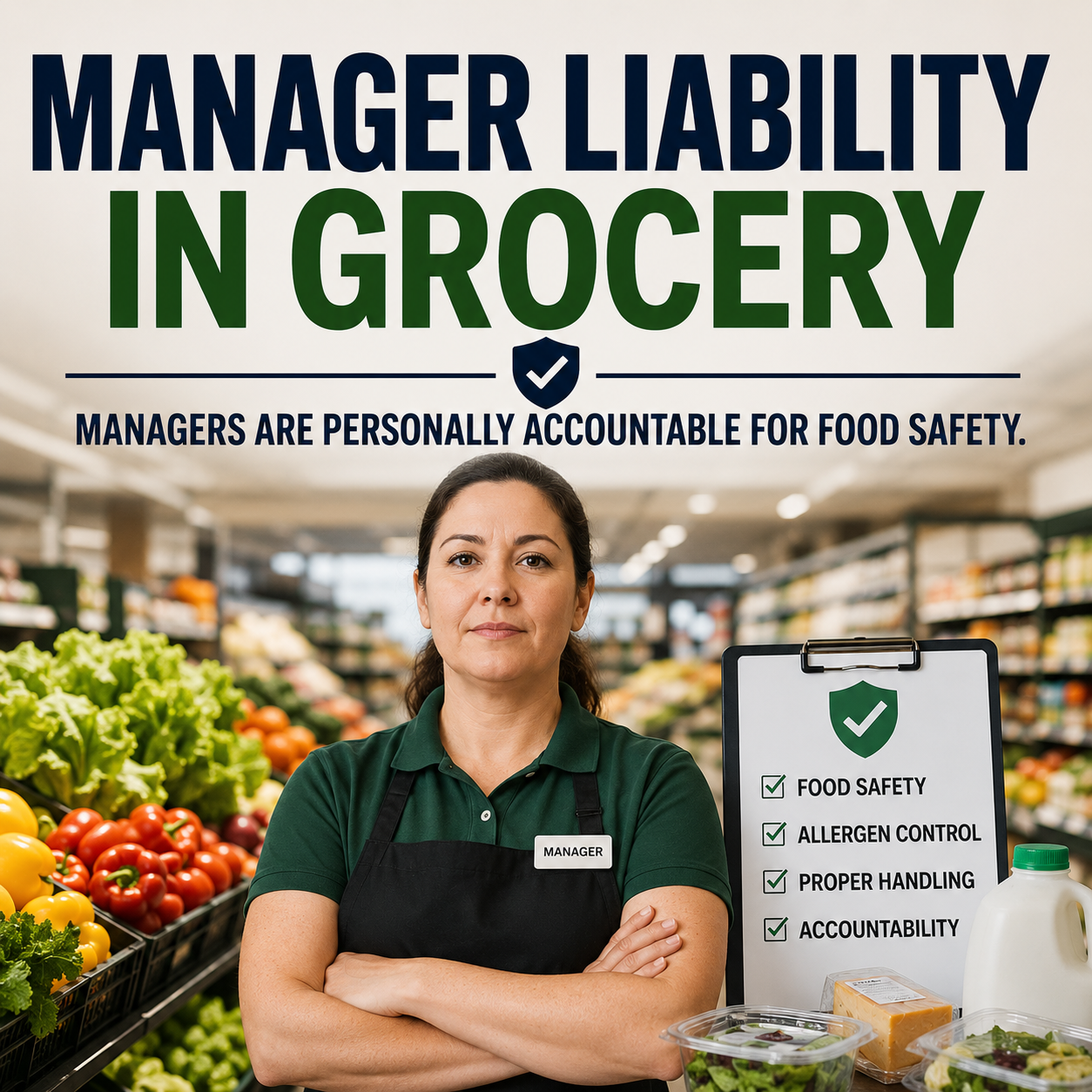
Food safety in grocery operations is not only the responsibility of frontline employees. Managers play a critical role in maintaining compliance, enforcing procedures, supervising food handling practices, and responding to food safety risks throughout the store. When food safety failures occur, managers may face direct accountability for operational breakdowns that lead to contamination, allergen incidents, failed inspections, or customer harm.
Across the United States, grocery retailers continue to face increasing pressure from health departments, regulators, customers, and legal authorities to maintain strong food safety programs. For managers, food safety is no longer simply an operational task. It is a leadership responsibility tied directly to compliance, liability prevention, and customer protection.
TAP Series’ Food Safety Manager and Allergen Plan Development courses help grocery leaders strengthen compliance programs, improve operational oversight, and support safer foodservice environments.
Food Safety Manager Course:
Retail Food Safety Manager Certification Training | Tap Series®
Allergen Plan Development Course:
Allergen Plan Development | Tap Series®
Why Managers Carry Food Safety Responsibility
Managers oversee the daily operations that directly affect food safety outcomes. They are responsible for ensuring employees follow proper procedures, maintain sanitation standards, monitor food handling practices, and respond appropriately to safety concerns.
Key management responsibilities often include:
- Supervising food preparation and storage
- Monitoring sanitation procedures
- Enforcing temperature controls
- Managing allergen safety practices
- Training and coaching employees
- Responding to customer complaints
- Preparing for inspections
- Maintaining food safety documentation
When managers fail to address known risks or enforce procedures consistently, small operational issues can quickly become major compliance violations.
How Grocery Managers Become Liable for Food Safety Failures
Many food safety incidents begin with preventable management oversights rather than intentional misconduct.
Common examples include:
- Failure to Enforce Food Handling Procedures
Employees may skip sanitation, glove use, or temperature monitoring practices when supervision is inconsistent.
- Poor Allergen Controls
Managers who fail to establish allergen procedures increase the risk of cross-contact and customer allergic reactions.
- Inadequate Employee Training
Staff members who are not properly trained may unknowingly create contamination or compliance risks.
- Improper Documentation
Missing temperature logs, cleaning records, or incident reports may create serious compliance concerns during inspections.
- Ignoring Known Safety Issues
Managers who delay corrective action after identifying risks may face greater accountability if incidents occur.
These operational failures may lead to health department citations, lawsuits, customer complaints, product loss, or reputational damage.
The Importance of Food Safety Management Training
Effective food safety leadership requires more than operational experience alone. Managers need structured training that helps them understand regulatory expectations, risk prevention, and compliance oversight.
The TAP Series Food Safety Manager course helps grocery leaders strengthen food safety knowledge and operational accountability.
Retail Food Safety Manager Certification Training | Tap Series®
Important areas of focus include:
- Foodborne Illness Prevention
Managers learn how contamination risks develop and how to reduce them effectively.
- Safe Food Handling Procedures
Teams improve understanding of food preparation, storage, and sanitation practices.
- Temperature Control Awareness
Managers learn proper monitoring techniques to reduce bacterial growth risks.
- Cleaning and Sanitation Oversight
Employees strengthen awareness of operational hygiene standards and compliance requirements.
- Regulatory and Inspection Readiness
Managers improve preparedness for inspections and compliance reviews.
Why Allergen Plan Development Matters in Grocery Operations
Food allergies continue to create major liability concerns for grocery retailers, especially in deli, bakery, prepared foods, and foodservice departments.
The TAP Series Allergen Plan Development course helps grocery operations build stronger allergen safety procedures that support compliance and customer protection.
Allergen Plan Development | Tap Series® 
Key learning topics include:
- Developing Structured Allergen Procedures
Managers learn how to create operational plans that reduce allergen-related risks.
- Cross-Contact Prevention
Teams improve awareness of food handling practices that help minimize allergen transfer.
- Employee Communication Standards
Staff strengthen communication regarding allergen concerns and ingredient information.
- Operational Risk Reduction
Managers learn how proactive allergen planning supports safer foodservice environments.
- Customer Safety Awareness
Teams reinforce the importance of protecting customers with food allergies.
Building Stronger Food Safety Accountability
Food safety culture starts with leadership. Grocery operations that prioritize management accountability are often better prepared to maintain compliance and reduce operational risk.
Best practices for grocery managers include:
- Conducting regular food safety inspections
- Reinforcing employee training consistently
- Monitoring sanitation and temperature controls daily
- Reviewing allergen handling procedures regularly
- Documenting corrective actions properly
- Encouraging employees to report safety concerns immediately
Managers who actively support food safety procedures help create safer environments for both employees and customers.
Protect Grocery Operations Through Stronger Management Training
Food safety violations can create serious operational and legal consequences for grocery businesses. Managers who fail to enforce procedures or address risks may face increased accountability when incidents occur.
The Food Safety Manager and Allergen Plan Development courses from TAP Series help grocery leaders strengthen compliance awareness, improve food safety oversight, and support safer retail foodservice operations through practical management training.