Grocery Food Safety Training
Manager Liability in Grocery Stores: Why Managers Are Personally Accountable for Food Safety
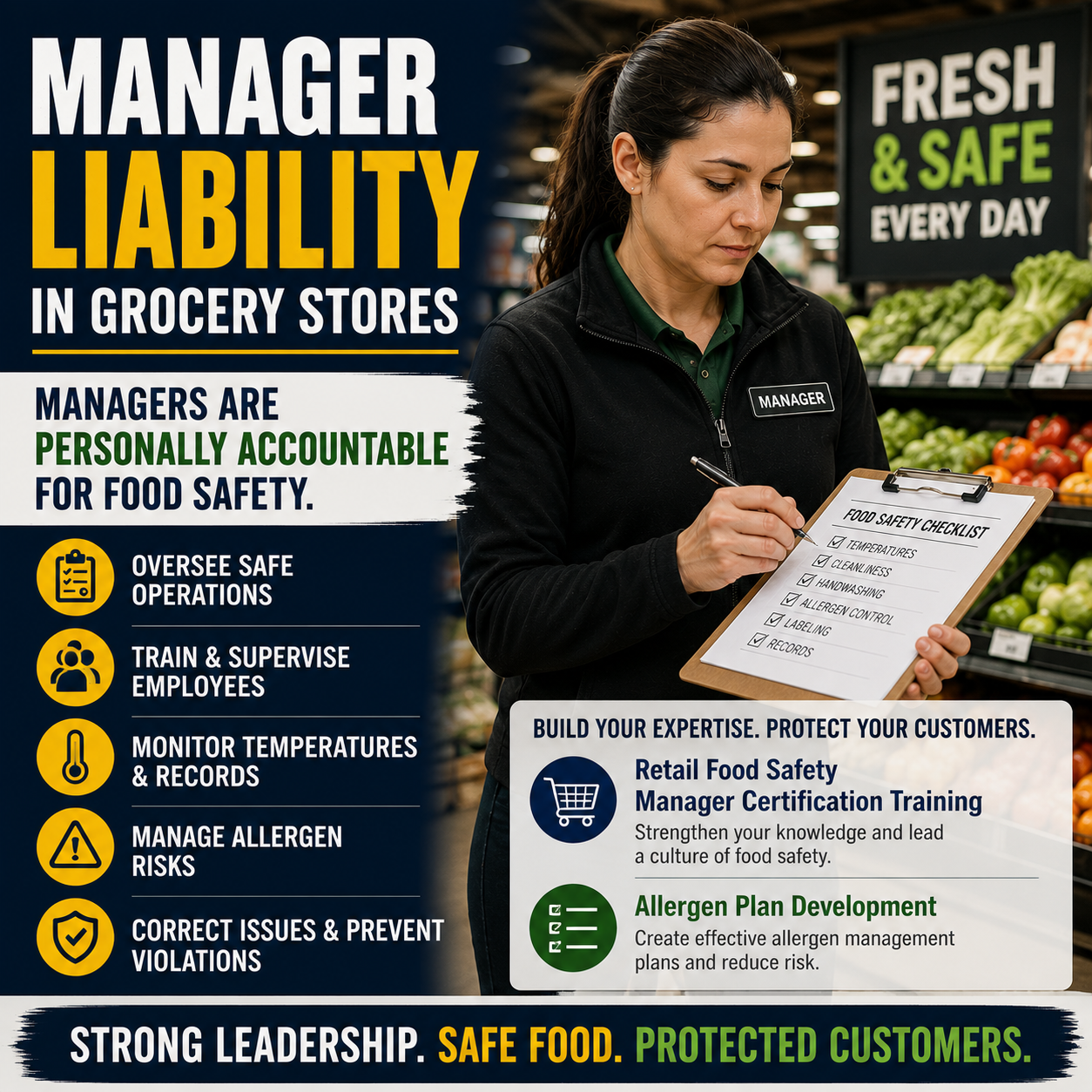
Food safety is often viewed as a shared responsibility across a grocery store operation. Employees handle food, department supervisors oversee daily tasks, and corporate teams develop policies and procedures. However, when food safety failures occur, managers are frequently the individuals held accountable for ensuring those systems were properly implemented and enforced.
For grocery stores across the United States, food safety management is more than an operational responsibility. It is a leadership obligation with significant legal, regulatory, and professional implications. Understanding manager liability can help grocery leaders strengthen compliance programs, reduce risk, and better protect customers.
Why Managers Play a Critical Role in Food Safety
Managers serve as the link between food safety policies and daily operations. While employees perform many food handling activities, managers are responsible for ensuring procedures are followed consistently.
Food safety leadership often includes:
- Monitoring employee compliance
- Conducting inspections
- Reviewing food safety records
- Addressing violations
- Managing corrective actions
- Overseeing allergen controls
- Providing employee training
When food safety systems break down, investigators and regulators often evaluate whether management fulfilled these responsibilities.
Understanding Manager Accountability
Food safety regulations increasingly emphasize active managerial control. This concept focuses on identifying risks before problems occur and implementing systems to prevent violations.
Managers may be expected to demonstrate that they:
- Identified food safety hazards
- Implemented preventive controls
- Trained employees appropriately
- Monitored compliance regularly
- Corrected unsafe conditions promptly
- Maintained required documentation
Failure to meet these expectations can expose organizations and managers to increased scrutiny.
Common Food Safety Failures Linked to Management Oversight
Many inspection violations can be traced back to gaps in supervision rather than isolated employee mistakes.
1. Inadequate Temperature Monitoring
Managers are often responsible for ensuring food temperatures are monitored and documented correctly.
Common issues include:
- Missing temperature logs
- Improper refrigeration temperatures
- Failure to investigate temperature deviations
- Inconsistent monitoring practices
Without management oversight, temperature-related risks can quickly escalate.
2. Insufficient Employee Training
Employees cannot follow procedures they do not fully understand.
Training gaps may result in:
- Improper food handling
- Cross-contamination
- Poor hygiene practices
- Incorrect allergen procedures
- Documentation errors
Managers play a key role in ensuring education remains current and effective.
3. Poor Allergen Management
Food allergies continue to be a growing concern for grocery retailers.
Management failures may involve:
- Missing allergen procedures
- Inadequate product labeling
- Failure to prevent cross-contact
- Lack of employee awareness
- Inconsistent customer communication
Even a single allergen-related mistake can have serious consequences for customers and the organization.
4. Failure to Correct Known Issues
One of the most significant risks occurs when managers are aware of a problem but fail to take action.
Examples include:
- Repeated inspection findings
- Ongoing sanitation concerns
- Equipment malfunctions
- Unsafe employee practices
- Incomplete corrective actions
Regulators often view repeated violations as evidence of inadequate management control.
The Consequences of Poor Food Safety Oversight
Food safety failures can impact both businesses and individual managers.
Potential consequences include:
- Regulatory penalties
- Inspection violations
- Corrective action orders
- Increased legal exposure
- Loss of customer trust
- Reputational damage
- Career implications
Strong management oversight helps reduce these risks while supporting compliance efforts.
Why Allergen Planning Requires Management Leadership
Food allergen management is one area where leadership involvement is especially important.
Effective allergen programs require:
- Written procedures
- Product reviews
- Labeling controls
- Employee training
- Incident response planning
- Ongoing monitoring
Managers are often responsible for ensuring allergen controls are integrated into daily operations rather than treated as standalone requirements.
Building a Culture of Accountability
The most successful grocery operations establish food safety as a leadership priority.
Managers can strengthen compliance by:
- Conducting routine operational reviews.
- Monitoring food safety metrics.
- Addressing violations immediately.
- Reinforcing employee accountability.
- Reviewing allergen procedures regularly.
- Maintaining accurate documentation.
When managers actively lead food safety efforts, employees are more likely to follow established procedures consistently.
The Role of Training in Reducing Liability
Education helps managers understand both regulatory requirements and leadership responsibilities.
Retail Food Safety Manager Certification Training | TAP Series® provides grocery managers with the knowledge needed to oversee food safety programs, identify risks, maintain compliance, and implement effective food safety controls throughout retail operations.
Allergen Plan Development | TAP Series® helps organizations establish structur ed allergen management programs, develop preventive procedures, improve compliance efforts, and reduce risks associated with food allergen exposure.
Together, these programs help grocery leaders strengthen operational controls while supporting customer safety and regulatory compliance.
Leadership Drives Food Safety Success
Food safety does not happen by accident. It requires active leadership, ongoing oversight, and a commitment to continuous improvement. While employees play an important role, managers are ultimately responsible for ensuring that food safety systems function effectively every day.
By investing in training, strengthening allergen management, and maintaining active managerial control, grocery leaders can reduce liability risks, improve compliance performance, and build a safer environment for customers and employees alike.