Grocery Food Safety Certification Training
Manager Liability in Grocery: Why Food Safety Accountability Starts at the Top
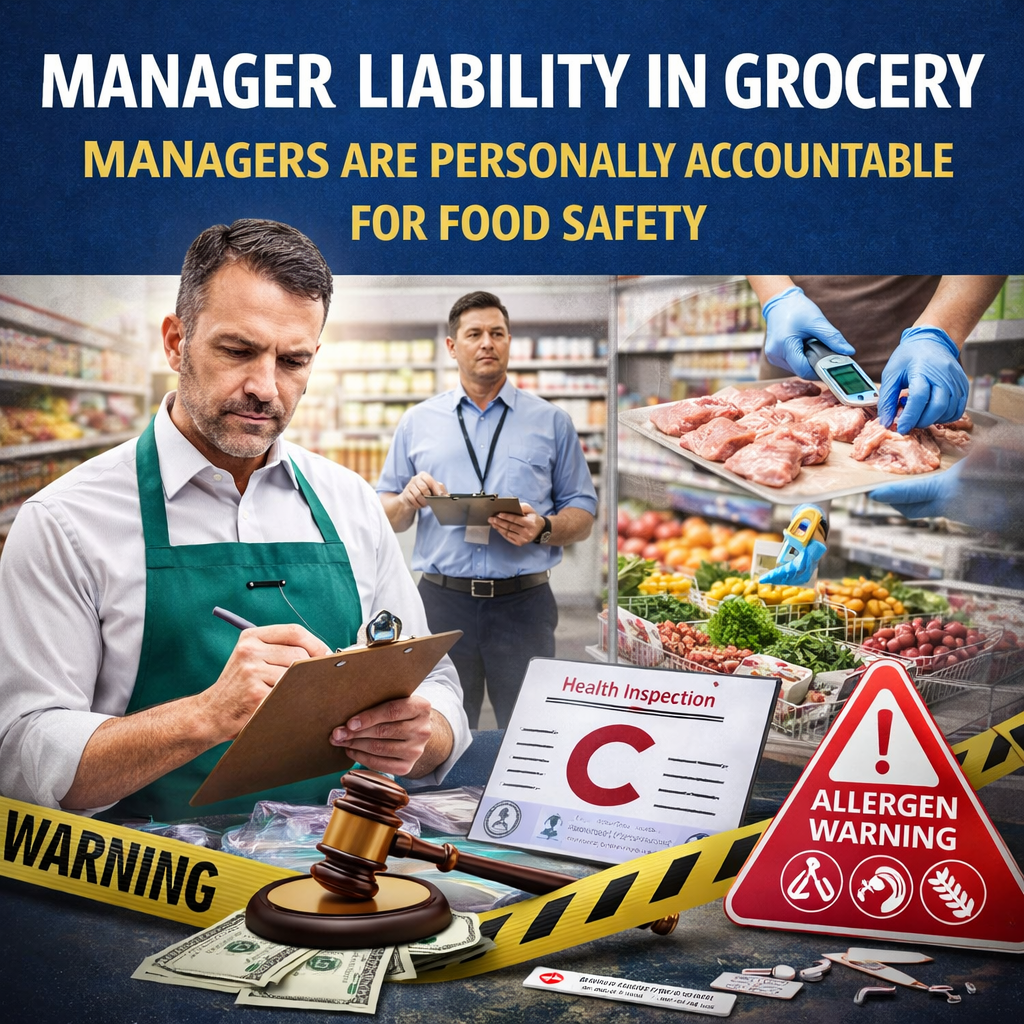
Manager liability in grocery operations is a growing concern across the United States, and one truth is becoming clear. Managers are personally accountable for food safety. When food safety failures occur, responsibility does not stop at the store level. It often traces directly back to leadership decisions, oversight, and training.
Why Managers Are Personally Accountable for Food Safety
Food safety is not just a frontline responsibility. It is a management obligation tied to compliance, operations, and public health.
Managers are expected to:
- Enforce food safety policies consistently
- Train and monitor employees
- Identify and correct risks proactively
- Ensure compliance with local and federal regulations
- Protect customers from foodborne illness and allergen exposure
Failure in any of these areas can result in serious consequences, including fines, legal action, and reputational damage.
Where Grocery Managers Face the Highest Risk
Even well-run stores can experience breakdowns without strong managerial control.
1. Improper Temperature Control
- Failure to monitor cold and hot holding temperatures
- Inadequate cooling and reheating procedures
2. Cross Contamination
- Poor separation of raw and ready-to-eat foods
- Improper use of equipment and utensils
3. Employee Health and Hygiene
- Not handling illness reports properly
- Lack of handwashing enforcement
4. Allergen Mismanagement
- Incorrect labeling or communication
- Lack of clear allergen procedures
5. Inadequate Food Safety Systems
- Missing or incomplete HACCP plans
- No active managerial control in place
These risks are not just operational gaps. They are management failures that can directly impact customer safety.
The Cost of Poor Food Safety Leadership
When managers do not take ownership, the consequences can escalate quickly:
- Foodborne illness outbreaks
- Allergen-related emergencies
- Failed health inspections
- Legal liability and lawsuits
- Loss of customer trust
Accountability means prevention, not reaction.
How Managers Can Take Control of Food Safety
Strong leadership is the foundation of safe grocery operations.
1. Implement Active Managerial Control
- Monitor critical control points daily
- Document processes and corrective actions
2. Establish Clear Food Safety Procedures
- Standardize food handling, storage, and preparation
- Ensure consistency across all shifts
3. Train Employees Continuously
- Reinforce safe food handling practices
- Address gaps immediately
4. Strengthen Allergen Management
- Create clear communication protocols
- Define responsibilities for allergen handling
5. Build and Maintain HACCP Systems
- Identify hazards and control measures
- Regularly review and update plans
Training That Reduces Manager Liability
Managers need more than basic knowledge. They need structured training that aligns with real-world grocery operations.
The Food Safety Manager Training from TAP Series equips leaders with the skills to manage food safety risks effectively.
Learn more here:
Retail Food Safety Manager Certification Training | Tap Series®
This course covers:
- Preventing foodborne illness
- Understanding the Big 6 foodborne illnesses
- Managing employee illness reports
- Controlling cross contamination risks
- Monitoring food temperatures and flow
- Setting up HACCP plans and active managerial control
Strengthening Allergen Safety Through Planning
Allergen risks require dedicated attention from management. A clear, well-structured plan can prevent life-threatening incidents.
The Allergen Plan Development course helps managers build effective allergen control systems.
Learn more here:
Allergen Plan Development | Tap Series®
This course helps managers:
- Develop clear allergen response guidelines
- Understand allergen risks across operations
- Define appropriate levels of accommodation
- Create a practical and actionable allergen plan
Who Should Take These Courses
- Grocery store managers
- Assistant managers and supervisors
- Food safety compliance officers
- Operations and district managers
Anyone responsible for food safety decisions should be properly trained.
Lead with Accountability and Protect Your Business
Manager liability in grocery operations is not just about compliance. It is about leadership, responsibility, and protecting lives.
Managers who invest in training and proactive planning:
- Reduce risk exposure
- Improve inspection outcomes
- Strengthen team performance
- Build customer trust
Take control of food safety today and lead with confidence through proper grocery compliance training.