Food Safety Oversight Responsibility
Manager Liability in the Grocery Industry: Managers Are Personally Accountable for Food Safety
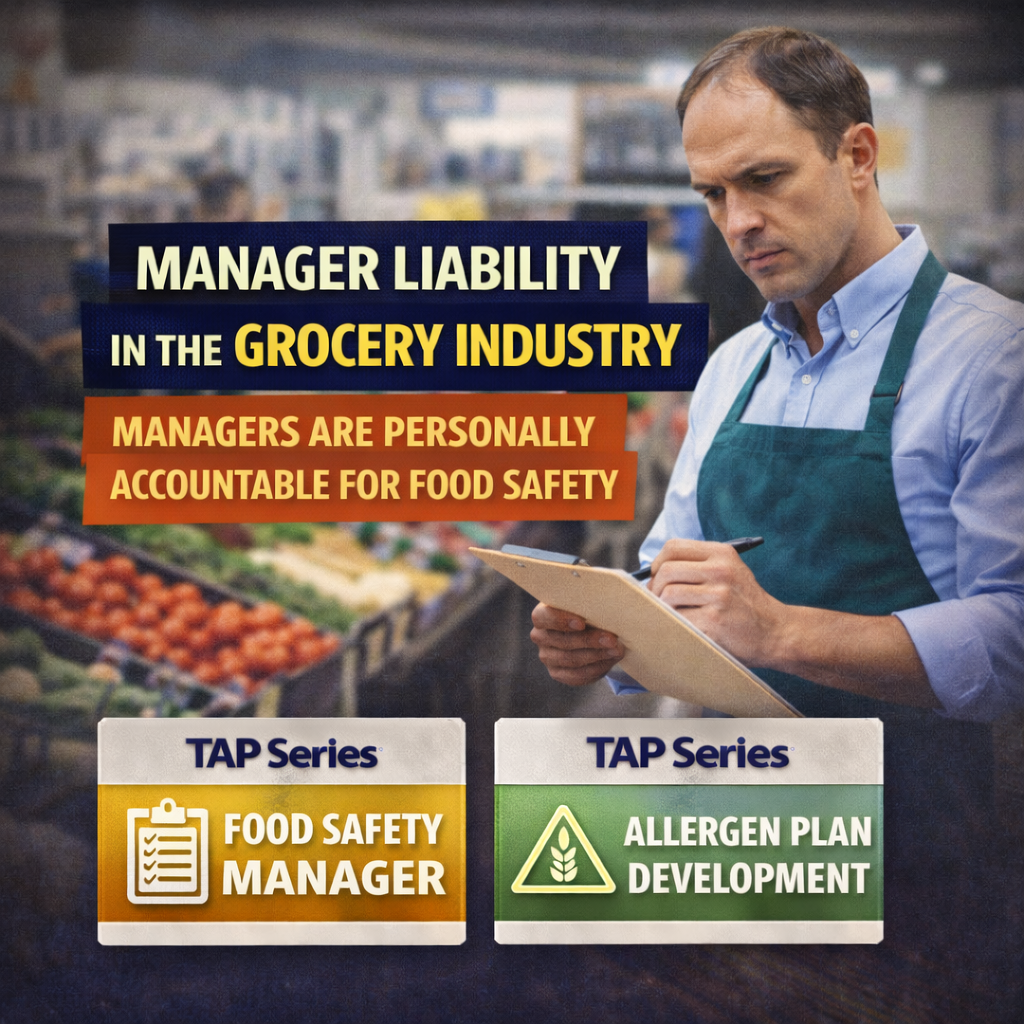
In grocery operations across the United States, food safety responsibility does not stop at policies or procedures. Managers are personally accountable for food safety outcomes in their stores. When violations occur, regulators often look beyond the brand and focus on the decisions made by management.
From temperature control failures to allergen incidents, grocery managers play a direct role in preventing foodborne illness, protecting customers, and maintaining compliance.
Why Managers Carry Personal Food Safety Liability
Grocery managers oversee daily operations that directly impact food safety. Health departments and regulatory agencies expect managers to actively control risks, not simply delegate them.
Managers are commonly held accountable for:
- Inadequate food safety oversight
- Failure to correct known violations
- Poor employee training and supervision
- Lack of documentation and monitoring
- Allergen control breakdowns
When inspections reveal repeated or serious violations, managers may face citations, retraining mandates, or legal exposure.
How Food Safety Failures Point Back to Management
Food safety issues rarely happen without warning. Many violations develop over time due to gaps in management control.
Common management related failures include:
- Inconsistent temperature monitoring
- Allowing unsafe food handling shortcuts
- Ignoring employee illness reports
- Poor enforcement of hygiene standards
- Lack of corrective action when risks are identified
Inspectors often ask one critical question: Who was responsible for preventing this?
The Growing Risk of Allergen Liability for Managers
Allergen safety is an increasing focus in grocery inspections and legal cases. Managers are expected to ensure that allergen controls are clearly defined, communicated, and enforced.
Allergen related risks include:
- No documented allergen procedures
- Inconsistent labeling of prepared foods
- Shared equipment without proper cleaning
- Employees unable to answer allergen questions
- No clear plan for allergen accommodations
When allergen incidents occur, the absence of a formal allergen plan often points directly to management responsibility.
Why Active Managerial Control Is Essential
Active managerial control means anticipating risks before they cause harm. This approach is emphasized in modern food safety regulations and inspection standards.
Effective managerial control includes:
- Identifying food safety hazards proactively
- Implementing preventive controls
- Monitoring employee compliance
- Taking corrective action immediately
- Documenting food safety practices
Managers who demonstrate active control are better protected during inspections and investigations.
TAP Series Training Solutions for Grocery Managers
TAP Series provides targeted training designed to help grocery managers meet their responsibilities with confidence and consistency.
Food Safety Manager Training
The Food Safety Manager course equips managers with the knowledge and tools needed to lead food safety programs effectively.
Skills you will achieve include:
- Food safety awareness and leadership
- Cross contamination prevention
- Temperature control and monitoring
- Safe food storage practices
- Understanding health regulations
- Active managerial control
- HACCP principles
- Personal hygiene enforcement
What you will learn:
- Preventing foodborne illness
- FDA PDA five most common risk factors
- Managerial roles and challenges
- Identifying causes of foodborne illness
- The Big 6 foodborne illnesses
- Handling employee illness reports
- Flow of food controls
- Setting up HACCP plans
👉 Learn more here:
Food Safety Manager Certification Training | Tap Series®
Allergen Plan Development Training
The Allergen Plan Development course guides managers through building a clear and defensible allergen safety strategy.
This course helps management:
- Understand food allergen risks fully
- Make informed decisions about allergen accommodations
- Create a documented allergen plan aligned with operations
- Develop a foundation for consistent allergen safety processes
- Save and implement a structured allergen plan
Course benefits include:
- User friendly guidance through allergen decision making
- A saved allergen plan ready for implementation
- Certification valid for three years
- Watermarked certificates for authenticity
- Certificate verification for regulators and employers
👉 Learn more here:
Allergen Plan Development | Tap Series®
Protecting Managers Through Knowledge and Planning
In grocery operations, managers are not just supervisors. They are the frontline defense against food safety failures and allergen incidents. Without proper training and documented plans, managers are left exposed to personal and professional risk.
For US grocery companies, investing in Food Safety Manager and Allergen Plan Development training through TAP Series helps protect managers, strengthen compliance, and build safer operations from the top down.