US Grocery Food Safety Certification
Manager Liability in the Grocery Industry: Why Food Safety Accountability Starts at the Top
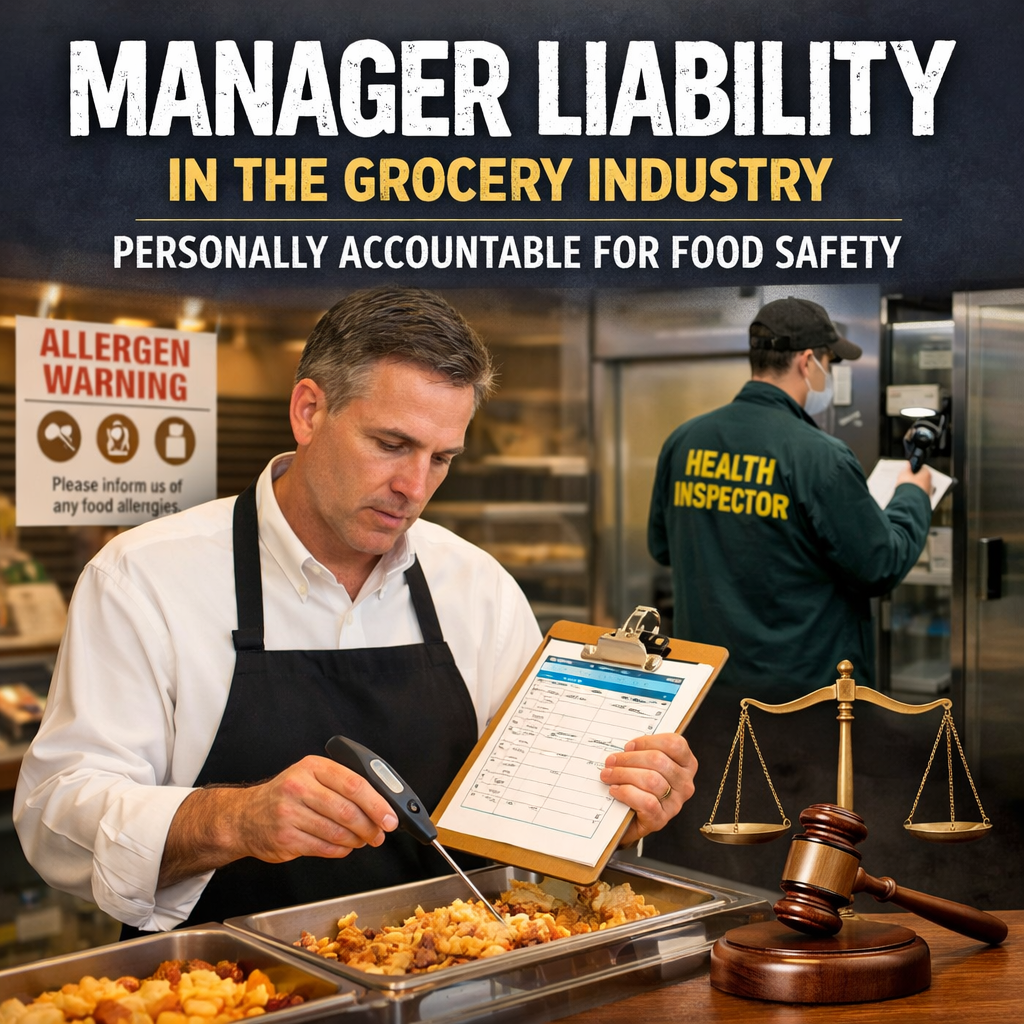
Manager liability in the grocery industry is no longer theoretical. Across the United States, grocery managers are being held personally accountable for food safety failures that lead to foodborne illness, allergen exposure, or regulatory violations.
For US grocery companies, the message is clear. Food safety is not just a policy. It is a leadership responsibility. When something goes wrong, investigators do not just look at the brand. They look at the manager in charge.
The Legal Reality: Managers Are Personally Accountable
Under federal and state food safety regulations, managers can face:
- Civil penalties
- Fines and regulatory sanctions
- Suspension or revocation of permits
- Personal liability in lawsuits
- Criminal charges in severe negligence cases
Agencies such as the Food and Drug Administration and the United States Department of Agriculture enforce strict standards that require active managerial control. If a store fails an inspection, investigators ask:
- Who was responsible for food safety oversight?
- Was there documented monitoring?
- Were corrective actions taken?
- Did management train staff appropriately?
If the answer is no, the responsibility often lands directly on the manager.
Where Grocery Managers Are Most Exposed
Grocery environments present complex risks. Managers oversee multiple departments, high employee turnover, and varied food handling processes.
The most common liability triggers include:
- Improper temperature control in deli, seafood, and prepared foods
- Cross contamination between raw and ready to eat items
- Failure to document corrective actions
- Inadequate cleaning and sanitation procedures
- Allergen mislabeling or failure to communicate allergen risks
One allergen mistake in a bakery or deli department can result in hospitalization or worse. In those cases, investigators do not accept ignorance as a defense. They expect documented systems.
The Allergen Risk Is Rising
Food allergies affect millions of Americans. Customers are increasingly asking managers direct questions about ingredients, cross contact, and safe accommodations.
If a manager cannot provide clear, consistent answers, the store faces serious exposure.
An effective allergen management system requires:
- Clear documentation
- Staff training on cross contact prevention
- Standardized communication procedures
- Defined accommodation levels
- Written allergen plans
Without a structured plan, managers are making high risk decisions in real time.
Why “I Didn’t Know” Is Not a Defense
Regulators expect grocery managers to implement preventive systems, not react after an incident. That includes:
- HACCP based controls
- Active managerial oversight
- Employee illness reporting procedures
- Routine monitoring and documentation
If a temperature log is incomplete or corrective action is missing, it suggests a breakdown in leadership.
Food safety failures are often management system failures.
Proactive Protection Through Training
US grocery companies can reduce exposure by investing in structured, defensible training programs that reinforce leadership accountability.
1. Food Safety Manager
The Food Safety Manager course provides comprehensive training aligned with regulatory expectations.
Food Safety Manager | Tap Series®
Skills Developed:
- Food Safety Awareness
- Cross Contamination Prevention
- Temperature Control
- Safe Food Storage
- Health Regulations
- Active Management Control
- HACCP Implementation
- Personal Hygiene Standards
Managers Learn How To:
- Prevent foodborne illness
- Identify the Big 6 foodborne illnesses
- Control the five most common risk factors
- Monitor temperature and flow of food
- Handle employee illness reports
- Set up HACCP plans
- Document corrective actions
This training helps managers demonstrate due diligence and active oversight.
2. Allergen Plan Development
The Allergen Plan Development course equips grocery managers to build a structured allergen accommodation framework.
Allergen Plan Development | Tap Series®
Skills Developed:
- Allergen Awareness
- Risk Assessment
- Cross Contamination Prevention
- Regulatory Compliance
- Menu and Label Adaptation
- Customer Interaction
Managers Learn How To:
- Answer common allergen questions confidently
- Evaluate accommodation options safely
- Create a foundational allergen plan
- Implement consistent allergen procedures
A written allergen plan reduces guesswork and strengthens legal defensibility.
A Leadership Standard, Not Just a Requirement
Grocery managers are not just department supervisors. They are compliance leaders.
When leadership is proactive:
- Inspections improve
- Incident rates decline
- Staff accountability increases
- Documentation becomes consistent
- Customer trust strengthens
When leadership is reactive, liability rises.
Building a Culture of Accountability
Food safety culture starts with visible managerial commitment. That means:
- Daily monitoring and verification
- Clear corrective action protocols
- Ongoing employee training
- Documented allergen controls
- Regular review of HACCP procedures
Managers who treat food safety as a leadership priority protect not only their customers but also their own careers.
The Bottom Line for US Grocery Companies
Manager accountability in grocery operations is a regulatory expectation and a legal reality. Companies that invest in structured food safety leadership training create protection at every level of the organization.
Strengthening compliance systems today reduces tomorrow’s exposure to inspections, lawsuits, and reputational damage.
For grocery organizations serious about reducing grocery management risk, proactive training is not optional. It is operational protection.