TAP Series Mandatory Reporter Course
Mandatory Reporting in Education: Why Failure to Report Puts Staff at Risk
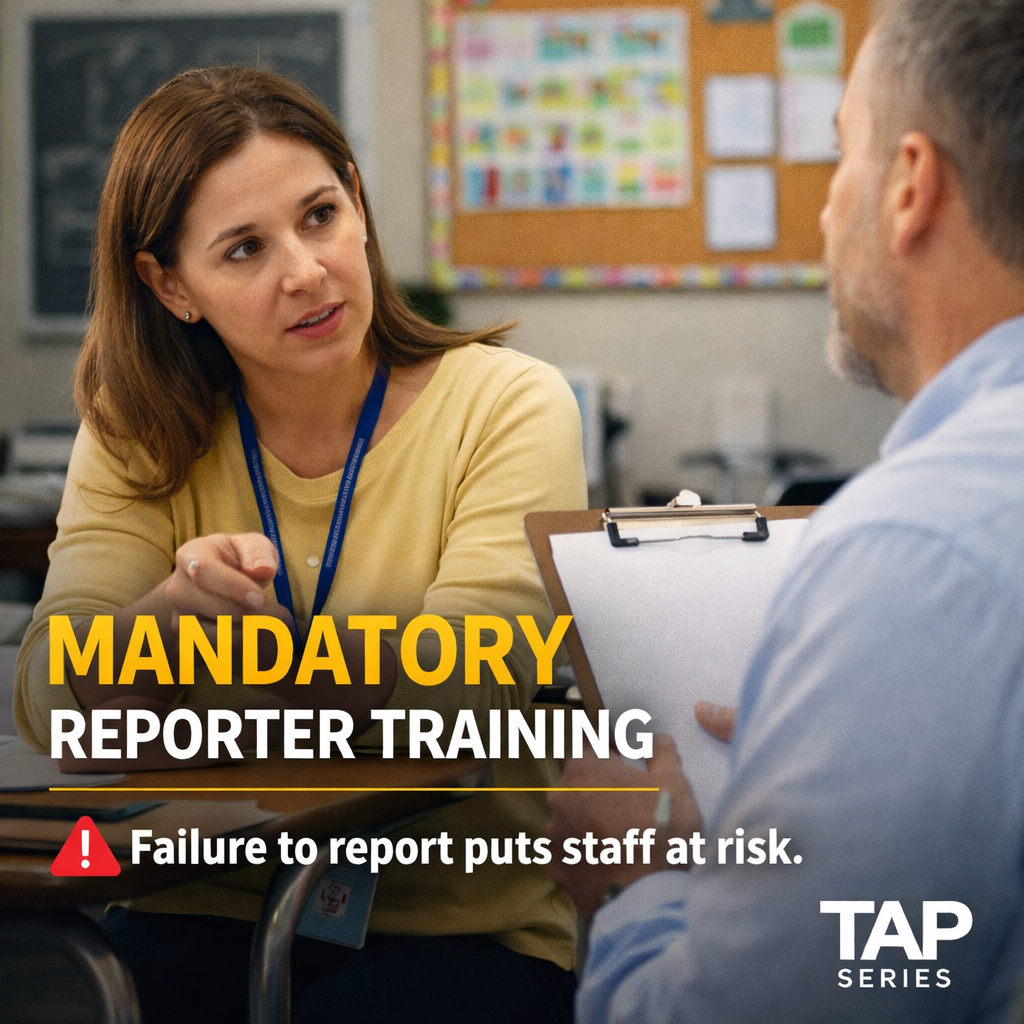
Mandatory reporting in the education industry is a legal and ethical responsibility that protects students, staff, and institutions. Across the United States, educators and school employees are legally required to report suspected abuse, neglect, or harm. When warning signs are ignored or reports are delayed, the consequences extend far beyond compliance violations.
Failure to report does not just endanger students. It exposes staff members and school districts to legal liability, professional discipline, and reputational damage.
For U.S. education organizations, mandatory reporter training is not optional. It is essential risk prevention.
The Legal and Professional Duty of Educators
Teachers, administrators, counselors, coaches, and support staff are often the first adults to notice signs of abuse, neglect, or mental health concerns. Because of this position of trust, most states classify education professionals as mandated reporters.
This means they are legally required to:
- Recognize signs of abuse or neglect
- Report suspicions promptly to the proper authorities
- Follow district reporting protocols
- Document concerns appropriately
Failure to meet these obligations can result in:
- Civil penalties
- Criminal charges
- Loss of professional licensure
- Employment termination
- Lawsuits against the district
The risk is real and increasing as enforcement and public scrutiny grow.
How Failure to Report Creates Institutional Risk
When warning signs are overlooked, schools face significant consequences:
1. Legal Exposure
Districts may face lawsuits for negligence if harm continues after signs were ignored.
2. Regulatory Violations
Noncompliance with state reporting laws can trigger investigations and sanctions.
3. Reputational Damage
Community trust erodes quickly when institutions appear to conceal or mishandle concerns.
4. Staff Vulnerability
Employees who fail to report may face personal legal consequences even if the failure was unintentional.
Mandatory reporting protects not only students but also the professionals responsible for their safety.
Recognizing Warning Signs and Disorders
In educational environments, concerns may include abuse, neglect, or serious health conditions that require intervention.
For example, understanding eating disorders is critical when warning signs emerge among students. Effective training helps staff:
- Define anorexia nervosa, bulimia nervosa, and binge eating disorder
- Identify distinctive physical and behavioral symptoms
- Recognize patterns that may require further evaluation
- Understand when and how to escalate concerns
Early recognition paired with proper reporting protocols prevents further harm.
What Effective Mandatory Reporter Training Should Cover
Strong mandatory reporter programs provide clarity and confidence.
Key learning areas include:
- Understanding legal reporting obligations
- Identifying signs of abuse, neglect, and serious disorders
- Following proper reporting procedures
- Reinforcing knowledge through practical learning checkpoints
- Exploring intervention and treatment pathways
When employees know exactly what to do, hesitation decreases and compliance improves.
Mandatory Reporter Training for U.S. Education Organizations
TAP Series offers comprehensive Mandatory Reporter Training designed to help schools and education organizations meet compliance requirements and protect their staff.
This course supports organizations by:
- Clarifying reporting responsibilities and legal expectations
- Strengthening recognition of warning signs and concerning behaviors
- Providing insights into disorders such as anorexia nervosa, bulimia nervosa, and binge eating disorder
- Reinforcing learning through structured knowledge checkpoints
- Promoting consistent reporting standards across campuses
The training is designed for seamless integration into Learning Management Systems and supports scalable deployment across districts, private schools, colleges, and educational organizations nationwide.
Creating a Culture of Accountability and Protection
Mandatory reporting should not be treated as a checkbox requirement. It must be embedded into school culture.
Leadership can strengthen compliance by:
- Incorporating training into onboarding
- Requiring annual refresher courses
- Establishing clear reporting chains
- Encouraging documentation of concerns
- Supporting staff who make good faith reports
When educators feel supported and informed, they are more likely to act promptly and responsibly.
Protecting Students Protects Staff
In today’s educational climate, inaction carries significant risk. Delayed reporting allows harm to continue and increases liability exposure for individuals and institutions alike.
Proactive training ensures that employees understand their responsibilities and feel empowered to act without fear or confusion.
For U.S. education organizations, investing in Mandatory Reporter Training strengthens compliance, reduces legal exposure, and builds safer learning environments. Mandatory reporting compliance is not only a student protection measure. It is a staff protection strategy and an essential component of responsible educational leadership.