Student Safety Training For Schools
Mandatory Reporting in Education: Why Failure to Report Puts Staff and Students at Risk
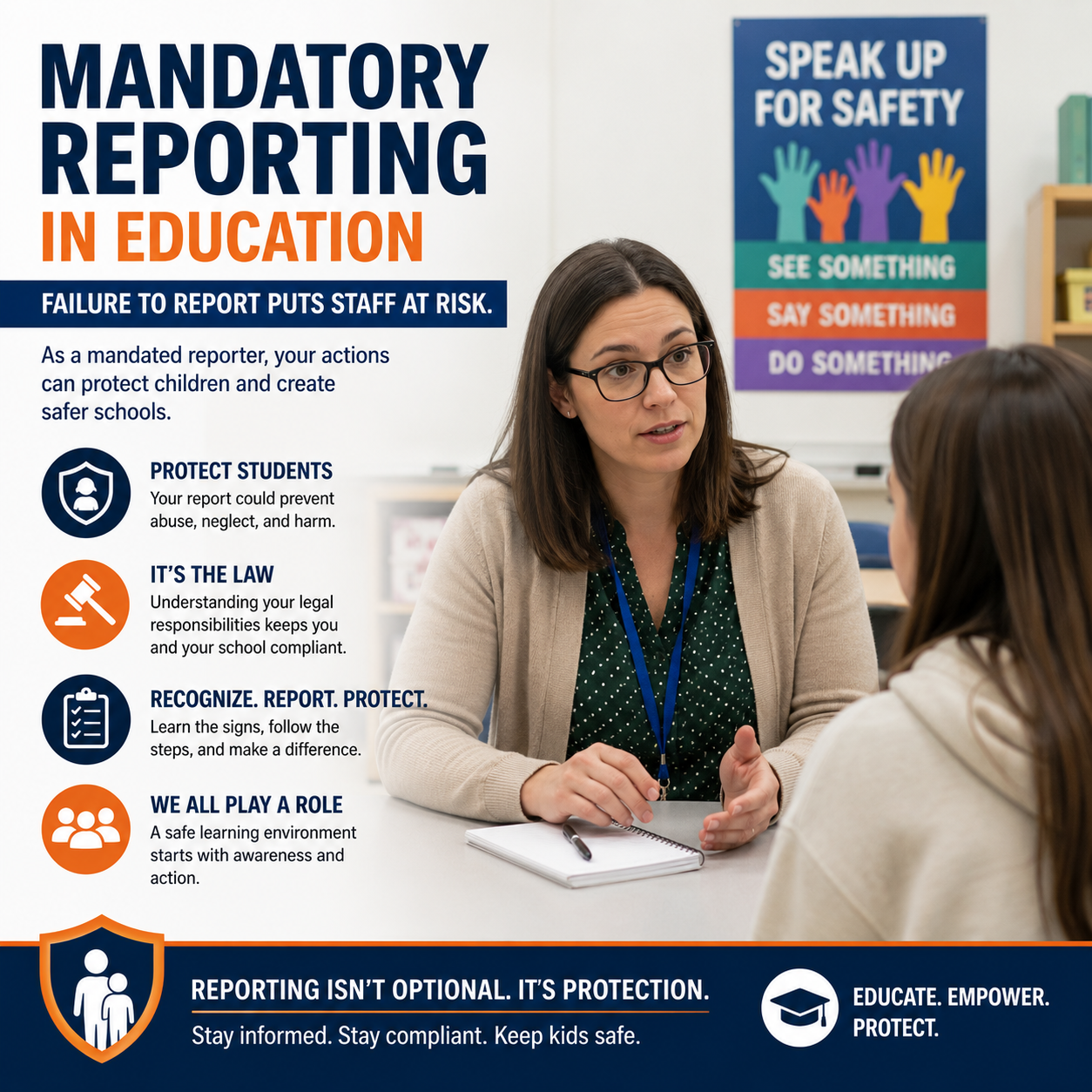
Mandatory reporter training is essential for schools, educational institutions, and youth-serving organizations across the United States. Educators and school staff are often among the first adults to notice signs of abuse, neglect, or endangerment involving children. When warning signs are overlooked or reporting obligations are misunderstood, the consequences can be serious for students, staff, and organizations alike.
Failure to report suspected abuse not only places children at continued risk, but can also expose employees and educational institutions to legal, professional, and reputational consequences. Proper training helps ensure staff understand their responsibilities, recognize warning signs, and respond appropriately when concerns arise.
Why Mandatory Reporting Matters in Educational Settings
Teachers, counselors, administrators, coaches, aides, and support personnel interact with students daily. These consistent interactions place school staff in a critical position to observe behavioral changes, physical indicators, or concerning situations that may require immediate attention.
Mandatory reporting laws exist to protect children by ensuring concerns are addressed promptly and professionally.
Common situations that may require reporting include:
- Signs of physical abuse
- Emotional or psychological abuse
- Neglect or abandonment
- Sexual abuse or exploitation
- Unsafe home environments
- Threats of self-harm or violence
- Concerning disclosures from students
Without proper understanding of reporting obligations, employees may hesitate, second guess warning signs, or fail to follow correct procedures.
Failure to Report Can Create Serious Risks
Many education professionals worry about making the wrong decision or misinterpreting a situation. However, delaying or avoiding a report can create far greater risks.
Failure to report may lead to:
- Continued harm to a child
- Legal penalties for employees
- Licensing or credential consequences
- Internal investigations
- Loss of community trust
- Increased institutional liability
- Emotional impact on staff and students
Educational organizations must ensure staff understand that reporting concerns is part of their professional responsibility and child protection efforts.
Early Recognition Protects Students
One of the most important aspects of mandatory reporting is recognizing indicators that something may be wrong. Abuse and neglect are not always obvious, and signs may appear gradually over time.
Potential warning signs can include:
- Sudden behavioral changes
- Frequent unexplained injuries
- Withdrawal or fearfulness
- Chronic absenteeism
- Poor hygiene or signs of neglect
- Inappropriate knowledge or behavior for age
- Reluctance to go home
Mandatory reporter training helps staff identify these indicators while understanding how to respond calmly and appropriately.
Reporting Procedures Must Be Clear and Immediate
Educational staff should never feel uncertain about what steps to take when concerns arise. Confusion about reporting channels or documentation procedures can delay action during critical situations.
Effective training helps employees understand:
- When a report is required
- Who should be contacted
- How to document concerns properly
- What information should be included
- Why immediate reporting matters
- How confidentiality requirements apply
Clear reporting procedures help organizations build a stronger culture of accountability and child safety.
Training Builds Confidence for School Staff
Mandatory reporting can feel intimidating for employees who fear making mistakes or facing difficult conversations. Comprehensive training reduces uncertainty and prepares staff to respond professionally.
Benefits of mandatory reporter education include:
- Increased confidence in identifying concerns
- Better understanding of legal responsibilities
- Faster and more accurate reporting
- Stronger child protection practices
- Reduced organizational risk
- Improved staff preparedness
When staff feel informed and supported, they are more likely to act promptly when concerns arise.
Child Protection Is a Shared Responsibility
Protecting children requires active participation from every level of an educational organization. Mandatory reporting should not be viewed as a compliance requirement alone. It is a critical safeguard that supports student wellbeing and school safety.
Schools that prioritize mandatory reporting education demonstrate their commitment to:
- Student protection
- Workplace accountability
- Staff preparedness
- Legal compliance
- Safer educational environments
Strong reporting practices create safer learning spaces where students, families, and employees feel supported and protected.
How TAP Series Supports Mandatory Reporter Training
The TAP Series Mandatory Reporter Training Course helps education professionals understand their responsibilities and respond appropriately when child safety concerns arise.
The course includes:
- Comprehensive mandatory reporting education
- Guidance on identifying signs of abuse and neglect
- Instruction on reporting procedures and legal requirements
- Self-paced online learning accessible from any device
- Post-training assessment for knowledge reinforcement
- Certificate of Completion for documentation purposes
Designed for busy professionals, the training allows staff to complete coursework conveniently from home, school, or office environments.
Strengthening School Safety Through Preparedness
Educational institutions cannot afford uncertainty when it comes to child protection responsibilities. Failure to report suspected abuse or neglect can place students, employees, and organizations at significant risk.
By investing in mandatory reporter compliance training, schools and educational organizations strengthen staff preparedness, support safer learning environments, and reinforce their commitment to student wellbeing and protection.