Mandatory Reporter Certification Training
Mandatory Reporting in Education: Why Failure to Report Puts Staff at Risk
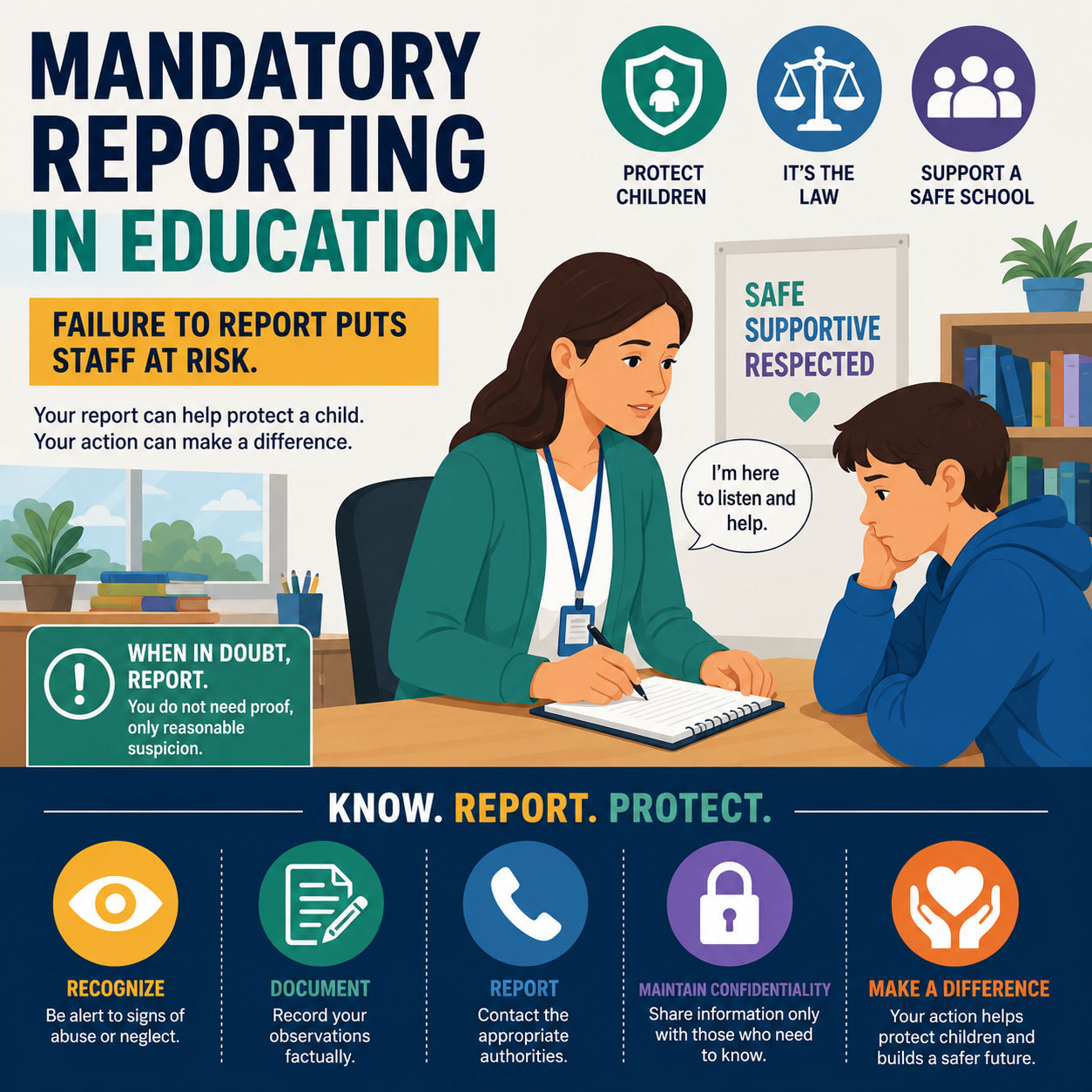
Educators, administrators, counselors, coaches, and school support personnel play a critical role in protecting the safety and well-being of children. While many education professionals focus on identifying signs of abuse or neglect, understanding the responsibility to report concerns is equally important.
Failure to report suspected abuse, neglect, or other reportable concerns can have serious consequences. Beyond the potential harm to a child, staff members may face disciplinary action, legal consequences, professional sanctions, and damage to their careers. In today's educational environment, mandatory reporting is not simply a policy requirement. It is a professional and legal responsibility.
Understanding Mandatory Reporting
Mandatory reporting laws require certain individuals to report suspected abuse, neglect, exploitation, or other designated concerns to the appropriate authorities.
In educational settings, mandatory reporters may include:
- Teachers
- School administrators
- Counselors
- Coaches
- Paraprofessionals
- Nurses
- Childcare staff
- Other school personnel
While specific reporting requirements vary by state, the core expectation remains consistent: when there is reasonable suspicion that a child may be at risk, action must be taken.
Why Reporting Matters
Mandatory reporting exists to help protect children from ongoing harm and to ensure concerns are investigated by qualified authorities.
Timely reporting can:
- Help prevent further abuse or neglect
- Connect children with protective services
- Support safer learning environments
- Protect vulnerable students
- Enable early intervention
- Strengthen community trust in educational institutions
A report does not determine guilt or innocence. It simply alerts the appropriate agency so professionals can assess the situation.
The Risks of Failing to Report
Many staff members hesitate to report concerns because they fear being wrong, damaging relationships, or creating unnecessary conflict.
However, failure to report often carries far greater risks.
Potential consequences may include:
- Violation of state laws
- Professional disciplinary action
- Employment consequences
- Civil liability
- Loss of professional licenses or credentials
- Reputational damage
Most importantly, failing to report may leave a child in a potentially dangerous situation without access to needed support and protection.
Common Reasons Staff Fail to Report
Even well-intentioned employees sometimes hesitate when faced with uncertainty.
Common reasons include:
- Fear of making an incorrect report
- Uncertainty about reporting requirements
- Concern about parental reactions
- Misunderstanding the reporting process
- Belief that someone else will report
- Lack of training or confidence
These barriers can delay action during situations where timely reporting is essential.
Recognizing Situations That May Require Reporting
Mandatory reporters are not expected to conduct investigations. Their role is to recognize potential concerns and report them appropriately.
Possible indicators may include:
- Unexplained injuries
- Frequent absences
- Sudden behavioral changes
- Signs of neglect
- Fearful or withdrawn behavior
- Disclosures from a child
- Inappropriate interactions observed by staff
When concerns arise, employees should follow established reporting procedures rather than attempting to determine whether abuse has occurred.
What Staff Should Do When Concerns Arise
Educational organizations should ensure employees understand the steps required when a reportable situation is identified.
Best practices include:
- Document observations accurately.
- Follow organizational reporting procedures.
- Contact the appropriate authorities when required.
- Maintain confidentiality.
- Avoid conducting personal investigations.
- Seek guidance when reporting requirements are unclear.
Having a clear process helps employees act confidently and consistently.
Building a Culture of Reporting and Protection
Strong educational organizations create environments where staff understand that reporting concerns is both expected and supported.
Key elements include:
- Regular mandatory reporting training
- Clear reporting procedures
- Leadership support
- Accessible resources and guidance
- Ongoing policy reviews
- Reinforcement of legal responsibilities
When reporting expectations are clearly communicated, employees are more likely to act quickly when concerns arise.
The Role of Training in Reducing Risk
Many reporting failures occur because employees are uncertain about what to report, when to report, or how to report.
Mandatory Reporter Training | TAP Series® helps education professionals understand their responsibilities, recognize potential signs of abuse and neglect, follow reporting requirements, and respond appropriately when concerns arise.
The course provides practical guidance that helps employees build confidence while supporting organizational compliance and child protection efforts.
Protecting Students and Protecting Staff
Mandatory reporting is one of the most important responsibilities entrusted to education professionals. While reporting decisions can sometimes feel difficult, failing to act can expose both students and staff to significant risks.
Educational organizations that invest in comprehensive training and clear reporting procedures help create safer environments for children while ensuring employees understand their legal and professional obligations. When staff know what to do and feel confident taking action, they are better equipped to protect those who depend on them most.