School Employee Training
Mandatory Reporting in Education: Why Failure to Report Puts Staff at Risk
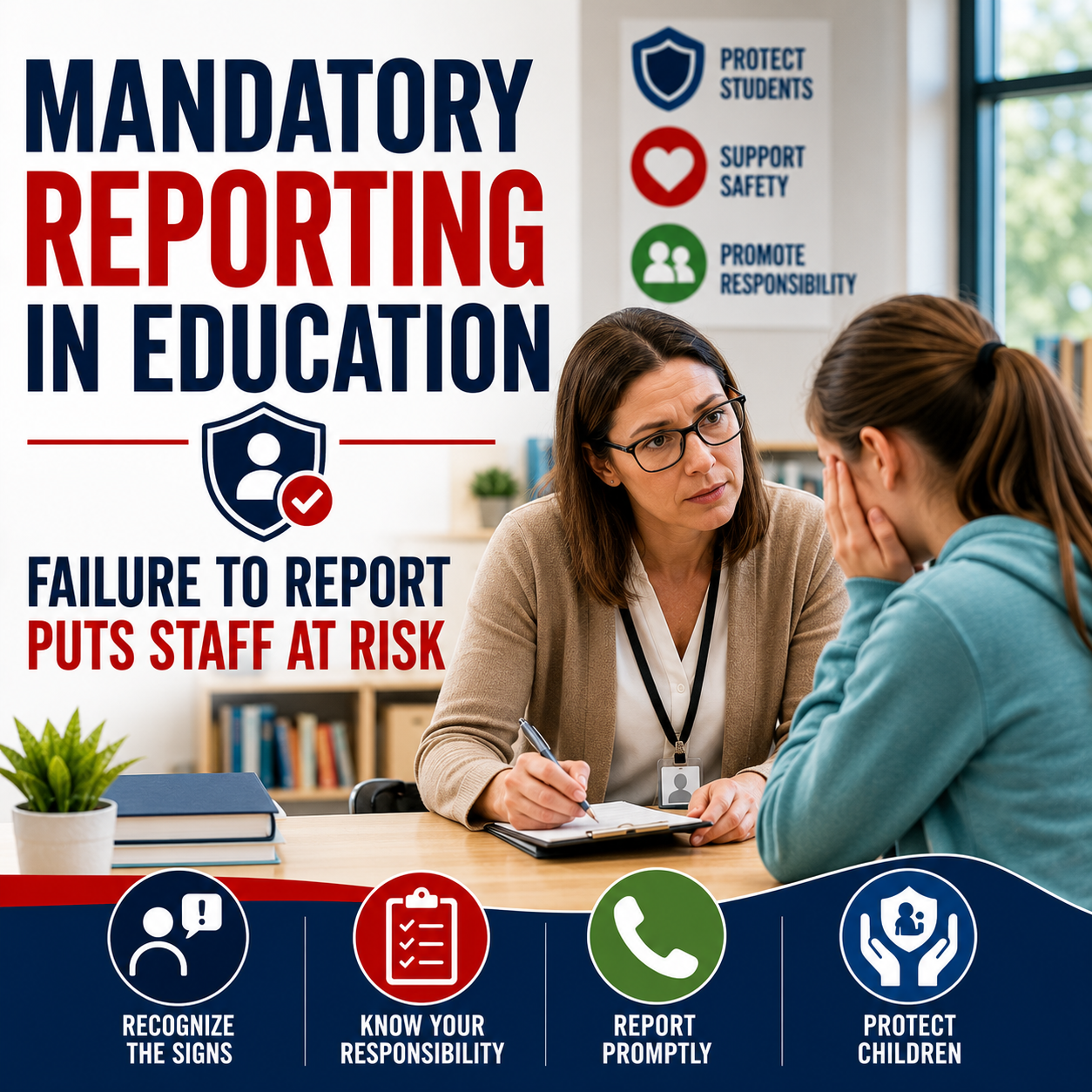
Schools are entrusted with providing safe environments where children can learn, grow, and thrive. Teachers, administrators, counselors, coaches, and support staff often build trusted relationships with students, placing them in a unique position to recognize signs that a child may be experiencing abuse or neglect.
In many states, education professionals are legally required to report suspected abuse or neglect. Failing to fulfill these responsibilities can place children at continued risk while also exposing staff members and educational institutions to legal, professional, and organizational consequences.
Understanding mandatory reporting responsibilities is essential for every school employee.
What Is Mandatory Reporting?
Mandatory reporting laws require certain professionals to report suspected child abuse or neglect to the appropriate authorities when they have reasonable cause or suspicion.
While reporting requirements vary by state, education employees are commonly included among mandated reporters because of their regular interaction with children.
Mandatory reporting is intended to:
- Protect children from harm
- Ensure concerns are investigated
- Support early intervention
- Promote student safety
- Fulfill legal responsibilities
The responsibility is to report reasonable concerns, not to conduct an investigation.
Why Failure to Report Creates Risk
Delaying or failing to report suspected abuse can have serious consequences.
Potential risks include:
- Continued harm to a child
- Legal liability
- Disciplinary action
- Professional consequences
- Damage to public trust
- Increased organizational risk
Prompt reporting helps ensure concerns are evaluated by the appropriate authorities.
Recognizing Possible Warning Signs
School employees may observe changes that warrant further attention.
Possible indicators include:
- Unexplained injuries
- Frequent absences
- Sudden changes in behavior
- Extreme fear or anxiety
- Poor hygiene or inadequate clothing
- Disclosure of abuse or neglect
- Withdrawal from friends or activities
A single sign does not necessarily confirm abuse, but patterns or reasonable concerns should never be ignored.
Common Reasons Reports Are Delayed
Many employees hesitate because they are uncertain about what they have observed.
Common reasons include:
- Fear of being wrong
- Lack of confidence in reporting procedures
- Concern about damaging relationships
- Uncertainty about legal obligations
- Waiting for additional evidence
- Assuming someone else will report
Mandatory reporting laws generally require reporting reasonable suspicion rather than proof.
The Importance of Following School Procedures
Schools should establish clear reporting procedures that align with applicable laws.
Employees should understand:
- Who to contact
- When reports should be made
- Documentation requirements
- Internal reporting expectations
- External reporting obligations
Clear procedures help reduce confusion during difficult situations.
Supporting a Culture of Student Protection
Creating a safe school environment requires more than written policies.
Educational organizations can strengthen reporting practices by:
- Providing regular training.
- Reviewing reporting procedures annually.
- Encouraging employees to speak up.
- Reinforcing legal responsibilities.
- Supporting staff during the reporting process.
- Promoting a culture that prioritizes student safety.
When employees understand their responsibilities, they are more prepared to respond appropriately.
Why Training Matters
Mandatory reporting responsibilities can involve complex situations that require sound judgment and confidence.
Training helps employees:
- Recognize potential warning signs
- Understand reporting obligations
- Respond appropriately to disclosures
- Follow reporting procedures
- Support student safety
- Reduce organizational risk
Education helps employees act confidently when concerns arise.
Strengthening Compliance Through Education
Mandatory Reporter Training | TAP Series® provides educators and school staff with practical guidance on recognizing potential abuse or neglect, understanding mandatory reporting responsibilities, responding appropriately to student disclosures, and following reporting procedures in accordance with applicable legal requirements.
The course helps educational institutions strengthen compliance while promoting safer learning environments for students.
Every Report Can Make a Difference
Mandatory reporting is one of the most important responsibilities entrusted to education professionals. While reporting a concern may feel difficult, failing to report can place vulnerable children at greater risk and expose employees and schools to serious consequences.
By providing ongoing training, reinforcing reporting procedures, and creating a culture that supports accountability, schools can help protect students while ensuring staff members are prepared to fulfill their legal and professional responsibilities.