Employment Law Changes New Hampshire
New Hampshire’s Labor Law Updates in 2025: What Workers and Employers Need to Know
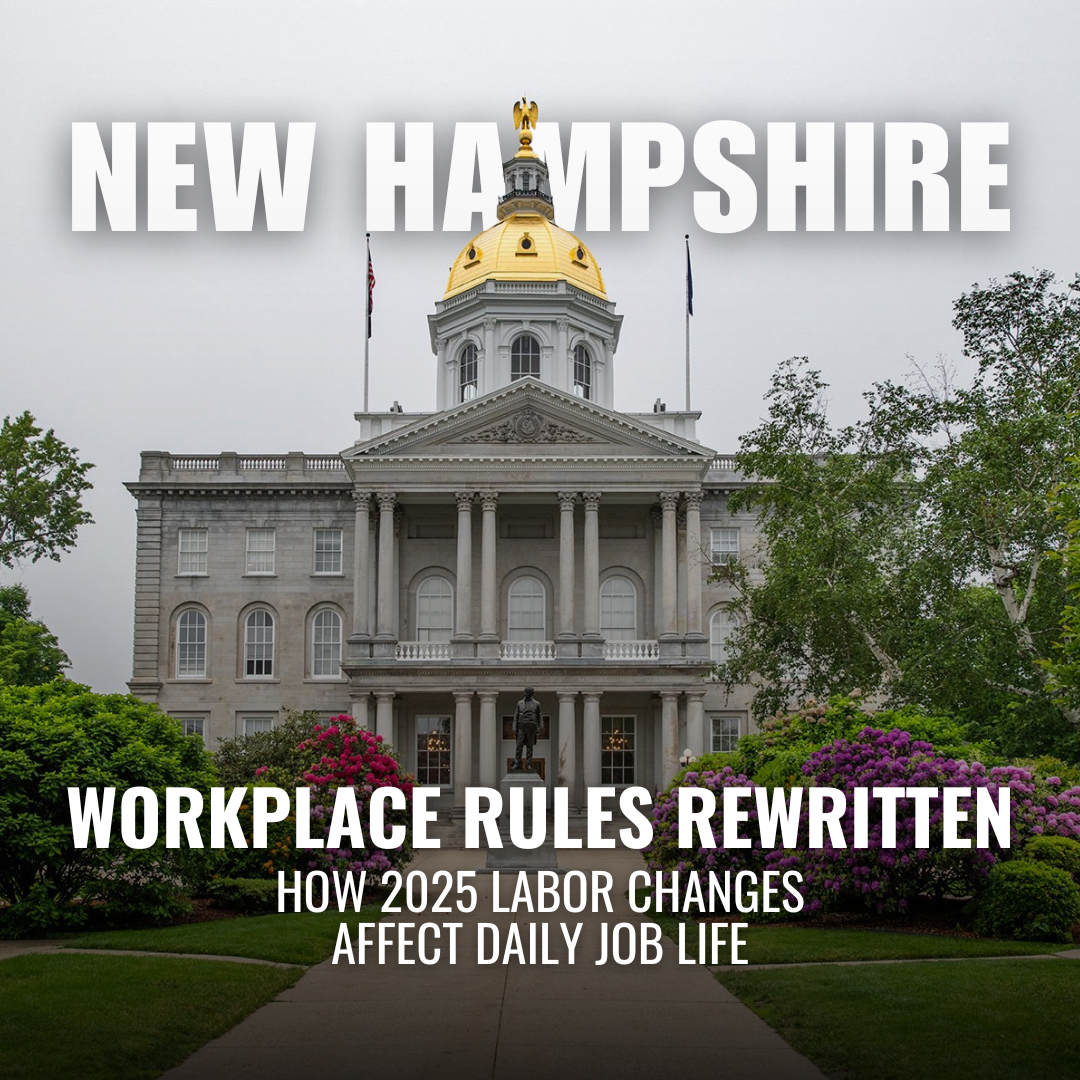
Starting in 2025, New Hampshire rolled out important changes to its labor laws that affect everything from workplace gun policies to breastfeeding breaks. Whether you're clocking in as an employee or managing a team, these updates are worth paying attention to. They aim to strengthen worker rights while still balancing employer interests—but not without a few practical challenges along the way.
Let’s break down what’s new, what it means, and why these laws still matter in 2025.
Firearms in Employee Vehicles: A Right to Safety or a Security Concern?
As of January 1, 2025, New Hampshire employers who receive public funding can no longer prohibit employees from keeping firearms in their personal, locked vehicles while parked on company property. This change is especially significant for employees who value their Second Amendment rights.
Here’s what to know:
- Employees with valid concealed carry permits are now legally allowed to store legally owned firearms in their cars during work hours.
- The firearm must be out of sight and the vehicle locked.
- Employers cannot ask whether an employee has a firearm in their car.
- The rule only applies to employers who receive public funds.
Benefits:
- Supports employee rights and personal protection preferences.
- Enhances privacy—employers can’t ask about firearms in cars.
Challenges:
- Raises concerns about workplace safety and liability.
- Employers may feel restricted in setting company-wide safety policies.
Lactation Breaks: A Win for Working Moms
Coming into effect July 1, 2025, this law ensures that nursing mothers have protected time and space at work to pump breast milk—something long overdue for many working parents.
Key details include:
- Employers with 6 or more employees must provide lactation breaks.
- Nursing employees are entitled to a 30-minute unpaid break for every 3 hours of work.
- Employers must offer a private, non-bathroom space for milk expression.
- The space should be within a reasonable walk from the employee’s work area.
- Advance notice of 2 weeks is required from the breastfeeding employee.
Benefits:
- Supports new parents and helps maintain breastfeeding goals.
- Promotes a healthier work-life balance.
Challenges:
- Smaller businesses may struggle to create a suitable private space.
- Unpaid breaks could impact income for hourly workers.
Meal Breaks: Reinforcing Rest and Recharge
While not entirely new, the meal break regulation remains a cornerstone of New Hampshire labor policy and is still relevant today.
Here’s the refresher:
- Employees working more than 5 consecutive hours must be given a 30-minute unpaid meal break.
- The break must fall after the first 2 hours and before the last 2 hours of the shift.
- Employees must be completely relieved of their duties during this break.
Benefits:
- Gives workers a guaranteed pause in long shifts.
- Reduces burnout and improves overall productivity.
Challenges:
- Some industries with unpredictable workflows (like healthcare or retail) may find compliance tricky.
- Employers must carefully manage schedules to ensure everyone gets their break.
Final Thoughts: What It Means for 2025 and Beyond
These labor law updates reflect a growing trend of balancing individual rights and workplace fairness. For employees, they provide more control over personal choices, whether it's bringing a firearm to work or expressing milk during the day. For employers, the challenge lies in adapting policies and facilities to meet the new standards—especially smaller organizations that may not have the infrastructure or flexibility.
The real impact will depend on how well both sides communicate and plan ahead. Whether you're an HR manager updating your handbook or a working parent navigating your rights, understanding these changes helps build a workplace that's more respectful, secure, and equitable for everyone.
Important Note to Consider
This content is intended for informational purposes only. Although we strive to present accurate and up-to-date information, we cannot guarantee that it is completely free from errors or omissions. We encourage users to verify any important details independently and not rely solely on the information provided here.