Retail Safety Training Online
OSHA Risk in Retail: How Everyday Operations Turn Into Costly Violations
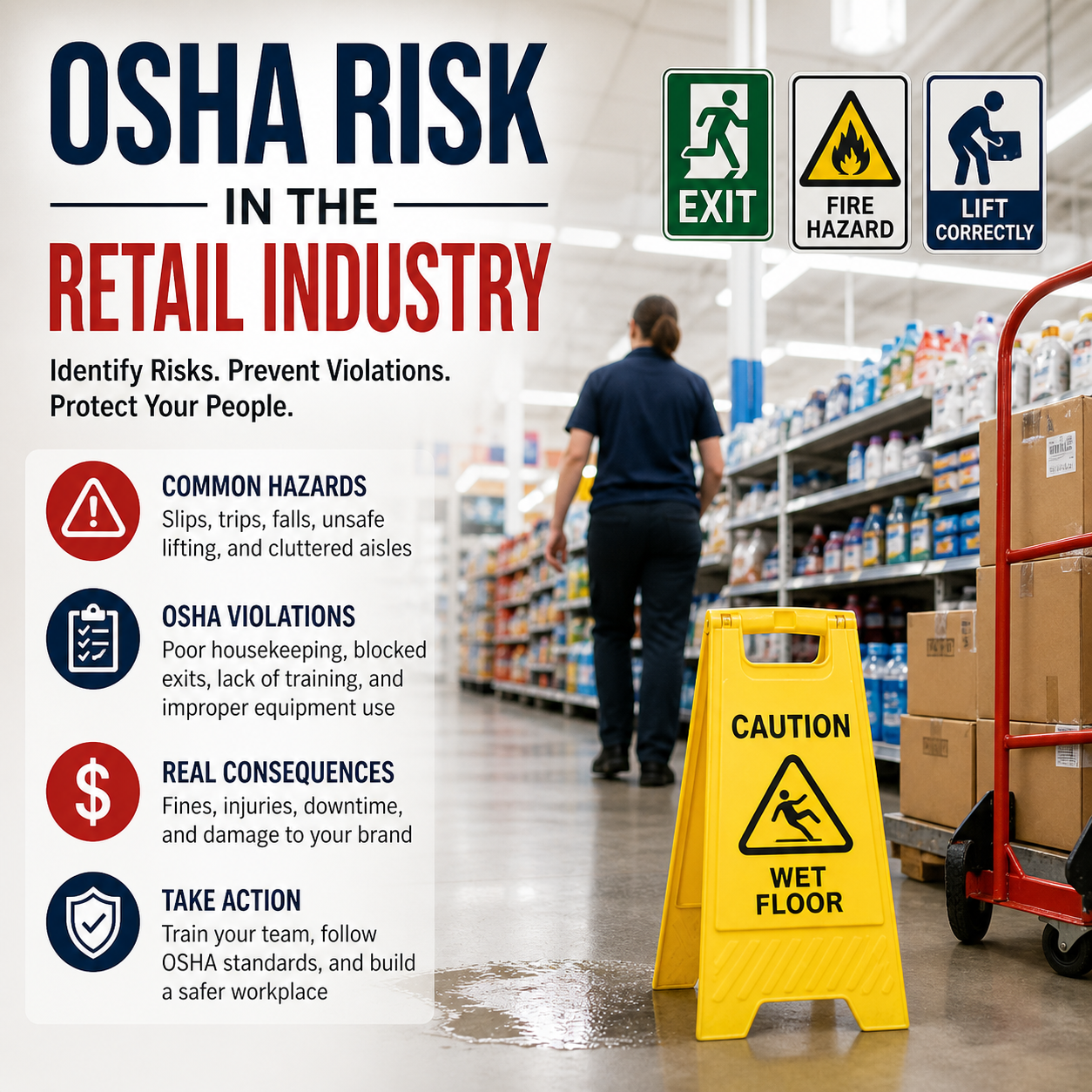
Retail environments move fast. Between stocking shelves, assisting customers, managing inventory, and handling deliveries, safety can easily become an afterthought. OSHA violations in retail operations often do not come from extreme hazards but from routine tasks done without proper awareness or training.
For U.S. retail businesses, these risks are not just operational concerns. They carry real consequences such as fines, injuries, legal exposure, and reputational damage. Understanding where violations happen is the first step toward preventing them.
Why OSHA Compliance Matters in Retail
Retailers may not seem as high risk as construction or manufacturing, but OSHA frequently cites retail businesses for preventable violations. These issues directly affect:
- Employee safety and well-being
- Customer trust and in-store experience
- Operational continuity
- Regulatory compliance and financial stability
Even a single oversight can lead to inspections, penalties, or workplace injuries that disrupt business operations.
Common OSHA Violations in Retail Operations
Many OSHA violations in retail stem from everyday activities that are overlooked or rushed.
1. Improper Material Handling and Storage
Employees often stack products unsafely or lift heavy items incorrectly. This leads to injuries and blocked emergency exits.
2. Slip, Trip, and Fall Hazards
Wet floors, cluttered aisles, loose cords, and uneven surfaces are among the most common violations in retail stores.
3. Blocked Exits and Fire Hazards
Stocking inventory in hallways or near exits can violate fire safety regulations and create dangerous evacuation conditions.
4. Lack of Hazard Communication
Cleaning chemicals and other hazardous substances must be labeled and properly handled. Many retail teams are not trained on this requirement.
5. Unsafe Use of Equipment
Ladders, box cutters, and stockroom equipment are frequently misused due to lack of training or supervision.
Where Retail Teams Fall Short
The issue is not usually intent but awareness. Retail employees often:
- Receive minimal safety training during onboarding
- Learn tasks informally from coworkers
- Focus on speed and customer service over safety
- Are unaware of OSHA standards that apply to their roles
This creates gaps that increase the likelihood of violations.
The Real Cost of OSHA Violations
Ignoring safety protocols can lead to more than citations.
- Financial penalties from OSHA inspections
- Worker compensation claims from injuries
- Operational downtime due to investigations
- Employee turnover caused by unsafe working conditions
- Brand damage when incidents become public
Retailers that treat safety as a compliance requirement rather than a daily practice often pay the price later.
How to Reduce OSHA Risk in Retail
Improving workplace safety does not require complex systems. It starts with consistent, practical steps.
1. Standardize Safety Procedures
Create clear guidelines for stocking, cleaning, lifting, and equipment use.
2. Keep Workspaces Organized
Ensure aisles, exits, and storage areas remain clear at all times.
3. Conduct Regular Safety Checks
Daily walkthroughs can identify hazards before they become violations.
4. Reinforce Safe Behavior
Encourage employees to prioritize safety without fear of slowing down operations.
5. Train Employees Consistently
Training is the most effective way to reduce violations and build awareness.
Why OSHA Safety Awareness Training Is Essential
Retail teams need more than basic instructions. They need structured, easy-to-understand training that applies directly to their daily tasks.
The OSHA Safety Awareness course from TAP Series provides:
- Clear explanations of OSHA standards relevant to retail environments
- Practical safety guidance employees can apply immediately
- Engaging content designed for non-technical learners
- Flexible online access for consistent training across teams
Learn more about the course here:
TAP Series® | Training And Cloud Solutions
Building a Safer Retail Workplace
Retail safety is not about slowing down operations. It is about preventing the small mistakes that lead to serious consequences. When employees understand risks and follow proper procedures, businesses can operate more efficiently and confidently.
Investing in training like OSHA Safety Awareness helps retailers reduce violations, protect their workforce, and maintain compliance without disrupting daily operations.
Conclusion: Strengthening Retail Compliance Through Safety Awareness
Reducing workplace incidents starts with recognizing that OSHA risks exist in everyday retail tasks. With the right training and consistent practices, businesses can minimize hazards and create a safer environment for both employees and customers while improving long-term operational compliance.