Food Safety Management For Grocery Stores
Regulatory Reality in Grocery Stores: What Inspectors Actually Check During Grocery Inspections
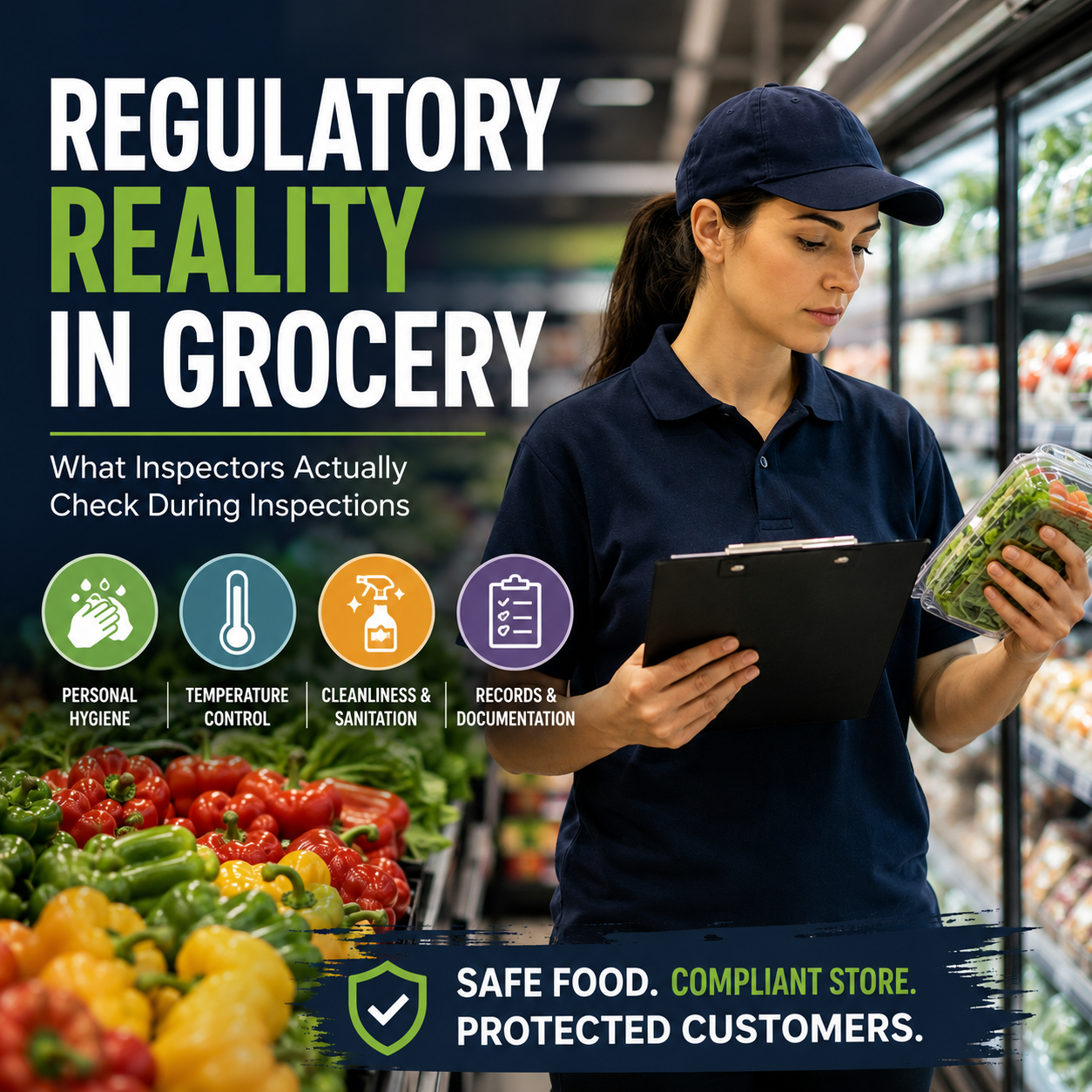
Every grocery store wants to pass inspections, but many managers and employees misunderstand what inspectors are really looking for. While cleanliness and organization matter, regulatory inspections focus on much more than appearances. Inspectors evaluate food handling practices, employee behaviors, documentation, temperature control, sanitation procedures, and overall compliance with food safety regulations.
For grocery retailers across the United States, understanding these inspection priorities is essential for protecting customers, maintaining compliance, and avoiding costly violations. The most successful grocery operations prepare their teams for the realities of inspections every day, not just when an inspection is expected.
Why Grocery Inspections Matter
Grocery stores handle thousands of food products that move through multiple stages of storage, preparation, display, and sale. Any breakdown in food safety practices can create significant public health risks.
Regulatory inspections help ensure that grocery businesses:
- Prevent foodborne illness outbreaks
- Maintain safe food storage conditions
- Protect vulnerable customers
- Comply with local and federal regulations
- Reduce legal and financial risks
- Maintain consumer trust
Inspectors evaluate whether food safety practices are consistently followed throughout daily operations rather than relying on temporary fixes or inspection-day preparations.
What Inspectors Actually Check
Many grocery employees assume inspections focus mainly on facility cleanliness. While sanitation is important, inspectors typically review several critical operational areas.
1. Employee Hygiene and Handwashing Practices
One of the first things inspectors observe is employee behavior.
They often look for:
- Proper handwashing procedures
- Availability of handwashing stations
- Correct glove usage
- Employee illness reporting practices
- Personal hygiene standards
- Prevention of bare-hand contact with ready-to-eat foods
Employees who fail to wash their hands correctly or consistently can create significant contamination risks that may lead to violations.
2. Food Temperature Control
Temperature management remains one of the most important areas of inspection.
Inspectors commonly verify:
- Refrigeration temperatures
- Freezer temperatures
- Hot holding temperatures
- Cooling procedures
- Product temperature monitoring records
- Calibration of food thermometers
Improper temperature control can allow harmful bacteria to multiply rapidly, making this one of the most heavily scrutinized inspection categories.
3. Prevention of Cross-Contamination
Cross-contamination remains a leading cause of food safety violations.
Inspectors evaluate:
- Separation of raw and ready-to-eat foods
- Storage practices in coolers and freezers
- Cleaning and sanitizing procedures
- Proper use of cutting boards and utensils
- Packaging integrity
- Product display arrangements
Even well-maintained stores can receive violations when food products are improperly stored or handled.
4. Cleaning and Sanitization Procedures
Inspectors review whether cleaning activities are effective and documented.
Areas often checked include:
- Food preparation surfaces
- Meat and seafood departments
- Deli operations
- Bakery equipment
- Display cases
- Slicers and food-contact equipment
- Sanitizer concentrations
Inspectors want evidence that cleaning procedures are consistently followed rather than performed only when inspections are anticipated.
5. Food Storage and Labeling
Proper storage practices help ensure food remains safe throughout its shelf life.
Inspectors typically review:
- Product labeling accuracy
- Date marking requirements
- Product rotation procedures
- Storage off the floor
- Protection from contamination
- Expired product management
Failure to properly label and rotate products can lead to food waste, safety risks, and compliance violations.
6. Pest Prevention and Facility Maintenance
A clean facility is only part of pest management.
Inspectors may examine:
- Signs of rodent or insect activity
- Building maintenance issues
- Door and window seals
- Waste handling practices
- Water leaks and drainage issues
- Structural conditions
Facility maintenance often plays a direct role in food safety compliance.
7. Food Safety Documentation
Many inspections include a review of records and documentation.
Examples include:
- Employee training records
- Temperature logs
- Cleaning schedules
- Corrective action reports
- Supplier documentation
- Food safety management procedures
Incomplete or missing documentation can create compliance concerns even when operational practices appear satisfactory.
Common Inspection Mistakes Grocery Stores Make
Several recurring issues frequently appear during grocery inspections:
- Inconsistent employee handwashing
- Improper food temperature monitoring
- Poor documentation practices
- Inadequate cleaning verification
- Failure to separate raw and ready-to-eat foods
- Lack of employee food safety knowledge
- Expired or improperly labeled products
Many of these problems result from training gaps rather than intentional noncompliance.
Building an Inspection-Ready Food Safety Culture
The most effective grocery operations do not prepare for inspections only when one is scheduled. Instead, they create a culture where food safety becomes part of everyday operations.
Key strategies include:
- Providing regular employee training
- Conducting internal audits
- Reinforcing food safety expectations daily
- Monitoring critical control points
- Maintaining accurate documentation
- Encouraging accountability at every level
When employees understand why food safety requirements exist, compliance becomes more consistent and sustainable.
Training That Supports Inspection Success
Employee education remains one of the most effective tools for improving inspection outcomes.
The Food Handler Training | TAP Series® course helps frontline grocery emp loyees understand safe food handling practices, personal hygiene requirements, contamination prevention, and food safety fundamentals needed for daily compliance.
The Retail Food Safety Manager Training | TAP Series® course equips supervisors and managers with the knowledge necessary to oversee food safety programs, manage regulatory requirements, maintain documentation, and lead compliance efforts across grocery operations.
Together, these training programs help grocery organizations strengthen food safety performance while preparing employees and managers for the realities of regulatory inspections.
Food safety inspections are not simply evaluations of cleanliness. They are comprehensive reviews of how effectively a grocery operation protects public health through proper food handling, sanitation, documentation, and employee practices. By investing in ongoing training and building a culture of accountability, grocery retailers can improve compliance, reduce risk, and create safer experiences for both customers and employees.