Grocery Food Safety Regulations
Regulatory Reality in Grocery Stores: What Inspectors Actually Check During Grocery Inspections
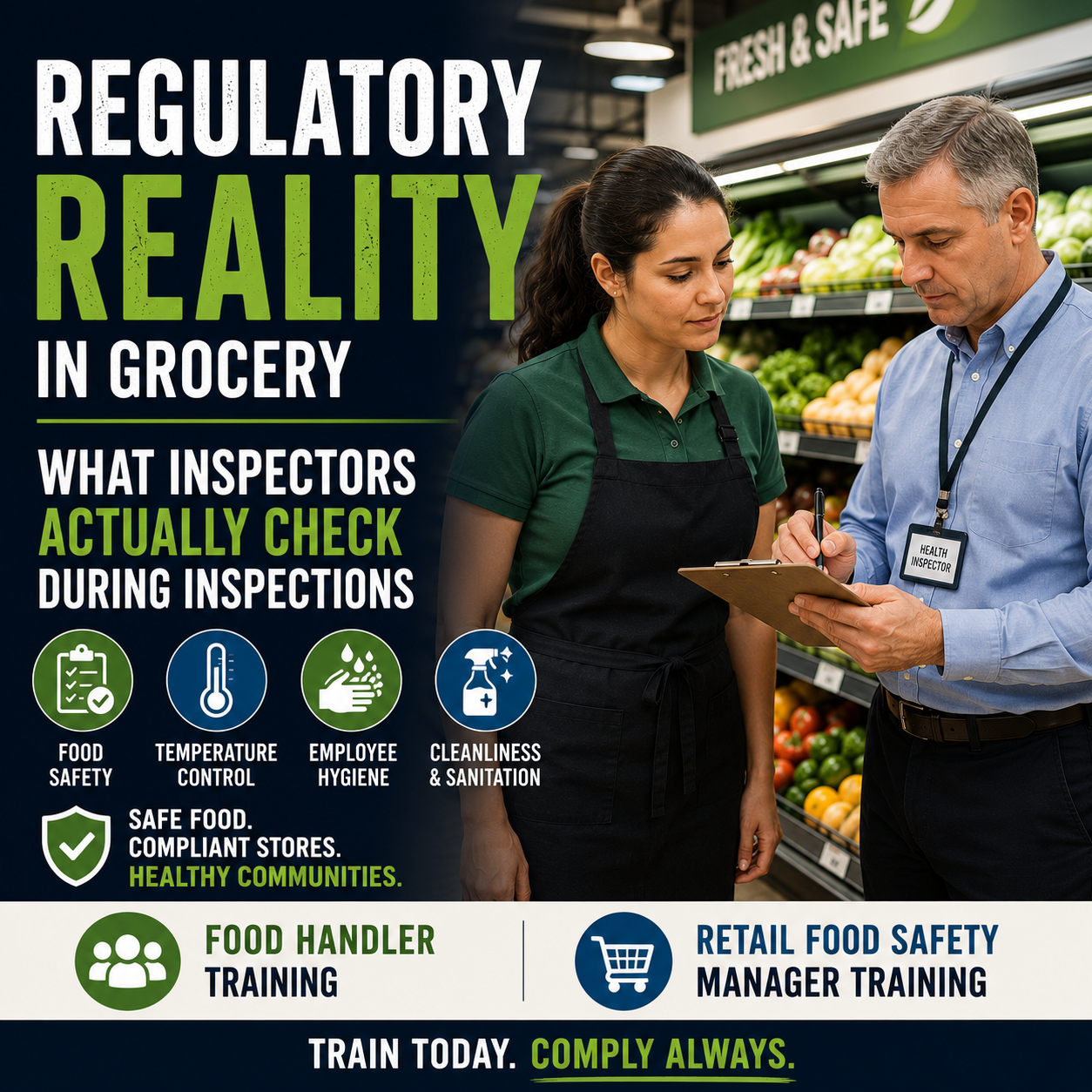
For grocery store operators, health and food safety inspections are a routine part of doing business. Yet many employees and even some managers misunderstand what inspectors are actually evaluating during these visits. Inspections are not designed to catch businesses off guard. Their purpose is to verify that grocery stores are following food safety regulations that protect public health.
Understanding what inspectors look for can help grocery organizations prepare more effectively, reduce violations, and create safer shopping environments for customers. The reality is that inspectors focus on operational practices that directly impact food safety, sanitation, and consumer protection.
Why Grocery Inspections Matter
Grocery stores handle a wide variety of food products, including fresh produce, prepared foods, deli items, dairy products, frozen foods, and ready-to-eat meals. Because these products can present food safety risks if not handled properly, regulatory agencies conduct inspections to ensure compliance with established standards.
Inspections help:
- Protect consumers from foodborne illness
- Verify food safety procedures
- Identify potential hazards
- Promote compliance with regulations
- Encourage corrective actions when necessary
- Maintain public confidence in food retailers
A successful inspection often reflects strong daily operational practices rather than last-minute preparation.
What Inspectors Actually Check
While requirements may vary slightly between jurisdictions, inspectors generally focus on several key areas during grocery inspections.
1. Employee Hygiene Practices
Employees play a major role in preventing food contamination.
Inspectors commonly evaluate:
- Proper handwashing practices
- Availability of handwashing supplies
- Appropriate glove use
- Employee hygiene standards
- Prevention of contamination during food handling
Poor hygiene practices remain one of the most common contributors to food safety violations.
2. Food Storage and Temperature Control
Temperature management is a critical part of food safety compliance.
Inspectors often check:
- Refrigeration temperatures
- Freezer temperatures
- Hot holding temperatures
- Temperature monitoring records
- Proper food storage procedures
Foods stored outside safe temperature ranges can create conditions that allow harmful bacteria to grow.
3. Cross-Contamination Prevention
Preventing contamination between foods is a major inspection priority.
Areas inspectors may review include:
- Separation of raw and ready-to-eat foods
- Storage practices
- Equipment cleanliness
- Food preparation procedures
- Employee handling practices
Effective controls help reduce foodborne illness risks.
4. Cleaning and Sanitization Procedures
Inspectors closely examine whether grocery stores maintain sanitary conditions.
Common inspection points include:
- Food-contact surfaces
- Food preparation equipment
- Deli slicers
- Storage areas
- Cleaning schedules
- Sanitizer use and concentrations
Proper cleaning procedures help prevent contamination and support compliance.
5. Product Labeling and Consumer Information
Accurate labeling helps customers make informed purchasing decisions.
Inspectors may review:
- Product labels
- Ingredient information
- Date marking procedures
- Packaging practices
- Consumer advisory requirements
Errors in labeling can create both compliance and customer safety concerns.
6. Pest Prevention and Facility Maintenance
The overall condition of the facility can influence inspection outcomes.
Inspectors often look for:
- Signs of pest activity
- Structural damage
- Water leaks
- Improper waste management
- Facility cleanliness
Maintaining a clean, well-managed environment helps reduce food safety risks.
Common Reasons Grocery Stores Receive Violations
Many violations stem from routine operational breakdowns rather than major failures.
Examples include:
- Incomplete employee training
- Missing temperature logs
- Improper food storage
- Inadequate cleaning procedures
- Poor documentation
- Failure to correct known issues
These problems often develop gradually when food safety oversight becomes inconsistent.
How Managers Influence Inspection Results
Managers play a critical role in preparing stores for successful inspections.
Responsibilities often include:
- Monitoring compliance
- Reviewing food safety records
- Conducting internal inspections
- Training employees
- Correcting deficiencies
- Reinforcing food safety expectations
Stores with strong management oversight are often better positioned to maintain compliance throughout the year.
Preparing for Inspections Every Day
The most effective approach to inspections is not preparing only when an inspector arrives. Instead, grocery stores should build food safety into everyday operations.
Best practices include:
- Conduct routine self-inspections.
- Monitor food temperatures consistently.
- Reinforce employee hygiene requirements.
- Maintain accurate records.
- Address problems immediately.
- Provide ongoing food safety training.
Consistent practices help reduce violations and improve operational performance.
The Role of Training in Inspection Readiness
Training helps employees understand regulatory requirements and their role in maintaining compliance.
Food Handler Training | TAP Series® provides employees with essential food safety knowledge, including personal hygiene, contamination prevention, temperature control, and safe food handling practices.
Retail Food Safety Manager Certification Training | TAP Series® equips managers with the expertise needed to oversee food safe ty programs, identify compliance risks, maintain operational controls, and prepare effectively for inspections.
Together, these programs help grocery organizations strengthen food safety performance and improve inspection readiness.
Compliance Starts Before the Inspector Arrives
Successful inspections are typically the result of consistent daily practices rather than short-term preparation efforts. Grocery stores that focus on employee education, active management oversight, sanitation, and food safety compliance are better equipped to meet regulatory expectations and protect public health.
By understanding what inspectors actually check and investing in ongoing training, grocery retailers can reduce violations, improve customer confidence, and build a stronger culture of food safety.