Choosing Between New And Old Homes
Should You Buy a Newly Built Home or an Older Property? Understanding the Pros, Cons, and Key Factors Before You Decide
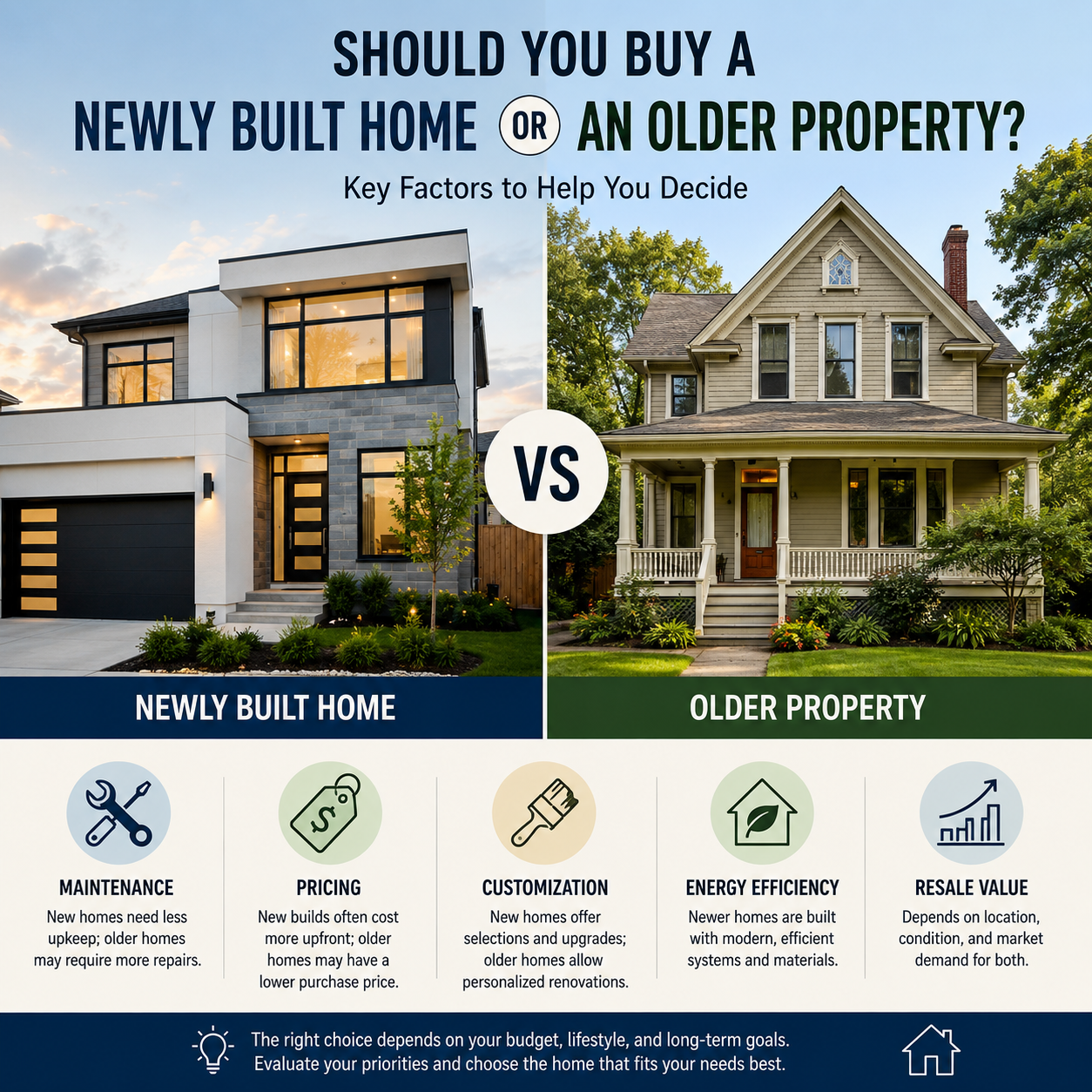
Should you buy a newly built home or an older property? This is one of the most common questions prospective homebuyers face when entering the housing market. Both options offer unique advantages and challenges, and the right choice often depends on your budget, lifestyle, long-term plans, and personal preferences.
Newly built homes may offer modern features and lower maintenance needs, while older properties can provide character, established neighborhoods, and potentially lower purchase prices. Understanding the differences can help you make a more informed decision before committing to a major purchase.
Understanding Newly Built Homes and Older Properties
A newly built home is typically a property that has recently been constructed and has not been previously occupied. These homes often feature modern layouts, updated building materials, and current construction standards.
An older property may range from a few decades old to more than a century old. These homes often offer unique architectural styles, mature landscaping, and locations in established communities.
Neither option is automatically better. Each comes with trade-offs that buyers should carefully evaluate.
Comparing Purchase Prices
One of the biggest factors for buyers is cost.
Newly Built Homes
New construction properties often come with higher purchase prices because they include modern finishes, updated technology, and brand-new systems.
Additional costs may include:
- Landscaping
- Window treatments
- Appliances in some developments
- Homeowners association fees
Older Properties
Older homes may have lower purchase prices compared to similarly sized new homes in the same market.
However, buyers should also consider:
- Potential renovation expenses
- Repair costs
- System upgrades
- Maintenance requirements
Example
A newly built home may cost more upfront but require fewer immediate repairs. An older property might be less expensive initially but need a new roof, updated plumbing, or electrical improvements within a few years.
Maintenance and Repair Considerations
Maintenance costs can significantly impact long-term homeownership expenses.
Advantages of Newly Built Homes
Many major components are brand new, including:
- Roof
- HVAC system
- Plumbing
- Electrical systems
- Appliances
This often reduces the likelihood of significant repairs during the first several years of ownership.
Advantages of Older Properties
While older homes may require more upkeep, many have already undergone renovations or upgrades.
Potential maintenance concerns include:
- Aging roofs
- Outdated electrical systems
- Older plumbing
- Foundation issues
- Window replacements
A thorough property inspection can help identify potential concerns before purchasing.
Customization and Design Flexibility
Many buyers place a high value on personalization.
Newly Built Homes
Builders may allow buyers to select:
- Flooring materials
- Paint colors
- Cabinet finishes
- Countertops
- Fixtures
This can create a home that better reflects personal preferences from the beginning.
Older Properties
Older homes offer customization opportunities through renovations and remodeling projects.
Benefits may include:
- Preserving historic features
- Expanding living spaces
- Modernizing kitchens and bathrooms
- Creating unique designs
However, remodeling projects can add both time and expense.
Energy Efficiency and Utility Costs
Energy efficiency has become an increasingly important consideration for homeowners.
Newly Built Homes
New homes often include:
- Improved insulation
- Energy-efficient windows
- Modern HVAC systems
- Smart home technology
- Energy-saving appliances
These features may help reduce monthly utility costs.
Older Properties
Older homes may be less energy efficient unless updates have been completed.
Potential upgrades include:
- New insulation
- Energy-efficient windows
- Modern heating and cooling systems
- Updated appliances
Buyers should consider whether future efficiency improvements fit within their budget.
Neighborhood and Location Factors
The home itself is only part of the decision.
Newly Built Communities
Benefits may include:
- New infrastructure
- Community amenities
- Consistent neighborhood appearance
- Modern planning designs
Potential considerations include:
- Limited mature landscaping
- Ongoing nearby construction
- Developing local services
Established Neighborhoods
Older homes are often located in mature communities with:
- Larger trees
- Established schools
- Existing public transportation
- Nearby shopping and dining options
Many buyers appreciate the character and stability of these neighborhoods.
Resale Value Considerations
Resale value is an important factor even if you plan to stay in a home for many years.
Newly Built Homes
Potential resale advantages include:
- Modern layouts
- Updated features
- Energy-efficient systems
- Lower expected maintenance
However, buyers should understand that brand-new homes may experience depreciation of certain premium features once occupied.
Older Properties
Older homes in desirable neighborhoods can maintain strong market appeal.
Factors that may support resale value include:
- Prime location
- Historic character
- Renovated interiors
- Limited housing supply in the area
Resale performance depends on local market conditions, property condition, and buyer demand rather than age alone.
Which Option May Be Right for You?
A newly built home may appeal to buyers who:
- Prefer modern designs
- Want lower maintenance requirements
- Value energy efficiency
- Enjoy customization during construction
An older property may appeal to buyers who:
- Want established neighborhoods
- Appreciate architectural character
- Are comfortable managing renovations
- Seek potentially lower purchase prices
The best choice depends on your financial situation, lifestyle preferences, and long-term goals.
Conclusion
Choosing between a new construction home and an older property involves more than comparing purchase prices. Maintenance needs, customization opportunities, energy efficiency, neighborhood characteristics, and future resale potential all play important roles in the decision-making process.
By carefully evaluating both options and considering your personal priorities, you can make a more informed choice that aligns with your housing needs and long-term plans. Whether you prefer modern convenience or established charm, understanding these factors can help guide your home buying decision with greater confidence.