Grocery Food Safety Training
The Growing Responsibility of Grocery Managers in Food Safety and Allergen Compliance
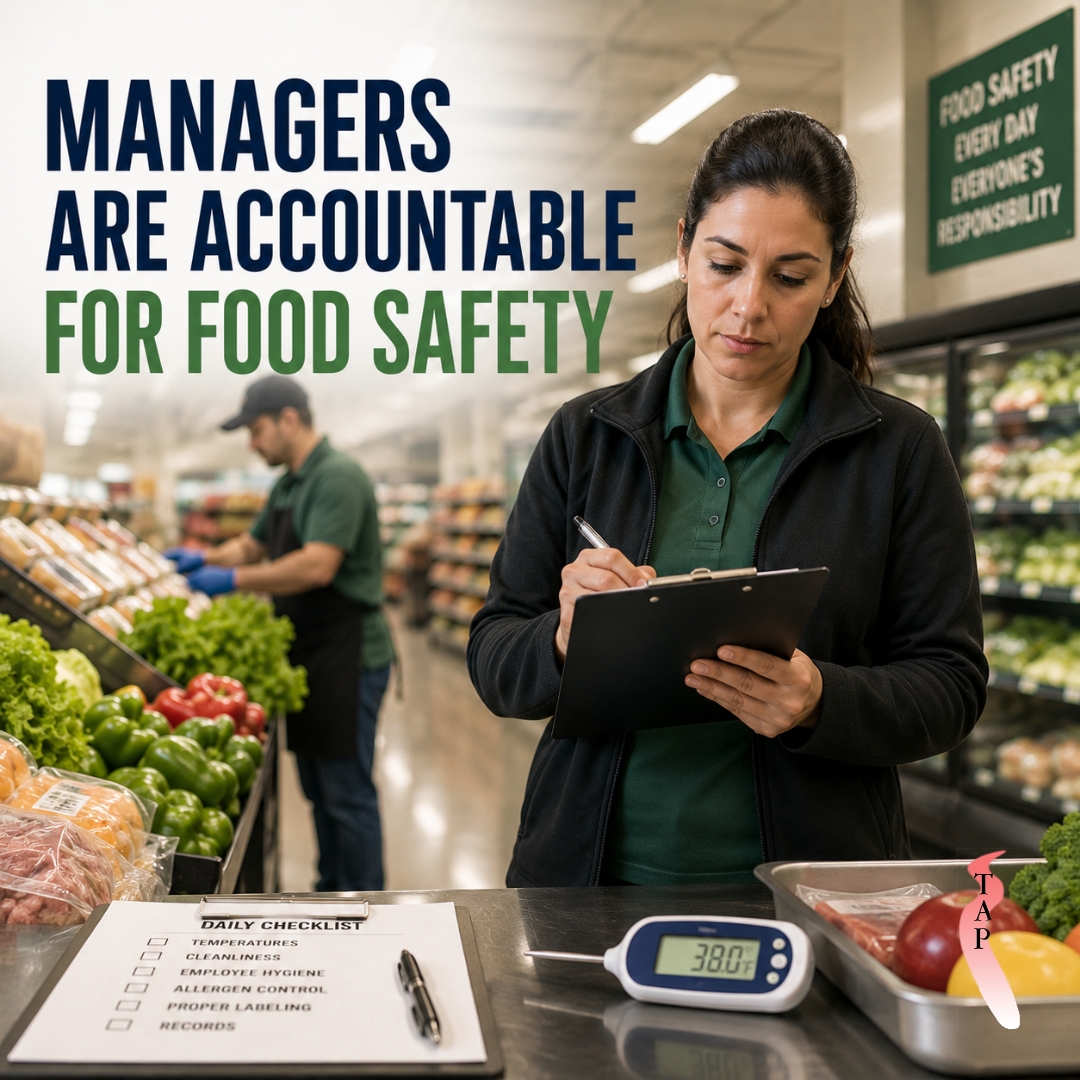
Food safety is a shared responsibility across every grocery store, but managers carry a unique level of accountability. From overseeing food handling procedures to ensuring regulatory compliance, grocery managers are expected to maintain safe operations that protect both customers and employees.
When food safety standards are ignored or inconsistently enforced, the consequences can extend beyond failed inspections. Managers may face professional, legal, and organizational consequences for failing to meet their responsibilities. Understanding this accountability is essential for anyone leading grocery operations.
Why Managers Play a Critical Role
Food safety programs depend on strong leadership. While employees carry out daily tasks, managers are responsible for ensuring those tasks are completed correctly and consistently.
Managers help:
- Maintain regulatory compliance
- Protect customer health
- Prevent foodborne illness
- Reduce operational risks
- Support employee performance
- Build a strong food safety culture
Leadership influences every aspect of food safety.
Areas Where Managers Are Accountable
Inspectors often evaluate not only employee practices but also how effectively management oversees food safety systems.
Key responsibilities include:
- Monitoring food temperatures
- Supervising employee hygiene
- Maintaining sanitation procedures
- Reviewing food safety records
- Correcting violations promptly
- Ensuring regulatory compliance
When these responsibilities are neglected, violations become more likely.
Common Management Failures That Lead to Violations
1. Inadequate Employee Supervision
Employees need regular guidance to follow food safety procedures consistently.
Problems may arise when:
- Procedures are not reinforced
- Unsafe practices go uncorrected
- New employees receive limited training
- Managers fail to monitor compliance
Active supervision helps prevent routine mistakes from becoming violations.
2. Weak Allergen Management
Food allergies remain one of the most significant food safety concerns in grocery operations.
Managers should ensure:
- Accurate product labeling
- Proper ingredient documentation
- Prevention of allergen cross-contact
- Clear communication between departments
- Employee understanding of allergen procedures
Strong oversight reduces risks for customers with food allergies.
3. Incomplete Documentation
Food safety records demonstrate that required procedures are being followed.
Examples include:
- Temperature logs
- Cleaning schedules
- Corrective action reports
- Equipment maintenance records
- Employee training documentation
Incomplete records can create additional compliance concerns during inspections.
4. Delayed Corrective Action
Minor issues can quickly become significant violations if they are ignored.
Examples include:
- Equipment left unrepaired
- Repeated sanitation deficiencies
- Ongoing employee errors
- Unresolved inspection findings
Managers should address deficiencies as soon as they are identified.
Building a Strong Food Safety Culture
Food safety becomes more effective when it is part of the workplace culture rather than a response to inspections.
Managers can strengthen compliance by:
- Conducting routine food safety reviews.
- Reinforcing safe work practices daily.
- Monitoring employee performance consistently.
- Encouraging employees to report concerns.
- Reviewing allergen procedures regularly.
- Leading by example.
Employees are more likely to follow procedures when managers demonstrate commitment to food safety.
The Importance of Allergen Planning
Managing food allergens requires more than employee awareness. It also requires structured planning and consistent procedures.
An effective allergen management plan should include:
- Product identification
- Ingredient verification
- Cross-contact prevention
- Cleaning procedures
- Employee responsibilities
- Ongoing review and improvement
Planning helps reduce risk while improving operational consistency.
Why Training Supports Manager Accountability
Managers need the knowledge and tools to oversee food safety programs effectively.
Retail Food Safety Manager Certification Training | TAP Series® prepares managers to understand regulatory requirements, stren gthen food safety systems, oversee daily operations, and maintain compliance throughout grocery environments.
Allergen Plan Development Training | TAP Series® provides practical guidance on creating and imp lementing effective allergen management plans that help reduce cross-contact risks, improve communication, and protect customers with food allergies.
Together, these courses help grocery managers strengthen leadership, improve compliance, and reduce the likelihood of food safety violations.
Strong Leadership Creates Safer Grocery Operations
Food safety begins with leadership. Managers who actively monitor operations, support employee training, maintain effective allergen plans, and reinforce compliance every day help create safer stores for customers and employees alike.
By investing in food safety education and structured management practices, grocery organizations can reduce regulatory risks, improve inspection outcomes, and demonstrate a lasting commitment to protecting public health.