TAP Series Workplace Violence Prevention Course
Theft and Escalation in Retail: When Shoplifting Turns Violent
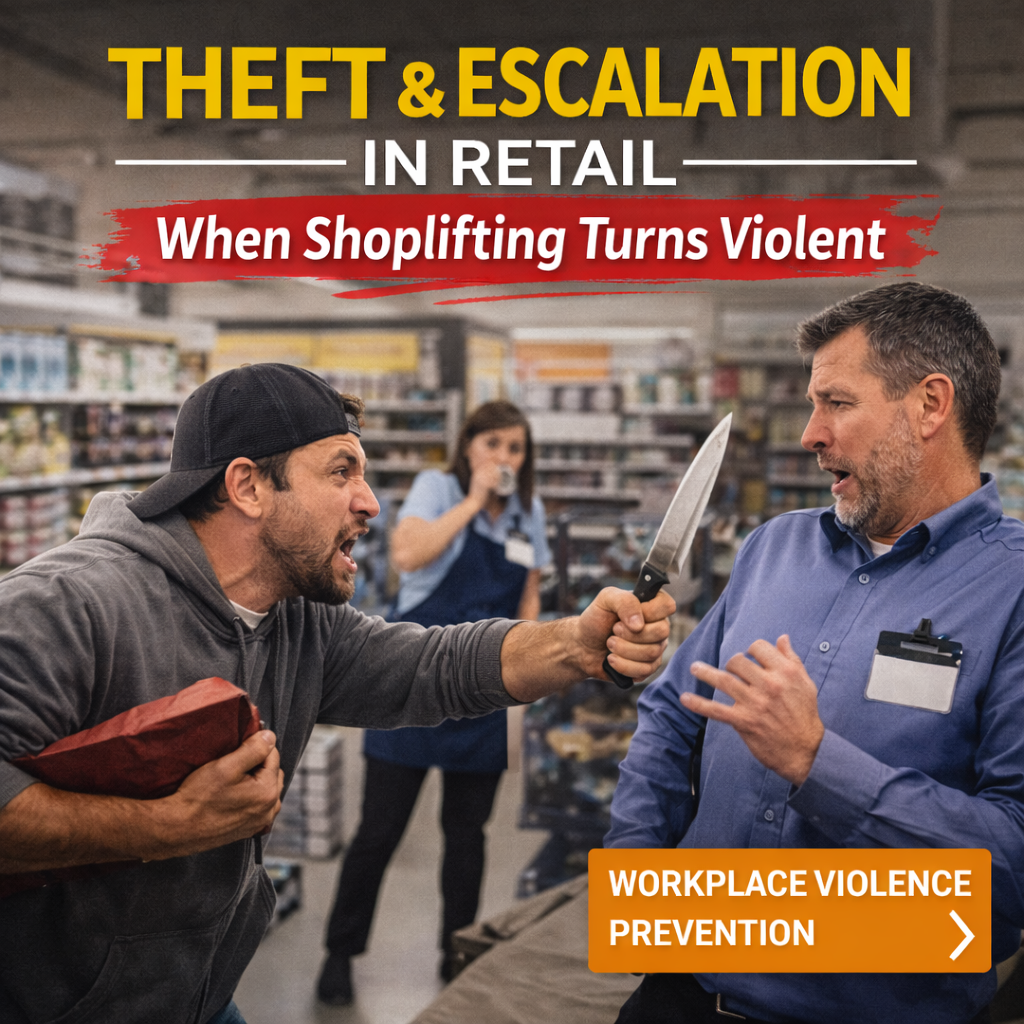
Theft and escalation in the retail industry have become serious operational and safety concerns for U.S. businesses. What begins as routine shoplifting can quickly shift into confrontation, threats, or physical violence.
Retail theft is no longer just a loss prevention issue. It is a workplace safety issue.
When employees are unprepared to respond to escalating behavior, minor incidents can spiral into dangerous situations that place staff and customers at risk.
How Retail Theft Escalates Into Violence
Retail environments are high interaction spaces. Employees are often expected to engage with suspected shoplifters, enforce policies, or deter suspicious behavior.
Escalation typically follows this pattern:
- A suspected theft is identified.
- An employee approaches the individual.
- The individual becomes defensive or confrontational.
- Verbal aggression escalates.
- Physical threats or violence occur.
Common escalation triggers include:
- Public confrontation
- Aggressive tone or body language
- Blocking exits
- Attempting to physically retrieve merchandise
- Failure to follow store safety protocols
Without structured training, employees may react emotionally or impulsively, increasing the risk of harm.
The Real Risks of Violent Theft Incidents
When theft turns violent, consequences extend beyond stolen merchandise.
Retail organizations may face:
- Employee injuries
- Workers’ compensation claims
- Civil lawsuits
- OSHA investigations
- Negative media coverage
- Increased employee turnover
- Reduced morale and psychological stress
Violent incidents also affect customers who witness confrontations, damaging trust and brand perception.
Recognizing Warning Signs Before Violence Occurs
Early identification of risk factors is critical.
Employees should be trained to recognize:
- Raised voices and hostile language
- Clenched fists or aggressive posturing
- Rapid movements toward exits
- Refusal to comply with basic requests
- Signs of emotional distress or instability
Recognizing warning signs allows employees to disengage safely rather than escalate the situation.
Why Workplace Violence Prevention Training Matters
Retail theft scenarios require more than basic loss prevention policies. They require structured safety training.
TAP Series offers Workplace Violence Prevention Training to help U.S. retailers reduce risk and protect their teams.
The course covers:
- Definition and types of workplace violence
- Characteristics and impacts of violent incidents
- Importance of adhering to organizational policies
- Hazard identification and mitigation measures
- Reporting obligations and incident documentation
- De-escalation techniques in confrontational situations
- Response strategies to warning signs
- The run hide fight protocol for volatile situations
- Managerial responsibilities in prevention efforts
- Prohibition of retaliation for reporting concerns
Comprehensive training ensures employees understand when to disengage, when to report, and how to protect themselves without increasing risk.
Building Safer Retail Environments
Retail leaders play a key role in preventing escalation.
Effective safety programs include:
1. Clear Non-Confrontation Policies
Employees should never feel pressured to physically intervene.
2. Strong Reporting Systems
Encourage documentation of threats, concerns, and suspicious activity.
3. Physical Security Enhancements
Improve surveillance, lighting, and store layout to reduce risk.
4. Regular Safety Drills
Reinforce response protocols and emergency planning.
5. Manager Accountability
Ensure leadership supports safety over merchandise recovery.
When safety policies are consistently reinforced, employees are more likely to prioritize protection over confrontation.
Protecting People First
Retail theft losses are measurable. The cost of violent escalation is far greater.
Investing in structured workplace violence prevention programs protects:
- Employees
- Customers
- Organizational reputation
- Legal standing
- Operational continuity
For U.S. retail companies, preparing teams to handle escalating theft scenarios with calm, structured response strategies reduces injuries and liability exposure.
When organizations prioritize violence prevention training, they create environments where employees understand that their safety comes first. Proactive retail workplace safety programs transform high risk encounters into controlled, well managed responses that protect everyone involved.