Workplace Safety Training For Retail Employees
Theft and Escalation in Retail: When Shoplifting Turns Into Workplace Violence
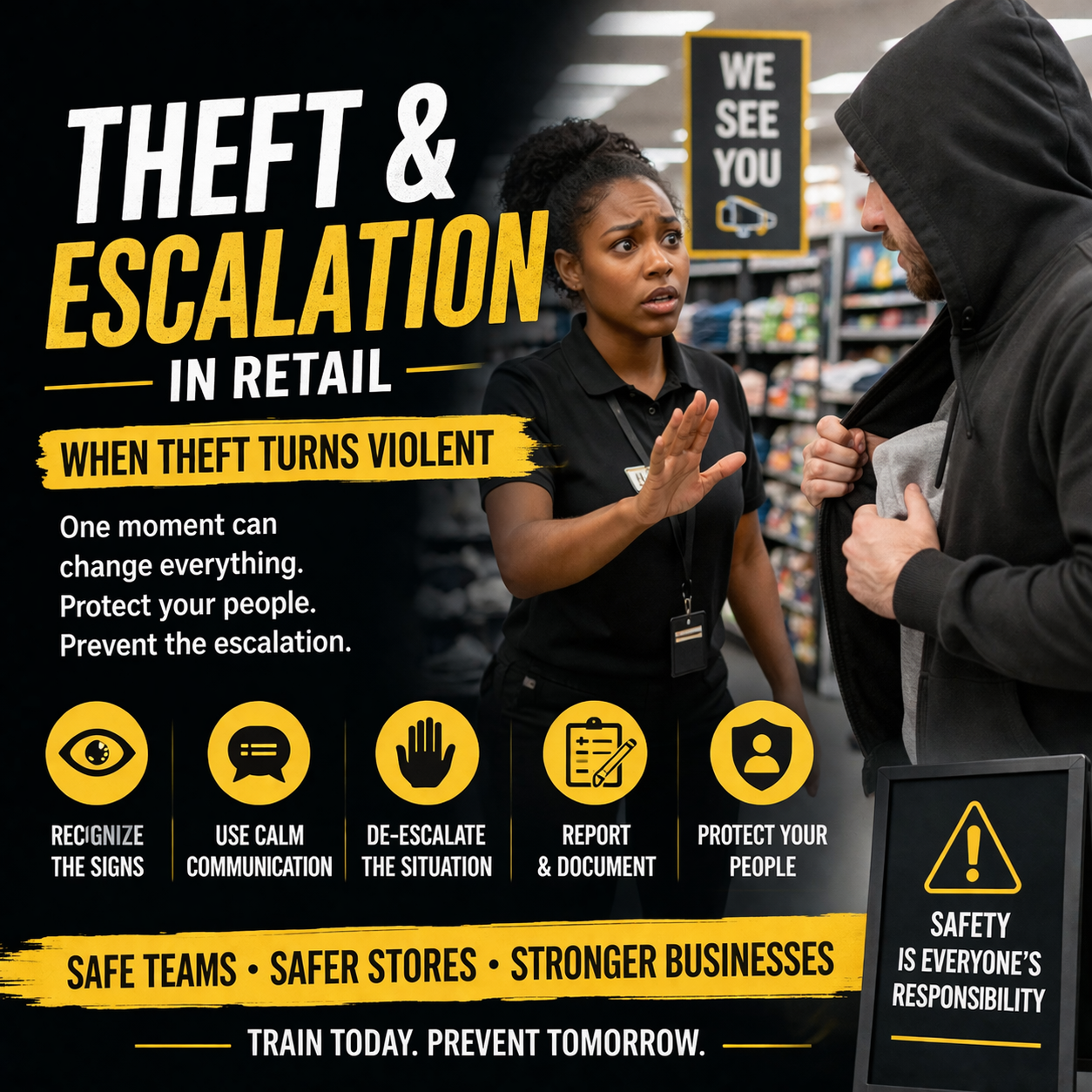
Retail environments are increasingly facing a serious safety challenge. What begins as a routine shoplifting incident can quickly escalate into a dangerous situation for employees and customers. Theft in retail is no longer just a loss prevention issue. It is a workplace safety risk that can lead to verbal threats, physical confrontation, and even violence.
Retail staff are often placed in difficult positions when responding to theft. Without proper training, these encounters can escalate rapidly and put everyone at risk.
Why Theft Incidents Escalate in Retail Settings
Shoplifting incidents can become volatile when emotions, pressure, and uncertainty collide. Many individuals involved in theft may react unpredictably when confronted.
Common escalation triggers include:
- Direct confrontation by employees
- Fear of consequences or arrest
- Miscommunication or aggressive tone
- Crowded or high stress store environments
- Lack of clear response procedures
When staff are unsure how to respond, they may act instinctively, which can unintentionally increase tension.
From Theft to Threat: Understanding the Risk Progression
Retail theft can escalate in stages if not handled carefully. What starts as a minor incident may develop into a more serious safety threat.
- Suspicion of Theft
An employee notices unusual behavior or suspected shoplifting. - Initial Engagement
Staff may approach or question the individual. - Escalation of Emotions
The individual becomes defensive, agitated, or confrontational. - Threatening Behavior
Verbal aggression, intimidation, or hostile body language emerges. - Potential Violence
The situation may escalate into physical confrontation or harm.
Understanding this progression helps employees recognize when to disengage and prioritize safety.
The Risks to Retail Employees
Retail workers are often the first point of contact during theft incidents. Without proper preparation, they may face significant risks.
These include:
- Verbal abuse and threats
- Physical intimidation or assault
- Unsafe attempts to recover stolen items
- Injury to staff or customers
- Emotional stress and anxiety after incidents
Employers have a responsibility to ensure that staff are trained to handle these situations safely and appropriately.
Why De-escalation Matters More Than Confrontation
Attempting to stop theft through direct confrontation can increase the likelihood of violence. In many cases, the safest approach is to avoid escalation and focus on observation and reporting.
Effective de-escalation involves:
- Maintaining a calm and neutral tone
- Avoiding accusatory language
- Keeping a safe physical distance
- Recognizing warning signs early
- Knowing when to disengage
Retail employees should be trained to prioritize safety over recovery of merchandise.
How Workplace Violence Prevention Training Supports Retail Safety
Proper training equips employees with the knowledge and confidence to respond appropriately during high risk situations.
The Workplace Violence Prevention course from TAP Series helps retail teams understand how to prevent, recognize, and respond to escalating incidents.
Learn more about the course here:
Workplace Violence Prevention Plan | Tap Series®
This course is designed to help organizations build safer workplaces by addressing real world risks faced by employees.
Key Skills Developed Through Workplace Violence Prevention Training
Participants gain practical skills that support safer responses to theft related incidents.
Understanding Workplace Violence
Employees learn the different types of workplace violence and how they can occur in retail environments.
Identifying Warning Signs and Risks
Training helps staff recognize early indicators of potential escalation, including behavioral and environmental cues.
De-escalation and Communication Techniques
Employees develop skills to reduce tension and avoid triggering aggressive responses.
Incident Response and Reporting
Staff learn how to respond appropriately during and after an incident, including proper documentation and reporting procedures.
Workplace Violence Prevention Planning
Organizations learn how to implement policies and procedures that support long term safety.
Creating a Safer Retail Environment
Retail theft incidents will continue to occur, but how employees respond can determine whether a situation remains controlled or becomes dangerous.
Retail organizations that prioritize training and safety practices benefit from:
- Reduced risk of injury or harm
- Increased employee confidence in handling difficult situations
- Stronger compliance with workplace safety expectations
- Improved overall store environment for both staff and customers
By investing in structured programs such as Workplace Violence Prevention Training, businesses can better prepare their teams to handle theft related situations safely and reduce the risk of escalation.
When employees are trained to recognize risks and respond with confidence, retail environments become safer, more controlled, and better equipped to handle today’s challenges.