Homeownership Guide
Understanding the Different Types of Residential Properties
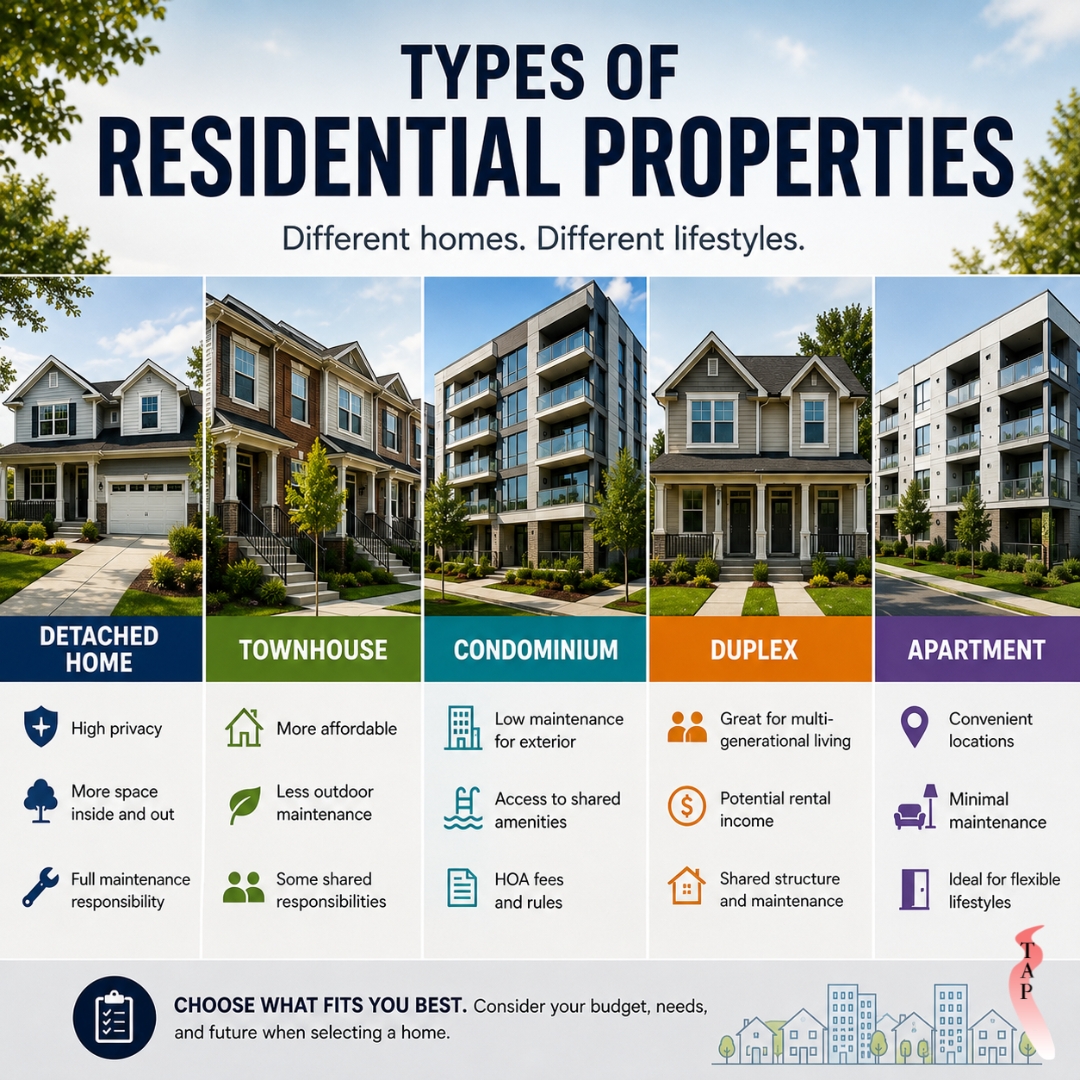
Choosing a home involves more than deciding on a location or budget. The type of residential property you purchase can significantly influence your lifestyle, maintenance responsibilities, monthly expenses, and long-term housing needs. Each property type offers unique advantages and considerations, making it important to understand how they differ before making a decision.
Whether you're a first-time homebuyer, downsizing, or simply exploring your options, learning about the most common residential property types can help you determine which one best fits your personal circumstances and future plans.
Detached Homes
A detached home is a standalone house located on its own parcel of land. It does not share walls with neighboring properties.
Advantages
- Greater privacy
- More indoor and outdoor space
- Opportunity for landscaping and gardening
- More flexibility for renovations, where permitted
- Suitable for growing families
Limitations
- Higher maintenance responsibilities
- Larger utility costs in some cases
- Outdoor maintenance such as lawn care and landscaping
- Potentially higher purchase price in certain locations
Maintenance Responsibilities
Owners are generally responsible for maintaining:
- Roof
- Exterior walls
- Yard
- Driveway
- Plumbing
- Heating and cooling systems
- Structural repairs
Lifestyle Considerations
Detached homes often appeal to buyers who value privacy, outdoor living, and additional space.
Townhouses
Townhouses are multi-level homes that typically share one or two walls with neighboring properties while providing separate entrances.
Advantages
- Often more affordable than detached homes
- Efficient use of living space
- Smaller outdoor maintenance requirements
- Good balance between privacy and convenience
Limitations
- Shared walls may reduce privacy
- Smaller yards
- Homeowners association fees may apply in some communities
Maintenance Responsibilities
Depending on the community, owners may maintain:
- Interior living spaces
- Private outdoor areas
- Certain exterior components
Shared facilities are often maintained collectively.
Lifestyle Considerations
Townhouses can be suitable for buyers seeking lower maintenance while still enjoying many features of a traditional home.
Condominiums
A condominium, or condo, is a privately owned residential unit within a larger building or community.
Owners typically own the interior of their unit while common areas are maintained by a homeowners association.
Advantages
- Lower exterior maintenance responsibilities
- Shared amenities such as fitness centers or pools in some communities
- Convenient locations near urban centers
- Often smaller and easier to maintain
Limitations
- Monthly homeowners association fees
- Shared walls and common spaces
- Community rules and regulations
- Less control over exterior changes
Maintenance Responsibilities
Owners generally maintain:
- Interior walls
- Flooring
- Appliances
- Fixtures
Common areas are typically managed by the association.
Lifestyle Considerations
Condominiums may appeal to buyers looking for convenience, lower maintenance, and access to shared amenities.
Duplexes
A duplex consists of two separate residential units within a single building.
The units may be side-by-side or stacked vertically.
Advantages
- Opportunity for multi-generational living
- Potential rental income if one unit is leased
- More affordable than purchasing two separate homes
Limitations
- Shared structure
- Less privacy than detached homes
- Maintenance responsibilities for both units if owned together
Maintenance Responsibilities
Owners are typically responsible for:
- Roof
- Exterior
- Shared utilities, where applicable
- Landscaping
- Structural maintenance
Lifestyle Considerations
Duplexes may suit buyers interested in flexible living arrangements or accommodating extended family members.
Apartments
Apartments are residential units within a larger building.
In many markets, apartments are commonly rented rather than individually owned, although ownership structures vary by location.
Advantages
- Minimal maintenance responsibilities for occupants
- Convenient locations
- Access to shared facilities in some buildings
- Suitable for individuals seeking flexible living arrangements
Limitations
- Limited personalization
- Shared walls
- Smaller living spaces
- Community rules
Maintenance Responsibilities
Maintenance responsibilities depend on the ownership arrangement.
Occupants are generally responsible for interior cleanliness and minor upkeep, while building management handles common areas and major structural maintenance.
Lifestyle Considerations
Apartments often appeal to individuals seeking convenience, lower maintenance, and urban living.
Think About Your Lifestyle
When comparing residential properties, consider questions such as:
- How much maintenance am I comfortable handling?
- Do I want outdoor space?
- Is privacy important to me?
- Would shared amenities add value to my lifestyle?
- How long do I plan to live in the property?
- Will my space requirements change in the future?
The answers to these questions can help narrow your options.
Consider Future Needs
Your housing needs today may not be the same several years from now.
Think about factors such as:
- Family growth
- Working from home
- Aging in place
- Commuting needs
- Lifestyle changes
Choosing a property that can accommodate future needs may reduce the likelihood of needing to move again sooner than expected.
Conclusion
Understanding the different types of residential properties is an important step in choosing a home that aligns with your lifestyle and financial goals. Detached homes, townhouses, condominiums, duplexes, and apartments each offer distinct advantages, maintenance responsibilities, and living experiences.
Rather than focusing solely on purchase price, buyers should consider how each property type fits their daily routines, long-term plans, and comfort with ongoing maintenance. Taking the time to compare your options carefully can help you make a more informed and confident home-buying decision.