Employer Harassment Compliance
Using Employee Feedback to Improve Sexual Harassment Prevention Programs
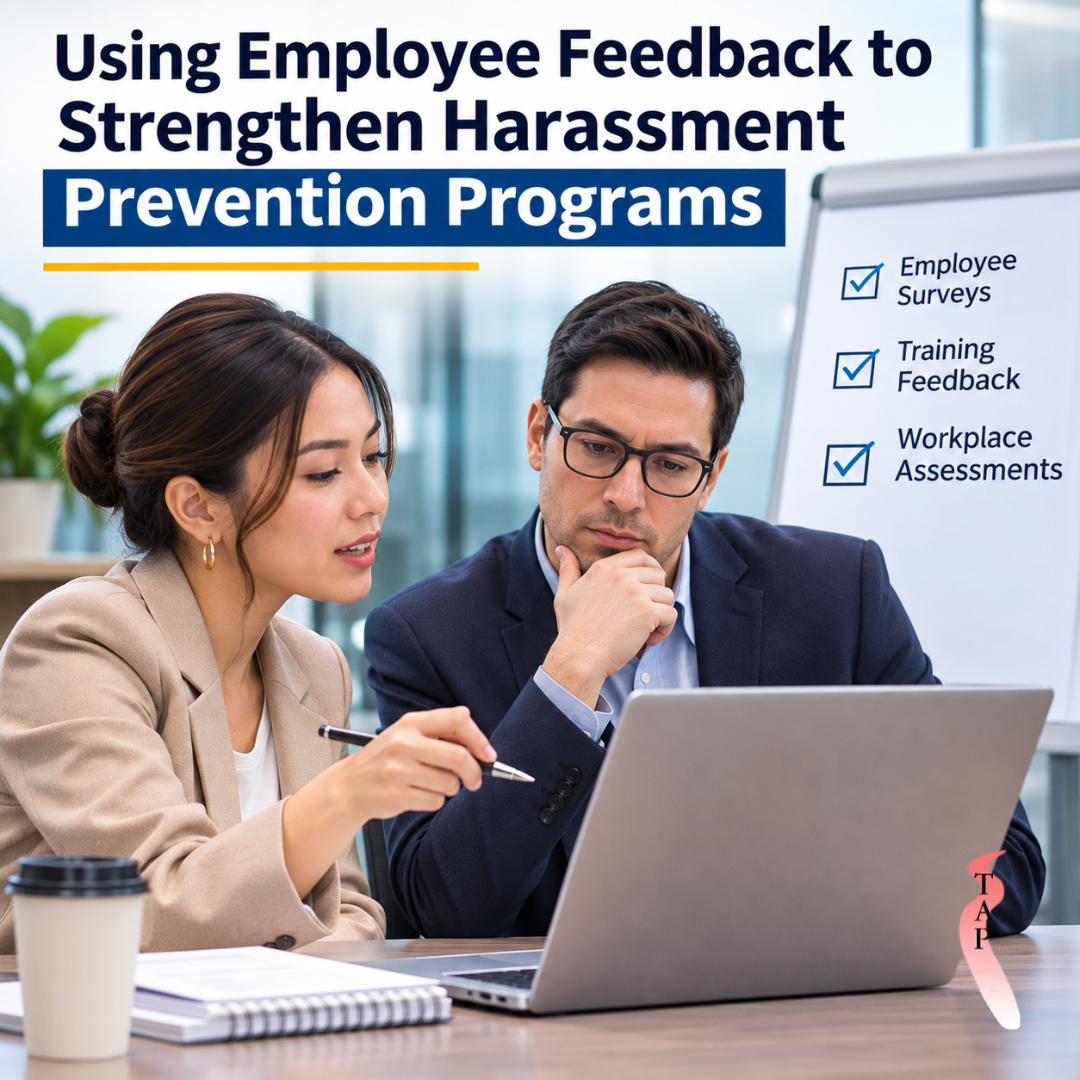
Sexual harassment prevention programs should reflect the experiences, concerns, and needs of employees. While workplace policies and training establish professional expectations, employee feedback can help employers identify gaps that may otherwise go unnoticed.
Appropriately designed surveys, training evaluations, and workplace assessments can provide valuable insights into employee awareness, reporting barriers, and workplace culture.
However, these tools should complement formal reporting procedures rather than replace them.
Why Employee Feedback Matters
Employees may experience workplace policies differently from how management intends them to operate.
Collecting employee feedback can help employers identify:
- Gaps in understanding workplace harassment policies.
- Uncertainty about available reporting channels.
- Concerns about confidentiality and retaliation.
- Areas where training may need improvement.
- Inconsistent enforcement of workplace conduct standards.
- Workplace practices that may discourage reporting.
A low number of formal complaints does not necessarily indicate that harassment is absent.
Designing Effective Employee Surveys
Workplace surveys should use clear, neutral language that encourages employees to provide meaningful feedback.
Employers can assess whether employees understand reporting procedures, feel comfortable raising concerns, and believe workplace policies are applied consistently.
Important survey practices include:
- Making participation voluntary.
- Protecting employee privacy.
- Avoiding leading or judgmental questions.
- Clearly explaining how responses will be used.
- Communicating any limitations on anonymity or confidentiality.
Surveys should also provide information about formal reporting options for employees who wish to report specific incidents.
Using Training Feedback to Identify Gaps
Employee feedback following sexual harassment prevention training can help employers evaluate whether training materials address relevant workplace concerns.
Training evaluations may assess:
- Understanding of inappropriate workplace conduct.
- Awareness of reporting procedures.
- Relevance of workplace scenarios.
- Understanding of professional boundaries.
- Confidence in identifying and responding to inappropriate behavior.
Employers can use this information to refine training materials and identify areas requiring additional education.
Keeping Formal Reporting Channels Accessible
Employee surveys and workplace assessments should never become substitutes for established complaint procedures.
Employers should clearly communicate that employees can report harassment directly without waiting for a survey or scheduled assessment.
If feedback reveals specific allegations or potential misconduct, employers should evaluate the information and respond appropriately, even when no formal complaint has been submitted.
Protecting Privacy and Preventing Retaliation
Employees may hesitate to provide feedback if they believe their responses could affect their employment or professional relationships.
Employers should limit access to sensitive responses, protect identifiable information, and avoid attempting to identify anonymous respondents unnecessarily.
Supervisors should also understand that employees must not face unlawful retaliation for reporting harassment or engaging in other legally protected activities.
Legal Background
Title VII of the Civil Rights Act of 1964 prohibits covered employers from engaging in unlawful sex discrimination, including sexual harassment that meets applicable legal standards.
Employers should respond appropriately when they become aware of potential harassment, regardless of whether the information comes through a formal complaint or another source.
Employee feedback initiatives should also account for applicable privacy, labor, and anti-retaliation requirements.
The Importance of Sexual Harassment Training
Employee feedback can help employers identify opportunities to improve harassment prevention education and reinforce workplace expectations.
Sexual Harassment Training | TAP Series®
Training should reinforce:
- Employee awareness: Recognizing inappropriate conduct and professional boundaries.
- Reporting procedures: Understanding available channels for raising concerns.
- Supervisor responsibilities: Responding appropriately to feedback and complaints.
- Workplace respect: Encouraging professional and respectful interactions.
- Prevention strategies: Identifying workplace risks and opportunities for improvement.
Training should complement accessible reporting channels, clear policies, and consistent complaint-handling procedures.
Key Takeaways for Employers
Employers can use employee feedback responsibly by:
- Conducting periodic workplace surveys and assessments.
- Reviewing training feedback to identify knowledge gaps.
- Protecting employee privacy and sensitive information.
- Maintaining accessible formal reporting channels.
- Responding appropriately to concerns identified through feedback.
- Documenting improvement measures and reviewing their implementation.
Conclusion
Employee feedback provides opportunities to identify weaknesses in workplace policies, training programs, and reporting procedures.
By listening to employees, protecting their privacy, and maintaining accessible complaint channels, employers can make informed improvements to their workplace harassment prevention practices.
Regular assessments and appropriate follow-up can support a workplace culture built on respect, communication, and accountability.