Evaluating Neighborhoods Near Industrial Facilities
What to Consider Before Buying a Home Near Industrial Areas
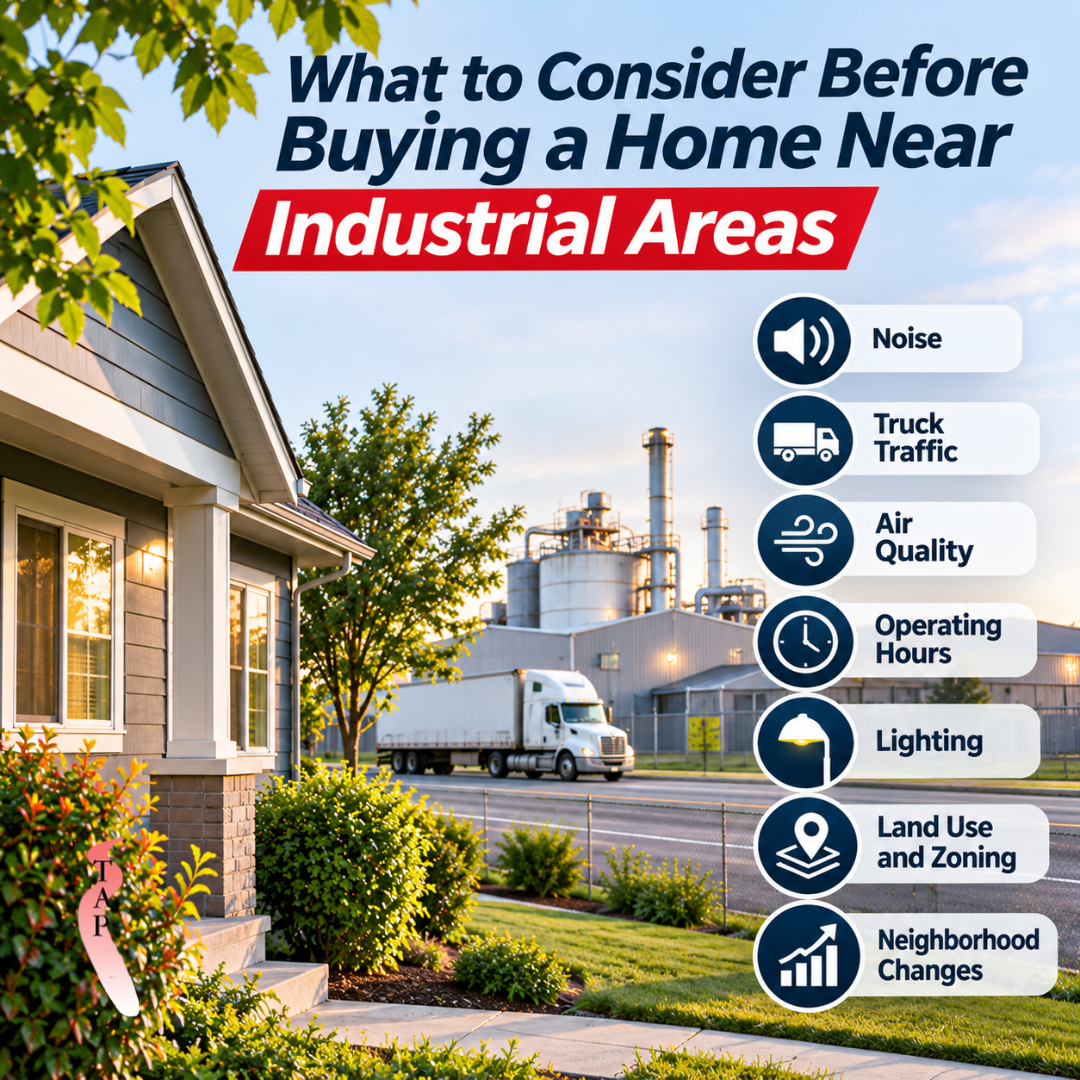
Buying a home near industrial areas requires consideration of both the property's condition and its surrounding environment. Manufacturing facilities, warehouses, distribution centers, and other industrial operations can influence neighborhood traffic, noise levels, air quality, and everyday living conditions.
However, proximity to industrial activity does not automatically make a residential property unsuitable. Some industrial facilities operate with minimal disruption, while others may have more noticeable effects on nearby communities.
Understanding these differences can help prospective homebuyers evaluate a property's surroundings, assess potential inconveniences, and develop realistic expectations about long-term homeownership.
Understand the Types of Nearby Industrial Activities
Industrial areas can accommodate a wide range of businesses and operations, each with different environmental and operational characteristics.
Common industrial facilities include:
- Manufacturing and processing plants.
- Warehouses and distribution centers.
- Automotive repair and maintenance facilities.
- Construction material suppliers.
- Recycling and waste management facilities.
- Freight terminals and logistics centers.
A warehouse may primarily generate delivery vehicle traffic, while a manufacturing facility may produce machinery noise or industrial emissions.
Buyers should research the nature of nearby operations rather than relying solely on an area's industrial designation.
Understanding what businesses operate nearby provides useful context for evaluating potential effects on residential living.
Evaluate Noise Levels Throughout the Day
Noise is an important consideration when purchasing property near industrial facilities.
Potential sources include operating machinery, loading equipment, ventilation systems, reversing alarms, and commercial vehicles.
The frequency and intensity of noise may vary depending on operating schedules, distance, building design, and surrounding landscape features.
A property that appears quiet during a weekend viewing may experience different conditions during weekday operations.
Buyers should consider how external noise could affect sleeping, working from home, outdoor activities, and general household comfort.
Features such as insulated windows, solid exterior walls, and appropriate building orientation may reduce some indoor noise exposure. However, these features may have limited effects on outdoor spaces.
Consider Truck Traffic and Road Conditions
Industrial facilities often depend on commercial vehicles to transport materials, equipment, and finished products.
Depending on local road networks, trucks may travel through or alongside residential neighborhoods.
Frequent heavy vehicle traffic can influence congestion, pedestrian comfort, road noise, and access to residential streets.
Buyers should observe whether nearby roads serve as designated freight routes and whether commercial vehicles regularly pass the property.
It is also useful to consider driveway accessibility, street parking, pedestrian crossings, and the availability of alternative routes.
A home located near an industrial area may experience relatively little disruption if commercial traffic uses separate access roads.
The actual road layout and traffic patterns are more informative than distance alone.
Research Air Quality and Environmental Conditions
Certain industrial activities may release airborne particles, odors, or other emissions.
Potential sources include manufacturing processes, vehicle exhaust, material handling, and fuel combustion.
However, the presence of an industrial facility does not establish that surrounding residential air quality is poor or unsafe.
Environmental effects depend on several factors, including the type of operation, emission controls, weather conditions, prevailing winds, and distance from the source.
Buyers can review publicly available environmental records and regional air quality information.
In the United States, resources such as AirNow and the Environmental Protection Agency provide information about air quality and environmental conditions.
Regional monitoring data may not reflect conditions at an individual property. Persistent concerns may warrant further investigation or professional environmental assessment.
Understand Industrial Operating Hours
Industrial businesses may operate during standard business hours, overnight shifts, weekends, or continuously.
Operating schedules can influence when surrounding neighborhoods experience vehicle movements, equipment noise, and exterior lighting.
For example, a distribution center may receive deliveries early in the morning, while a manufacturing facility may operate machinery throughout the night.
Buyers should investigate whether nearby facilities have operating restrictions or documented schedules.
However, business hours and operational activities may change over time.
Understanding current operating patterns can help prospective homeowners evaluate whether surrounding activities are compatible with their household routines.
Assess Exterior Lighting and Nighttime Conditions
Industrial properties often use exterior lighting for security, vehicle movement, loading areas, and overnight operations.
Depending on fixture placement and property orientation, artificial light may extend into neighboring residential areas.
Potential effects include light entering bedroom windows, reduced nighttime privacy, and changes to the appearance of outdoor spaces after dark.
Buyers should consider the location of nearby lighting fixtures and whether buildings, fences, or vegetation provide separation.
Visiting the neighborhood after sunset can reveal conditions that may not be noticeable during daytime property inspections.
Review Local Land Use and Zoning Information
Land-use classifications and zoning regulations help establish what types of activities may occur within designated areas.
Residential properties located near industrial zones may be affected by future development or changes in neighboring land uses.
Buyers can review local planning maps, zoning information, development applications, and publicly available planning documents.
For example, an undeveloped industrial parcel near a residential neighborhood could eventually accommodate a warehouse or manufacturing facility, subject to applicable approvals.
Existing conditions do not necessarily reflect how surrounding land will be used in the future.
Because zoning requirements vary by jurisdiction, buyers should consult the appropriate local planning authority for relevant information.
Consider Potential Neighborhood Changes
Industrial development can influence surrounding communities in different ways.
New businesses may create employment opportunities, support infrastructure improvements, or increase demand for nearby services.
Conversely, expanding industrial operations may introduce additional traffic, construction activity, or changes to neighborhood character.
The effects on residential property demand and value are not uniform and depend on broader market conditions, local infrastructure, and buyer preferences.
Researching proposed developments and long-term community plans can help buyers understand potential changes without relying on assumptions about future property values.
Visit the Neighborhood at Different Times of Day
A single property viewing may provide an incomplete picture of surrounding industrial activity.
Visiting the area at different times can help buyers observe variations in neighborhood conditions.
Useful times to visit include:
- Early mornings: Observe delivery schedules and commercial vehicle movements.
- Weekday afternoons: Assess normal industrial operations and traffic.
- Evenings: Evaluate noise levels as residents return home.
- After dark: Observe exterior lighting and overnight activities.
- Weekends: Compare conditions with regular working days.
Weather conditions and seasonal business activity may also influence observations.
Repeated visits can provide a broader understanding of the neighborhood, although they cannot establish every possible future condition.
Conclusion
Living near industrial facilities can involve both practical advantages and potential inconveniences. Noise, commercial traffic, air quality, operating schedules, lighting, and future land development may influence the residential experience.
The suitability of a property depends on the nature of surrounding operations, existing infrastructure, household preferences, and documented environmental conditions.
By researching local land-use records, reviewing environmental information, and visiting the neighborhood at different times, prospective homeowners can develop a more informed understanding of the property's surroundings and long-term suitability.
This article is intended for general educational purposes only and does not constitute environmental, legal, property valuation, or financial advice. Local regulations and environmental conditions vary by location.