Workplace Religious Accommodation
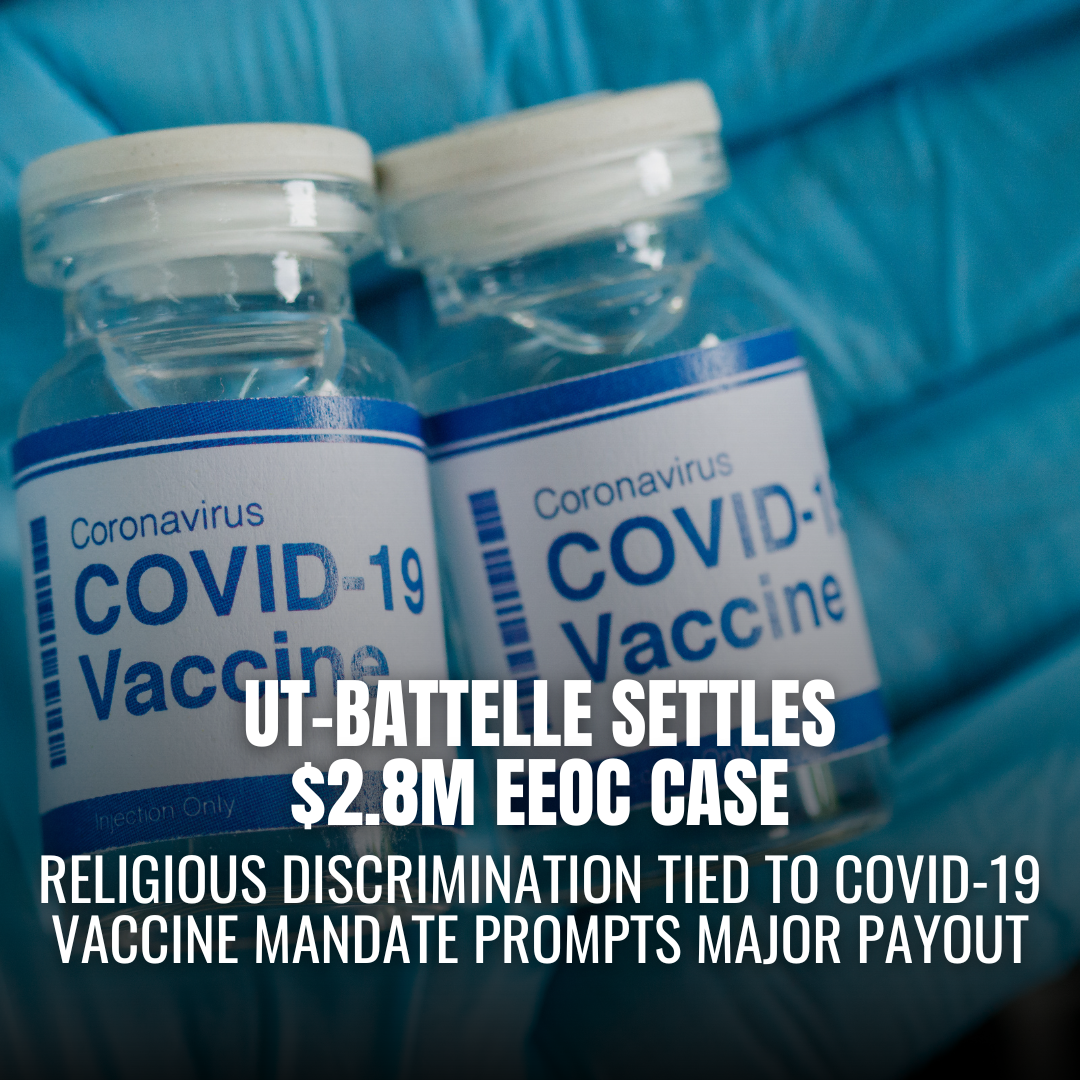
UT-Battelle to Pay $2.8 Million After EEOC Finds Religious Discrimination Over COVID-19 Vaccine Policy
Background
UT-Battelle, LLC — the managing contractor of Oak Ridge National Laboratory in Tennessee — reached a $2.8 million settlement with the U.S. Equal Employment Opportunity Commission (EEOC) following an investigation into its COVID-19 vaccine mandate. The case stemmed from employees who sought religious exemptions from the organization’s vaccination policy during the pandemic.
In 2021, the EEOC opened an investigation after receiving a commissioner’s charge alleging that UT-Battelle denied reasonable religious accommodations to certain employees who objected to the vaccine on faith-based grounds.
Incident Details
According to the EEOC’s findings, UT-Battelle implemented a COVID-19 vaccination requirement but failed to grant accommodation requests from employees who cited sincerely held religious beliefs. The affected workers, employed at Oak Ridge National Laboratory, alleged that they faced adverse consequences after their accommodation requests were denied.
Rather than providing alternate arrangements — such as reassignment, regular testing, or remote work — UT-Battelle allegedly enforced its policy in a way that resulted in discriminatory outcomes for those employees.
Legal Background
The case falls under Title VII of the Civil Rights Act of 1964, which prohibits employment discrimination based on religion and requires employers to provide reasonable accommodations for employees’ sincerely held religious beliefs unless doing so would cause undue hardship.
Under Title VII, employers must engage in an interactive process with employees seeking accommodations and consider all viable alternatives before denying a request.
Settlement Terms
The EEOC’s investigation concluded with a two-year voluntary settlement agreement, in which UT-Battelle agreed to pay over $2.8 million in monetary relief. This amount includes back pay and compensatory damages for the affected employees.
In addition to financial compensation, UT-Battelle will:
- Update and recirculate its religious accommodation policies;
- Provide training to human resources staff on handling accommodation requests;
- Ensure compliance reporting to the EEOC throughout the agreement’s duration.
The company also reaffirmed its commitment to respecting religious diversity in the workplace while maintaining health and safety standards.
Key Takeaways
- Religious accommodations remain protected under Title VII, even during public health emergencies such as COVID-19.
- Employers must engage in good-faith discussions with employees requesting accommodations to avoid violating civil rights laws.
- Settlement agreements like this reinforce the EEOC’s focus on ensuring pandemic-related employment policies align with federal anti-discrimination standards.
Conclusion
The UT-Battelle case underscores the continuing importance of balancing workplace safety measures with employees’ religious rights. As organizations adapt to evolving health and labor challenges, clear policies and fair accommodation processes are essential to maintaining compliance with Title VII and upholding workplace equity.