Retail Warehouse Safety Compliance Forklift
Warehouse Safety in Retail Depends on Forklift Accountability and Risk Control
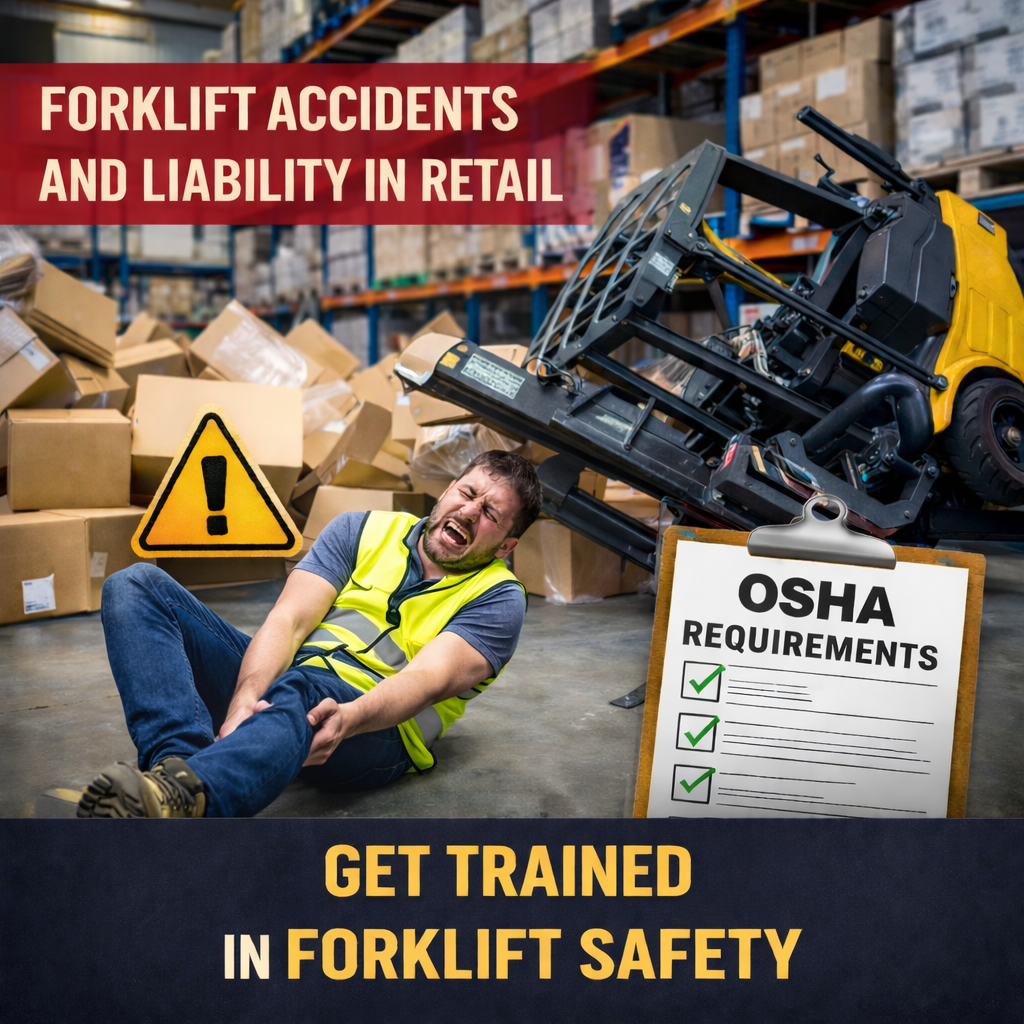
Forklift accidents and liability remain one of the most serious safety risks in retail warehouse operations. From distribution centers to backroom storage areas, improper forklift use can lead to severe injuries, product damage, and costly legal consequences for U.S. retail businesses.
In many cases, these incidents are preventable. The difference comes down to training, supervision, and consistent safety enforcement.
Why Forklift Accidents Create Significant Liability in Retail
Forklifts are essential for efficiency, but they also introduce high-risk conditions when not properly managed.
Retail employers can face liability due to:
- Operator error caused by lack of training
- Failure to enforce OSHA safety standards
- Unsafe warehouse layouts and traffic flow
- Inadequate equipment inspections and maintenance
- Poor pedestrian safety controls in shared spaces
When accidents occur, investigations often focus on whether proper training and safety procedures were in place and actively enforced.
Common Causes of Forklift Accidents in Retail Warehouses
Understanding where risks originate allows managers to take proactive control.
Improper Operation of Equipment
- Driving too fast or making unsafe turns
- Incorrect use of controls and lifting mechanisms
Lack of Pre-Operational Inspections
- Overlooking mechanical issues
- Using unsafe or damaged forklifts
Unsafe Loading and Unloading Practices
- Unbalanced loads
- Improper stacking or lifting techniques
Poor Navigation in Tight Spaces
- Collisions in aisles or loading docks
- Mishandling ramps and inclines
Pedestrian Safety Failures
- No clear separation between workers and forklifts
- Lack of awareness in shared work zones
Each of these risks reflects gaps in both operator training and managerial oversight.
OSHA Expectations for Forklift Safety in Retail
Retail warehouses must comply with OSHA standards for powered industrial trucks. This includes:
- Certified operator training and evaluation
- Routine inspections and maintenance procedures
- Clear hazard communication practices
- Safe operating procedures for all environments
- Protection for pedestrians in high-traffic areas
Failure to meet these requirements can result in fines, legal exposure, and increased scrutiny during inspections.
How TAP Series Forklift Operator Safety Training Reduces Risk
Forklift Operator Safety Training
👉 Forklift Certification Training | Tap Series®
This course prepares retail employees and operators to handle forklifts safely, confidently, and in compliance with OSHA standards.
Key learning areas include:
- Forklift components, controls, and safety features
- OSHA regulations and best practices for operation
- Pre-operational inspections and preventive maintenance
- Safe driving techniques and maneuvering in tight spaces
- Proper loading, unloading, and material handling
- Navigating ramps, inclines, and loading docks
- Hazard recognition and workplace risk prevention
- Emergency response and hazard communication protocols
- Pedestrian awareness in shared work areas
- Proper shutdown and storage procedures
Why it matters:
Well-trained operators reduce accidents, protect coworkers, and help organizations maintain compliance and operational efficiency.
Building a Safer Warehouse Environment in Retail
Forklift safety is not just an operator responsibility. It requires a coordinated effort across management and staff.
Retail businesses should:
- Require certified training for all forklift operators
- Implement daily inspection and maintenance routines
- Design warehouse layouts with safety in mind
- Establish clear traffic and pedestrian zones
- Monitor compliance and correct unsafe behavior immediately
Consistency is key. Safety procedures must be followed every shift, not just during audits.
Forklift Safety Is a Business and Legal Priority
Forklift accidents can result in serious injuries, operational disruptions, and long-term financial consequences. More importantly, they can expose retail businesses to significant liability if proper safeguards are not in place.
By investing in structured training like TAP Series, companies can:
- Reduce workplace injuries
- Improve operational safety and efficiency
- Maintain OSHA compliance
- Protect employees and company assets
Retail warehouse safety depends on proactive forklift training and consistent enforcement of safe practices across every level of the operation.