Forklift Operator Safety Course
Warehouse Safety in Retail: Forklift Accidents, Liability, and the Cost of Complacency
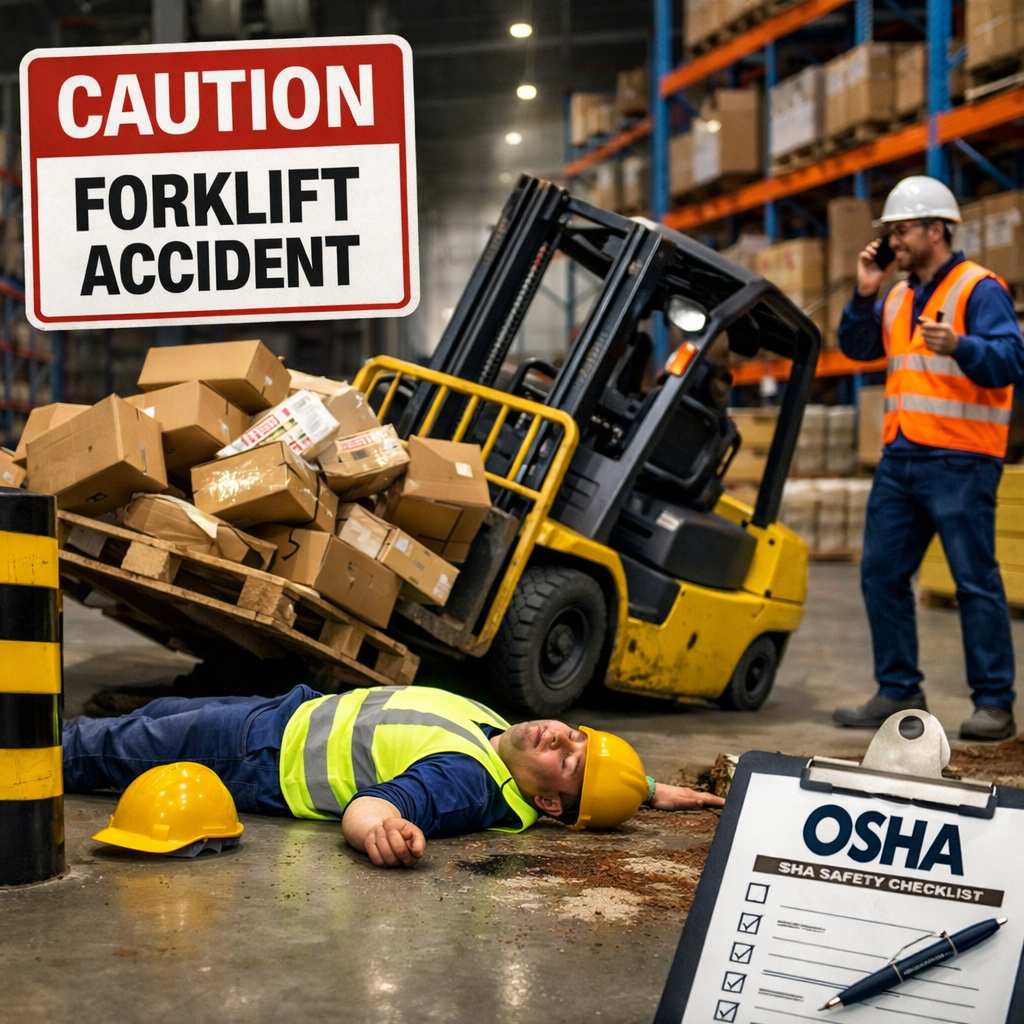
Warehouse safety in retail is no longer just an operational concern. It is a legal, financial, and reputational priority. As retail distribution centers expand to meet eCommerce demand and faster delivery expectations, forklift traffic has increased dramatically. With that growth comes heightened risk.
Forklift accidents are among the most serious and costly incidents in retail warehouse operations. Injuries, damaged inventory, OSHA penalties, and civil liability can quickly escalate from a single preventable mistake.
Retail leaders must recognize that forklift safety is not optional training. It is a frontline defense against operational disruption and legal exposure.
The Reality of Forklift Accidents in Retail Warehouses
Retail warehouses operate under constant pressure:
- Tight fulfillment deadlines
- High employee turnover
- Seasonal workforce surges
- Congested aisles and shared pedestrian zones
Forklifts move pallets, stage inventory, load trucks, and support daily order fulfillment. When operators are rushed or insufficiently trained, the risk multiplies.
Common forklift incidents include:
- Tip overs due to improper load balancing
- Collisions with pedestrians
- Striking racks or inventory
- Dock fall offs
- Improper ramp navigation
Each of these can result in severe injury, fatality, or significant property damage.
Liability Exposure for Retail Employers
Forklift accidents do not stop at workers compensation claims. They can trigger:
- OSHA investigations and citations
- Civil lawsuits for negligence
- Increased insurance premiums
- Operational shutdowns
- Reputational damage
Under OSHA regulations, employers are responsible for ensuring forklift operators are properly trained and certified. Failure to comply may be viewed as negligence.
Retail companies that cannot demonstrate documented forklift safety training face increased liability if an incident occurs.
A single serious accident can cost far more than comprehensive preventive training.
High Risk Areas Inside Retail Distribution Centers
Retail warehouses have unique exposure points that increase forklift risk:
Loading docks
Uneven surfaces and trailer gaps create rollover and fall hazards.
Narrow aisles
Improper turning or speeding can cause rack strikes and falling inventory.
Shared pedestrian zones
Pickers, supervisors, and temporary workers often walk in forklift traffic lanes.
Seasonal staffing spikes
Temporary employees may operate equipment without full hazard awareness.
Without structured training and clear procedures, these risk areas become accident hotspots.
Why Forklift Training Must Be Structured and OSHA Aligned
A short orientation is not enough. Operators must understand:
- Key components, controls, and forklift functions
- OSHA safety regulations and compliance requirements
- Common workplace hazard identification
- Safe loading and unloading techniques
- Proper ramp, dock, and tight space navigation
- Daily inspection and maintenance procedures
- Emergency response protocols
- Pedestrian safety strategies
- Safe parking and shutdown procedures
Retail employers that invest in formal training create a defensible safety program.
Proactive Prevention with Forklift Operator Safety Training
The Forklift Operator Safety course from TAP Series provides structured, accessible training designed to reduce risk and improve compliance.
Explore the course here:
Forklift Certification Training | Tap Series®
This course helps retail warehouse teams:
- Operate forklifts safely and confidently
- Understand OSHA regulations and best practices
- Identify and prevent common hazards
- Perform proper inspections and maintenance
- Navigate ramps, docks, and confined areas safely
- Protect pedestrians in shared workspaces
For multi location retail organizations, consistent forklift training ensures standardized safety expectations across all warehouses.
Protecting Your Workforce and Your Business
Forklift safety is not just about preventing injury. It protects:
- Your employees
- Your operational continuity
- Your insurance profile
- Your brand reputation
- Your legal standing
Retail distribution centers are high speed environments. Accidents often happen when routine becomes automatic and shortcuts are tolerated.
Leaders who prioritize structured forklift certification and refresher training demonstrate due diligence and commitment to safe operations.
Building a Culture of Accountability in Retail Warehousing
Retail safety programs succeed when leadership reinforces:
- Zero tolerance for unsafe operation
- Mandatory training before equipment use
- Routine performance evaluations
- Clear pedestrian safety policies
- Documented inspection procedures
When forklift operators are properly trained and supported, accidents decrease, morale improves, and compliance strengthens.
Final Thoughts
Retail warehouse liability from forklift incidents is preventable. Companies that invest in structured forklift certification training reduce accidents, protect their workforce, and shield themselves from costly legal consequences.
In today’s retail environment, safety is not an expense. It is a strategic safeguard.