Buying Property Near Water
What Buyers Should Know About Flood Risk Before Buying Property
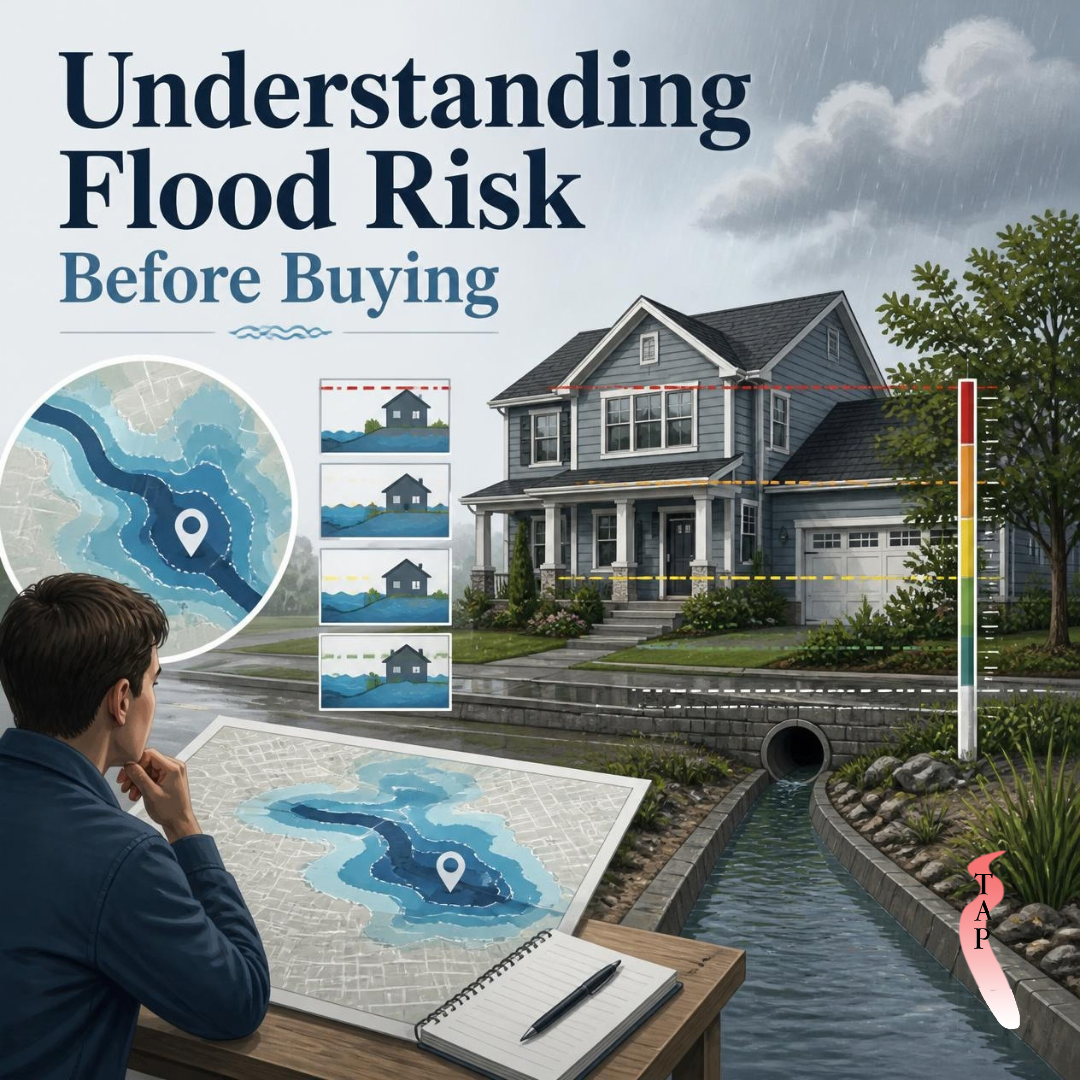
Flood risk is an important consideration when buying a home, particularly for properties near rivers, coastlines, drainage channels, low-lying areas, or locations that have experienced significant rainfall. A property does not need to be directly beside a body of water to experience flooding.
Flooding can affect a property's condition, maintenance requirements, insurance costs, and everyday usability. Understanding the local environment and researching available flood information can help buyers develop a more complete picture of a property before purchasing.
What Is a Flood Zone?
A flood zone is a geographic area identified through flood-risk mapping. Different jurisdictions use different mapping systems and terminology, so buyers should understand the system used in their local area.
In the United States, FEMA's flood maps identify areas with different levels of mapped flood hazard. For example, some zones represent areas subject to a 1% annual chance flood, while other zones represent moderate, minimal, or undetermined hazards.
A property's flood-zone designation can provide useful information, but it should not be treated as a complete prediction of future flooding. Maps are based on available data and can be updated as conditions, development, and mapping methods change.
Why Previous Flooding Matters
A property's history can provide information that a flood-zone map alone may not show.
Buyers can research whether the property or surrounding area has experienced previous flooding, water intrusion, drainage problems, or flood-related damage. Depending on the jurisdiction, this information may be available through property records, local authorities, disclosure documents, insurance records, or other sources.
Previous flooding does not necessarily mean that a property will experience the same problem again. However, it can be useful context when assessing the property's location, construction, drainage, and maintenance history.
Pay Attention to Drainage
Drainage is another important consideration.
During heavy rainfall, water needs somewhere to go. Poor drainage around a property can contribute to standing water, water intrusion, erosion, or damage to landscaping and structures.
When viewing a property, buyers can observe the surrounding terrain and look for signs such as:
- Standing water or unusually wet areas
- Drainage channels or stormwater infrastructure
- Sloping ground toward the home
- Water stains or signs of previous moisture
- Damaged landscaping caused by water movement
- Basement or lower-level water intrusion
- Nearby creeks, rivers, retention areas, or drainage paths
A property's drainage should be considered alongside the wider neighborhood because water can move across property boundaries during major rainfall events.
Consider the Property's Elevation
Elevation can be relevant when assessing flood exposure. The relationship between the property's elevation and nearby water or mapped flood levels can provide additional context.
Some flood-risk maps include information such as base flood elevations. FEMA's mapping materials, for example, use base flood elevations in certain mapped zones to indicate the expected elevation of floodwater during the mapped flood event.
Elevation information can be technical, and the terminology varies by location. Buyers may need to consult local records or qualified professionals to understand how elevation information applies to a particular property.
Research Flood Insurance
Flood risk can also affect insurance considerations.
Standard homeowners insurance policies may not cover flood damage, depending on the policy and location. In the United States, FEMA notes that flood insurance is separate from standard homeowners coverage in many circumstances, and flood insurance may be available even for properties outside the highest-risk mapped areas.
Insurance requirements and coverage vary by country, state, insurer, lender, and property. Buyers should therefore investigate the actual insurance requirements and available coverage for the property they are considering.
It can also be useful to understand how flood risk could affect the property's ongoing ownership costs rather than considering insurance only after purchasing.
Look Beyond the Property Boundary
Flood risk is not limited to what happens directly on a particular lot.
Nearby roads, drainage systems, rivers, streams, coastal areas, development projects, and changes to surrounding land can influence how water moves through an area.
For example, changes in development can alter the amount of paved or otherwise impermeable surface in a neighborhood. Local drainage infrastructure may also affect how quickly water is moved away during heavy rainfall.
Researching the surrounding area can therefore be just as important as examining the house itself.
Check Local Environmental Information
Flooding is only one environmental consideration that buyers may want to research.
Depending on the location, relevant information could include:
- Flood-prone areas
- Coastal or river hazards
- Stormwater drainage
- Wetlands
- Soil and erosion conditions
- Nearby waterways
- Historical flood events
- Local development projects
- Changes to drainage infrastructure
- Other location-specific environmental hazards
Local government agencies and environmental authorities may provide maps, records, or other information relevant to the area.
The availability and accuracy of information can vary, so buyers should distinguish between confirmed records and informal reports.
Do Not Rely on One Source
No single source necessarily provides a complete picture of flood risk.
A flood map can show mapped hazards, while previous property records may provide information about actual flooding. A property inspection can identify visible signs of moisture or damage, while local authorities may provide information about drainage infrastructure or environmental conditions.
Considering multiple sources can help buyers identify information that deserves further investigation.
It is also important to remember that being outside a mapped high-risk area does not necessarily mean a property cannot flood. FEMA specifically notes that flooding can occur outside areas where flood insurance is mandatory.
Consider the Long-Term Ownership Impact
Flood risk can have implications beyond the possibility of water entering a home.
Potential considerations include repairs, moisture-related maintenance, landscaping, insurance, drainage improvements, and the condition of structures exposed to repeated water.
The extent of these costs will depend on the property and location. Buyers can consider how the property's flood exposure fits into their overall expectations for maintenance and ownership.
Final Thoughts
Flood risk is an important part of researching a property, particularly when buying in an area affected by heavy rainfall, rivers, coastal conditions, or drainage challenges.
Buyers can investigate the property's flood-zone designation, previous flooding, drainage, elevation, insurance considerations, and broader environmental conditions. They can also look beyond the individual property to understand how surrounding infrastructure and land characteristics may affect water movement.
Flood maps and other records provide useful information, but they should be interpreted in context. Researching multiple sources and understanding the conditions specific to the property can give buyers a more informed view of the potential risks and responsibilities associated with homeownership.