Food Safety Leadership Training
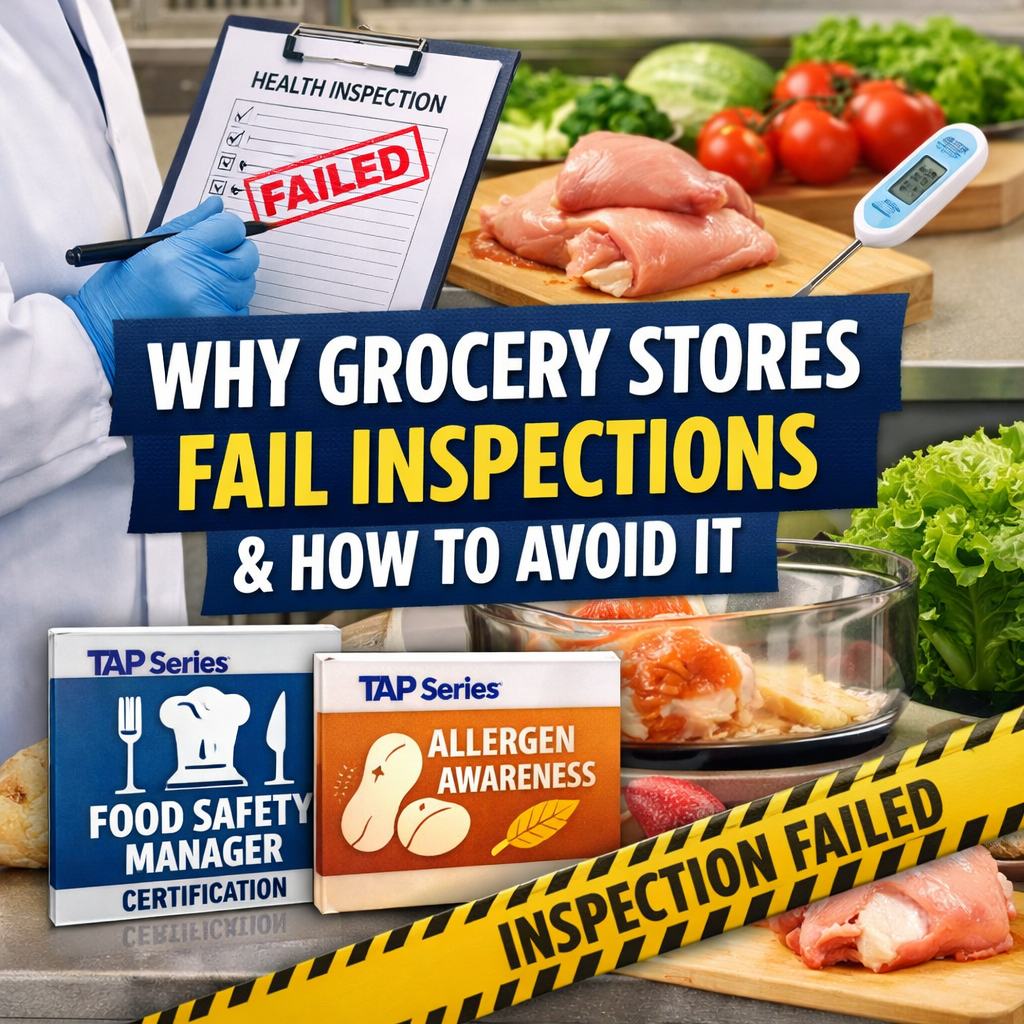
Why Grocery Stores Fail Health Inspections and How TAP Series Helps You Avoid Costly Violations
Introduction
Health inspection failures in grocery stores are rarely caused by one big mistake but rather by repeated small oversights that add up fast during inspections.
From improper food handling to allergen mismanagement, these failures can damage customer trust, trigger costly penalties, and even force temporary closures. The good news is that most inspection violations are preventable with the right training, systems, and accountability in place.
In this TAP Series inspection spotlight, we break down why grocery stores fail inspections, what inspectors commonly look for, and how your team can stay compliant before issues arise.
Why Grocery Stores Fail Health Inspections
Grocery stores operate in high-volume, high-risk environments. Unlike restaurants, grocery operations involve multiple departments such as deli, bakery, meat, seafood, and prepared foods. Each area creates its own food safety challenges.
Most inspection failures stem from three core issues:
- Inconsistent employee training across departments
- Poor documentation and monitoring practices
- Lack of allergen awareness and control
When teams are undertrained or turnover is high, food safety procedures often become informal or ignored. Inspectors notice these gaps quickly.
Most Common Inspection Violations in Grocery Stores
1. Improper Temperature Control
Cold holding, hot holding, and thawing violations remain among the most cited issues. When logs are incomplete or equipment is not monitored, inspectors flag the risk immediately.
2. Cross Contamination
Raw meats stored above ready-to-eat foods, shared prep surfaces, and improper glove use create contamination risks that inspectors take seriously.
3. Poor Employee Hygiene
Inadequate handwashing practices, missing hair restraints, and improper glove changes are easy violations that still cause major inspection failures.
4. Inadequate Cleaning and Sanitizing
Sanitation schedules are often inconsistent during peak hours. Inspectors frequently cite unclean slicers, prep tables, and food contact surfaces.
5. Allergen Mismanagement
Missing allergen labels, shared utensils, and uninformed staff create serious risks for customers with food allergies. This is one of the fastest-growing inspection focus areas in the US.
How Grocery Stores Can Prevent Inspection Failures
Step 1: Assign Certified Food Safety Leadership
Every grocery operation needs trained leadership that understands FDA Food Code requirements and can enforce them consistently.
Step 2: Standardize Training Across All Departments
Food safety training should not vary between deli, bakery, and prepared foods. Consistency reduces inspection risk.
Step 3: Improve Allergen Awareness
Staff must understand allergens, cross contact risks, labeling rules, and how to respond to customer allergy questions.
Step 4: Maintain Real-Time Documentation
Temperature logs, cleaning schedules, and corrective actions should be current and accessible during inspections.
Step 5: Use Ongoing Training Instead of One-Time Courses
Food safety is not a one-and-done requirement. Refresher training keeps teams compliant even during turnover.
TAP Series Training Solutions for Grocery Compliance
TAP Series offers industry-focused training designed specifically for food retail and grocery environments.
Food Safety Manager Certification
The Food Safety Manager course prepares supervisors and managers to lead compliance confidently across all departments.
Key benefits include:
- FDA Food Code aligned training
- Inspection readiness best practices
- Temperature control and sanitation leadership
- Staff accountability and documentation oversight
👉 Enroll here:
Food Safety Safety Manager Training | TAP Series®
Allergen Awareness Training
The Allergen Awareness course helps grocery teams understand allergen risks and prevent cross contact before it happens.
This course focuses on:
- Top food allergens and labeling requirements
- Safe handling and storage procedures
- Customer communication and incident prevention
- Reducing liability and inspection violations
👉 Enroll here:
Allergen Friendly® | Course Information | TAP Series®
Conclusion
Reducing inspection violations in grocery stores starts with proactive education, not reactive fixes. By investing in certified leadership and allergen awareness training, grocery operators can protect customers, reduce risk, and build long-term compliance confidence.
With TAP Series training solutions, grocery teams gain the knowledge they need to pass inspections, protect public health, and strengthen operational standards across every department.