Harassment Risk Management Restaurant Industry
Workplace Culture in Restaurants Directly Impacts Harassment Risk and Employee Turnover
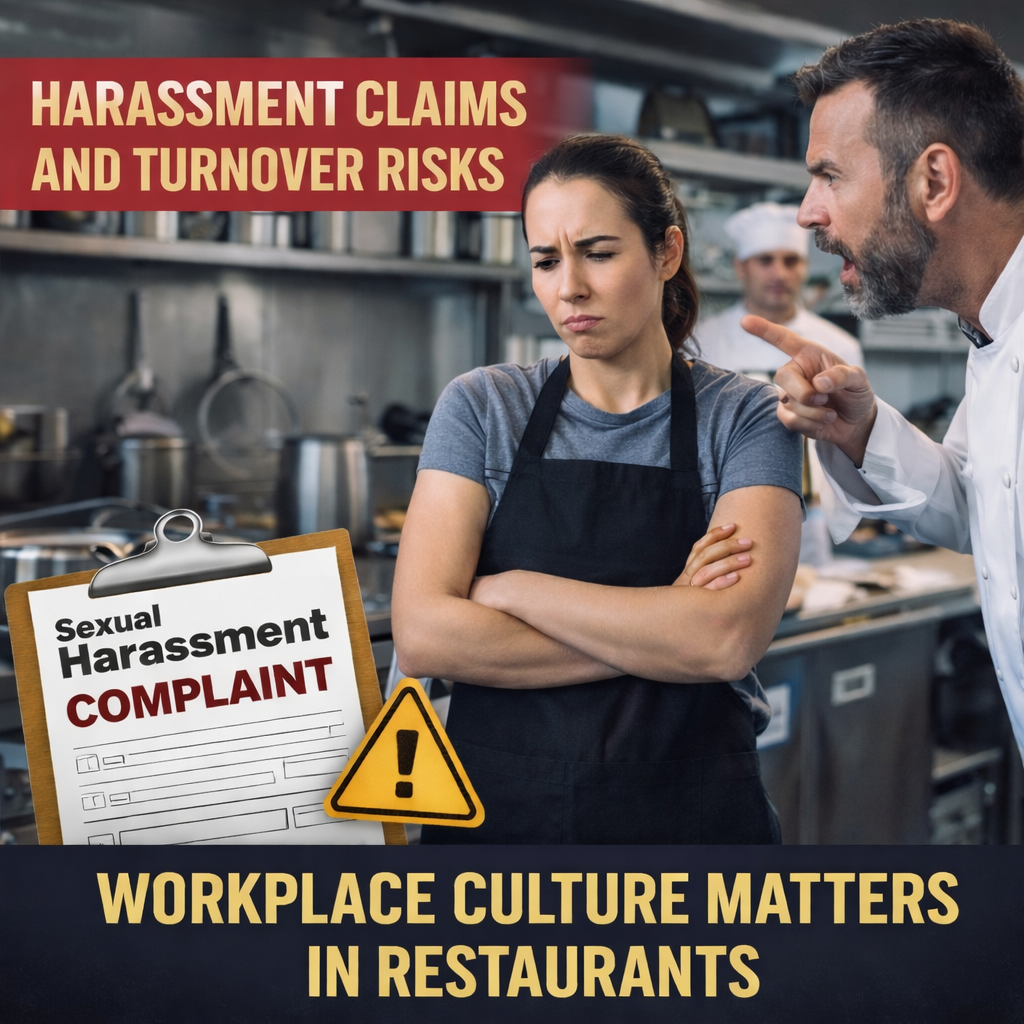
Harassment claims and turnover risks are closely tied to workplace culture, especially in the restaurant industry where fast-paced environments, high stress, and diverse teams create unique challenges. For U.S. restaurant operators, culture is not just an internal matter. It is a legal and operational priority that directly affects retention, reputation, and compliance.
When workplace behavior is not clearly defined and enforced, small issues can quickly escalate into serious claims.
Why Restaurant Culture Creates Higher Risk for Harassment Claims
Restaurants operate in environments that often include:
- Close team interactions in confined spaces
- High-pressure shifts and peak-hour stress
- Varied communication styles across teams
- Power dynamics between supervisors and hourly staff
Without structured training and accountability, these conditions can lead to:
- Inappropriate comments or behavior going unchecked
- Unclear reporting processes for employees
- Managers failing to address issues early
- Normalization of unprofessional conduct
This not only increases legal exposure but also damages team morale and trust.
The Connection Between Harassment and Employee Turnover
High turnover is already a challenge in the restaurant industry. Harassment and poor workplace culture make it worse.
Employees are more likely to leave when they experience or witness:
Lack of Respect in the Workplace
- Discriminatory remarks or jokes
- Dismissive or hostile communication
No Clear Reporting Channels
- Fear of retaliation
- Lack of confidence in management response
Inconsistent Enforcement of Policies
- Rules applied differently across staff
- Favoritism or ignored complaints
Untrained Supervisors
- Managers unsure how to respond to incidents
- Delayed or inappropriate handling of complaints
Turnover increases hiring costs, disrupts operations, and weakens team performance.
Managers Set the Tone for Workplace Culture
Restaurant managers and supervisors play a critical role in preventing harassment and maintaining a respectful environment.
They must:
- Model professional behavior at all times
- Respond to complaints quickly and appropriately
- Ensure policies are clearly communicated and enforced
- Create a safe environment for reporting concerns
- Document incidents and corrective actions properly
When leadership fails to act, liability increases and workplace culture deteriorates.
How TAP Series Training Supports Safer Restaurant Workplaces
Structured training is one of the most effective ways to reduce harassment risks and improve retention.
1. Sexual Harassment Prevention Training for Employees
Sexual Harassment Training | TAP Series®
This course helps restaurant staff understand expectations and responsibilities in the workplace.
Key focus areas include:
- Recognizing inappropriate behavior
- Understanding employee rights and protections
- Encouraging respectful communication
- Knowing how and when to report concerns
Why it matters:
Employees become more aware, confident, and aligned with company standards.
2. Sexual Harassment Prevention Training for Supervisors
Sexual Harassment Training | TAP Series®
Supervisors carry additional responsibility and must respond effectively to complaints.
This course helps supervisors:
- Identify and address harassment early
- Handle complaints professionally and legally
- Understand employer liability and responsibilities
- Maintain proper documentation and follow procedures
Why it matters:
Well-trained supervisors reduce risk, improve trust, and protect the organization from costly claims.
Building a Culture That Reduces Risk and Retains Talent
A strong workplace culture does not happen by accident. It is built through consistent actions, clear expectations, and ongoing training.
Restaurant operators can strengthen culture by:
- Establishing clear anti-harassment policies
- Providing regular training for all staff levels
- Encouraging open and safe communication
- Holding managers accountable for enforcement
- Taking immediate action on reported issues
When employees feel safe and respected, they are more engaged and more likely to stay.
Workplace Culture Is a Business and Legal Priority
Harassment claims are not just HR issues. They are business risks that impact staffing, operations, and brand reputation.
By investing in proactive training like TAP Series, restaurant operators can:
- Reduce legal exposure
- Improve employee retention
- Strengthen team performance
- Create a safer and more professional workplace
A strong workplace culture protects your people, your business, and your long-term success in the restaurant industry.