Respectful Workplace Training Food Service
Workplace Culture in the Restaurant Industry: Harassment Claims and Turnover Risks
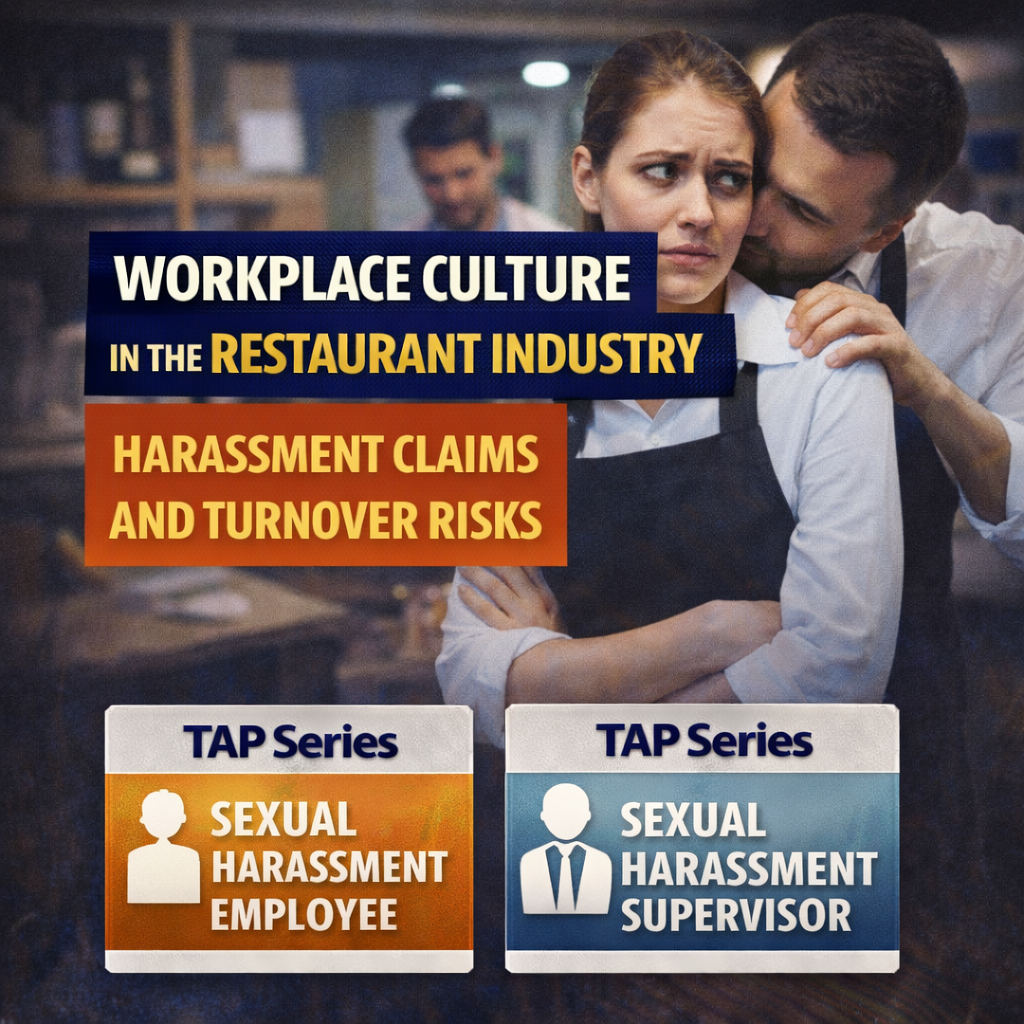
Workplace culture in the restaurant industry directly impacts employee retention, brand reputation, and legal exposure. In fast paced restaurant environments, unclear boundaries, power imbalances, and lack of training can quickly lead to harassment claims and high turnover.
For US restaurant operators, addressing harassment is not just a compliance issue. It is a leadership responsibility that shapes culture, morale, and long term business stability.
Why Restaurants Face Higher Harassment Risk
Restaurants often operate with close quarters, late hours, tip based pay structures, and hierarchical reporting lines. These factors increase the likelihood of inappropriate behavior when expectations are not clearly defined or enforced.
Common risk factors include:
- High employee turnover and seasonal staffing
- Informal workplace norms
- Limited management presence during peak shifts
- Inconsistent reporting procedures
- Lack of role specific training for employees and supervisors
When these risks are ignored, harassment complaints become more likely.
How Harassment Claims Lead to Turnover
Harassment does not only affect the individuals involved. It impacts entire teams.
When employees feel unsafe or unsupported, they are more likely to:
- Quit without notice
- Warn others about the workplace
- File formal complaints
- Disengage from their work
- Seek legal action
Turnover driven by harassment increases hiring costs, disrupts service quality, and damages team cohesion.
The Legal and Financial Impact of Harassment Claims
Sexual harassment claims can expose restaurants to serious consequences under federal and state laws.
Potential outcomes include:
- Costly legal defense and settlements
- Regulatory investigations
- Management discipline or termination
- Public complaints and reputational harm
- Increased insurance premiums
- Loss of trust from employees and customers
Many claims point back to a lack of training or failure to respond appropriately when issues arise.
Why Training Is Critical for Restaurant Culture
Training sets expectations, defines boundaries, and empowers employees to speak up. It also gives supervisors the tools they need to prevent issues before they escalate.
Effective sexual harassment training helps organizations:
- Clearly define what constitutes sexual harassment
- Educate teams on federal and state laws
- Identify inappropriate behavior early
- Encourage proper reporting through internal channels
- Document incidents accurately
- Reinforce a respectful workplace culture
Training demonstrates a proactive commitment to employee safety and compliance.
TAP Series Sexual Harassment Training for Restaurants
TAP Series offers comprehensive Sexual Harassment training designed for restaurant environments, with dedicated learning paths for both employees and supervisors.
Sexual Harassment Employee Training
This course helps employees:
- Understand what sexual harassment is
- Recognize inappropriate behavior
- Learn how and when to report concerns
- Navigate internal complaint processes
- Understand their rights and protections
Sexual Harassment Supervisor Training
This course prepares supervisors and managers to:
- Understand legal responsibilities under state and federal laws
- Respond appropriately to complaints
- Document incidents correctly
- Enforce anti harassment policies consistently
- Reduce organizational liability
- Lead by example and shape workplace culture
All training content is reviewed by experienced legal professionals and verified by members of the legal community.
👉 Learn more and enroll here:
Sexual Harassment | Course Information | TAP Series®
Building a Stronger Restaurant Culture Through Education
Harassment claims and turnover risks often stem from silence, confusion, and lack of preparation. Restaurants that invest in training create safer, more respectful workplaces where employees feel valued and protected.
For US restaurant companies, Sexual Harassment Employee and Supervisor training through TAP Series is a practical step toward reducing legal risk, improving retention, and building a positive workplace culture that supports long term success.