Safety Compliance US Retail
OSHA Risk in the Retail Industry: OSHA Violations in Retail Operations
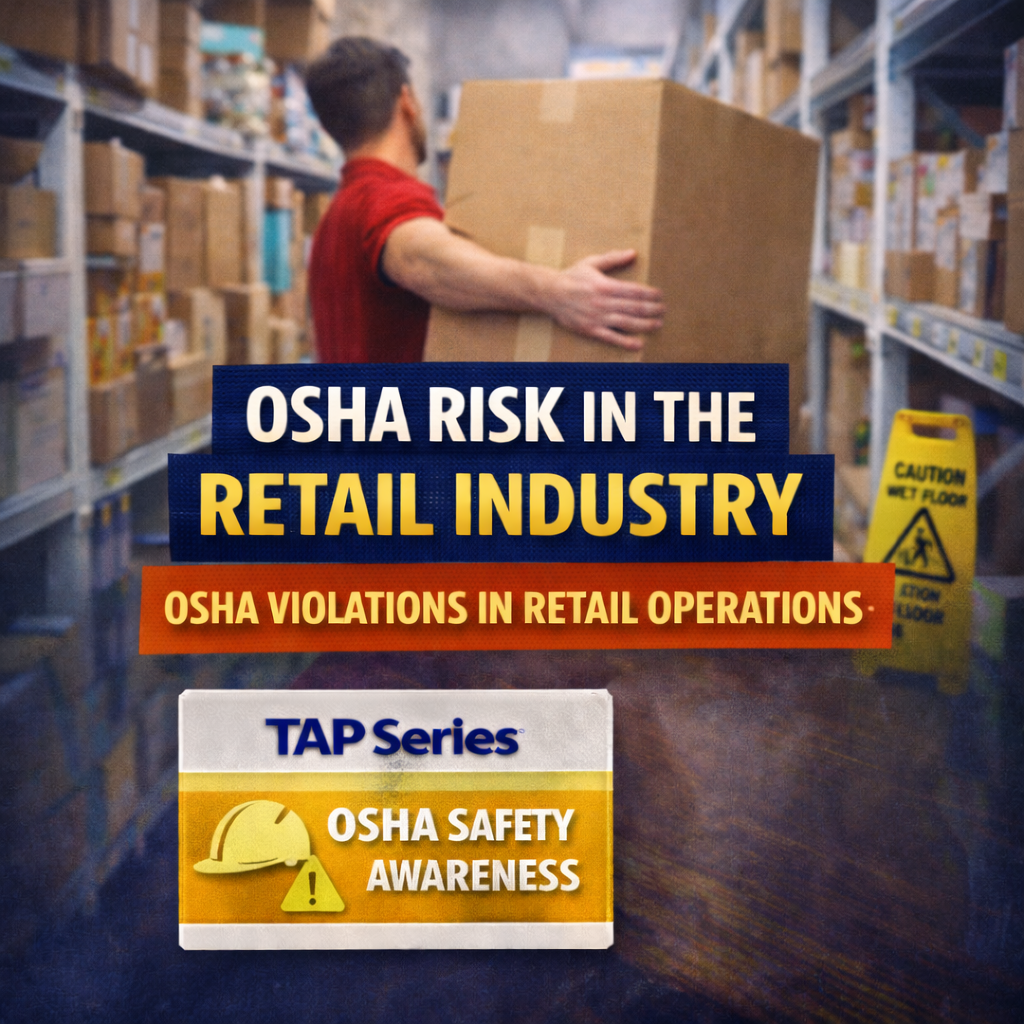
OSHA risk in the retail industry is often underestimated because retail environments are not always viewed as hazardous workplaces. In reality, retail operations across the United States face frequent OSHA violations that expose employees to injury and employers to serious legal and financial consequences.
From stockrooms and loading areas to sales floors and back offices, safety risks are present every day. When these risks are not addressed through training and awareness, OSHA violations quickly follow.
Why Retail Operations Are Vulnerable to OSHA Violations
Retail environments are fast paced and customer focused, which often pushes safety concerns into the background. Employees multitask, lift heavy products, work around equipment, and manage crowded spaces.
Common risk factors include:
- High employee turnover with limited safety training
- Inconsistent enforcement of safety procedures
- Pressure to move inventory quickly
- Limited supervision in stockrooms and back areas
- Lack of hazard awareness among frontline staff
These conditions create gaps that OSHA inspectors frequently identify during investigations.
Common OSHA Violations in Retail Settings
Many OSHA violations in retail are preventable and stem from everyday operational habits.
Frequently cited violations include:
- Improper lifting and material handling practices
- Blocked exits and aisles
- Unsafe ladder and step stool use
- Poor housekeeping in stockrooms
- Inadequate hazard communication
- Failure to provide basic safety training
Even minor violations can result in citations, fines, and increased scrutiny from regulators.
The Cost of OSHA Non Compliance for Retailers
OSHA violations impact more than compliance scores. They affect people, productivity, and profitability.
Retail businesses may face:
- OSHA citations and monetary penalties
- Employee injuries and workers compensation claims
- Lost productivity due to accidents
- Increased insurance premiums
- Legal exposure related to unsafe workplaces
- Damage to brand reputation and employee morale
Repeated violations can also lead to more frequent inspections and higher penalties.
Why OSHA Safety Awareness Training Matters
OSHA Safety Awareness training helps retail employees recognize hazards before incidents occur. When staff understand risks, they are more likely to follow safe practices and report unsafe conditions.
Effective safety awareness training helps employees:
- Identify common workplace hazards
- Use ladders, equipment, and tools safely
- Follow proper lifting techniques
- Maintain clear walkways and exits
- Understand their role in workplace safety
- Reduce injury risks and OSHA citations
Training also shows that an employer is making a good faith effort to comply with OSHA standards.
TAP Series OSHA Safety Awareness Training
TAP Series offers an OSHA Safety Awareness course designed for real world retail operations.
This course helps retailers:
- Increase employee awareness of workplace hazards
- Reduce common OSHA violations
- Improve overall safety culture
- Support compliance with OSHA expectations
- Protect employees and reduce liability
The training is suitable for frontline retail staff, supervisors, and management teams.
👉 Learn more and enroll here:
HACCP Manager Certification | Tap Series®
Building Safer Retail Operations Through Awareness
OSHA risk in retail operations does not come from one major failure. It builds from small safety oversights repeated every day. With proper training and awareness, retailers can significantly reduce violations and create safer workplaces.
For US retail companies, investing in OSHA Safety Awareness training through TAP Series is a practical step toward compliance, employee protection, and long-term operational stability.